
Dental appointments can feel overwhelming when you have a fear of needles, painful procedures, unfamiliar sounds, or a difficult past experience. For some people, that anxiety is strong enough to delay routine checkups and necessary treatment.
Fortunately, sedation dentistry for dental anxiety can be one part of a personalized plan to make dental care more manageable. Understanding your concerns, discussing comfort options, and preparing for your appointment can help you feel more confident about visiting the dentist.
At Bright Dental in Des Plaines, IL, we believe patients deserve clear explanations, respectful communication, and an opportunity to discuss their fears before treatment begins.
Quick Answer: Can Sedation Dentistry Help With Dental Anxiety?
Yes. Sedation dentistry uses medication to help suitable patients feel more relaxed during dental treatment. Nitrous oxide is one commonly used option, while other methods may be considered depending on a patient’s health, the procedure, and the qualifications of the treating team.
However, medication is not the only way to manage dental anxiety. Clear communication, planned breaks, and a comfortable treatment environment can also make a meaningful difference.
The best approach is the one your dentist determines is appropriate for your individual needs.
What Causes Dental Anxiety?
Dental anxiety can develop for several reasons, and the experience is different for every patient.
Common triggers include:
- Fear of pain: Worrying that an injection or procedure will hurt.
- Previous negative experiences: Remembering uncomfortable or stressful dental treatment.
- Loss of control: Feeling vulnerable while sitting in the dental chair.
- Dental sounds and smells: Becoming anxious around drills, instruments, or clinical environments.
- Embarrassment: Worrying about being judged for cavities, damaged teeth, or missed appointments.
- Strong gag reflex: Finding examinations or certain dental procedures uncomfortable.
Some patients experience mild nervousness, while others have intense fear that makes scheduling an appointment difficult.
Recognizing these triggers is an important first step toward finding appropriate dental anxiety relief.
How Sedation Dentistry for Dental Anxiety Works
Sedation dentistry for dental anxiety involves carefully selected medication intended to reduce distress and help patients tolerate treatment.
The experience depends on the medication and the level of sedation used. Some patients remain awake, relaxed, and able to communicate. Deeper forms of sedation may produce substantial drowsiness or reduced awareness.
Sedation and pain control are not the same thing. A patient may still need local anesthesia to numb the treatment area, even when sedation is used to reduce anxiety.
Before recommending sedation, a dentist should review relevant medical conditions, medications, allergies, and the planned dental procedure.
3 Best Ways to Feel Calmer During Dental Treatment
1. Discuss Nitrous Oxide for Mild to Moderate Anxiety
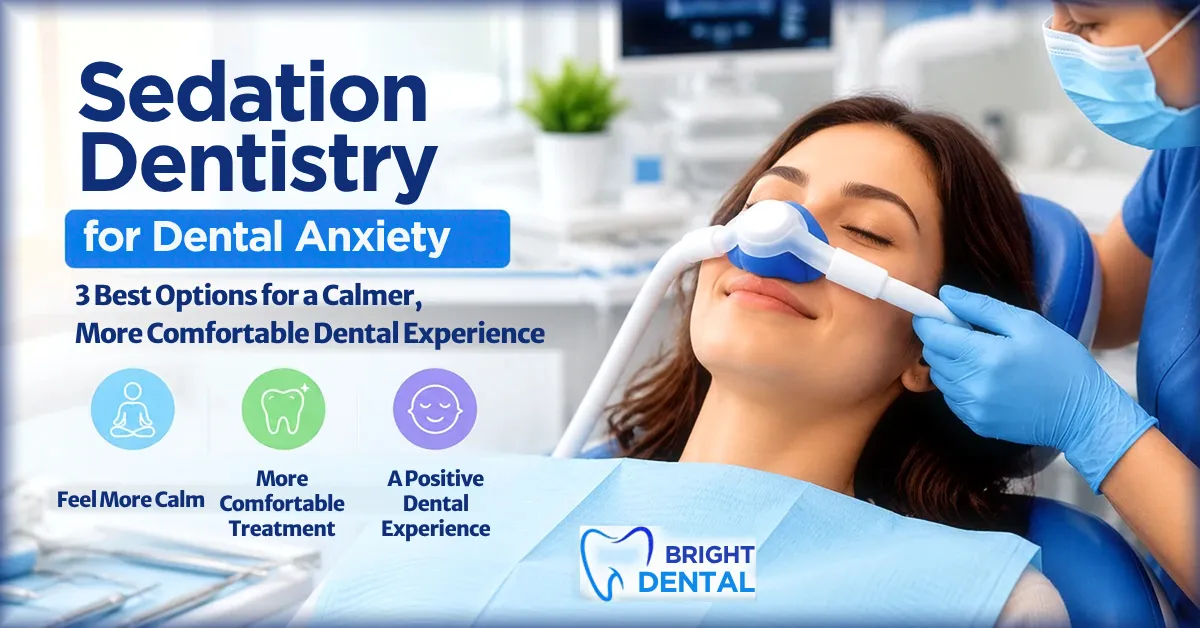
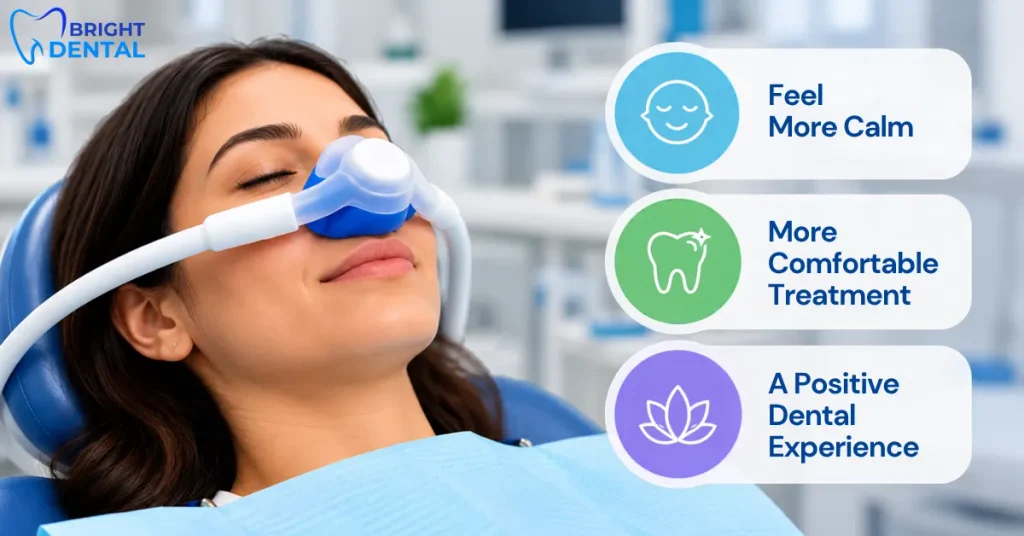
Nitrous oxide, often called laughing gas, is inhaled through a small nasal mask along with oxygen.
It can help patients feel more relaxed while generally allowing them to remain conscious and responsive. Its effects begin relatively quickly and usually fade rapidly after administration stops.
Nitrous oxide may be particularly helpful for people who feel nervous about routine dental procedures but prefer to remain aware of their surroundings.
Bright Dental lists nitrous oxide among its patient comfort technologies. Your dentist can assess whether it is suitable for your appointment.
The American Dental Association explains how nitrous oxide is used in dentistry, including its role in managing dental anxiety.
2. Create a Personalized Comfort Plan
Medication is only one part of a positive dental experience.
Before treatment begins, tell your dentist what makes you uncomfortable. You can discuss:
- Agreeing on a hand signal when you need a break.
- Asking the dentist to explain each step before beginning.
- Discussing how local anesthesia will be used.
- Requesting shorter appointments when practical.
- Asking questions about expected sensations and recovery.
These small adjustments can help patients feel more involved in their care.
For additional information about supportive treatment approaches, explore our guide to pain-free dentistry in Des Plaines.
3. Prepare for Your Visit and Ask About Other Options
If your anxiety is severe, tell the dental team before your appointment rather than waiting until you arrive.
Some patients may be assessed for prescription oral sedation, IV sedation, or other anesthesia approaches. These methods require appropriate clinical evaluation, monitoring, and qualified providers. Not every dental practice offers every type.
Never take someone else’s sedative medication or use alcohol to manage dental anxiety before an appointment.
If medication is prescribed, follow the specific instructions provided by your treating clinician, including transportation and fasting requirements when applicable.
Preparing in advance can make sedation dentistry for dental anxiety feel less intimidating.
Who May Benefit From Sedation Dentistry?
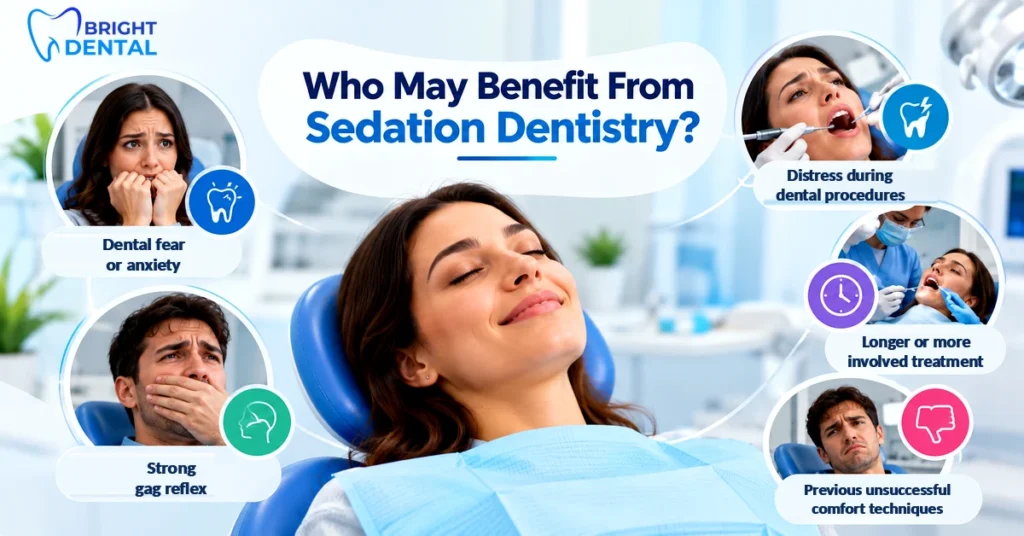
Sedation dentistry for dental anxiety may be considered for patients who:
- Have difficulty attending appointments because of fear.
- Experience significant distress during dental procedures.
- Have a strong gag reflex that interferes with treatment.
- Need longer or more involved dental work.
- Have had unsuccessful experiences with non-medication comfort techniques.
Not everyone needs sedation, and not every patient is a suitable candidate.
A dentist should consider your medical history and treatment needs before recommending any medication.
What to Expect Before, During, and After Your Appointment
Before Your Visit
Your dental team may ask about your medical history, prescription medications, supplements, allergies, previous anesthesia experiences, and current health concerns.
You should also explain which aspects of dental treatment cause the most anxiety.
If sedation is planned, follow the instructions given for eating, drinking, medications, and transportation. Requirements vary by sedation method.
During Treatment
Your dentist will explain the procedure and provide appropriate pain control.
With nitrous oxide, patients generally remain awake and can respond to instructions. Other forms of sedation may affect awareness more significantly and require additional monitoring.
Your comfort and safety should be assessed throughout treatment.
After Treatment
Recovery depends on the medication used.
Nitrous oxide generally wears off quickly, although the dental team must confirm that you are ready to leave. Oral or IV sedatives can affect coordination, alertness, and judgment for much longer.
Follow your clinician’s discharge instructions, especially regarding driving, work, and supervision.
Is Sedation Dentistry Safe for Anxious Patients?
Sedation can be an appropriate option when administered by qualified professionals with suitable screening, equipment, monitoring, and emergency procedures. Choosing sedation dentistry with proper medical evaluation and professional monitoring can help patients manage dental anxiety while prioritizing their safety.
However, no sedative medication is completely risk-free.
Factors that may affect suitability include:
- Sleep apnea or breathing difficulties.
- Certain heart or lung conditions.
- Pregnancy.
- Medication interactions.
- Previous reactions to anesthesia.
- Other significant medical conditions.
Discuss these factors with your dentist before treatment. Do not assume that a particular method is appropriate without an individual assessment.
Can You Overcome Dental Anxiety Without Sedation?
Yes. Some patients find that supportive dental care and gradual exposure help reduce fear over time.
You might begin with a consultation rather than a treatment appointment, ask for a detailed explanation of the proposed procedure, or establish a clear signal for breaks.
For routine examinations, cleanings, and preventive care, our general dentistry guide explains the importance of maintaining regular dental visits.
If fear has caused you to postpone care, consider starting with a conversation about your concerns rather than committing immediately to a procedure.
Frequently Asked Questions
Will I be asleep during sedation dentistry?
Not necessarily. Nitrous oxide usually allows patients to remain awake and responsive. Other sedation methods can cause greater drowsiness, while general anesthesia produces unconsciousness.
Does sedation dentistry prevent all pain?
No. Sedation primarily helps manage anxiety and awareness. Local anesthesia or other pain-control methods may still be needed.
Can I drive home after sedation?
It depends on the method and your individual recovery. Patients often recover quickly after nitrous oxide, but oral and IV sedation generally require an escort and restrictions on driving.
Is sedation dentistry suitable for severe dental anxiety?
It may be considered, but suitability depends on the patient’s medical history, the planned treatment, and the available qualified providers.
What should I tell my dentist if I am embarrassed about my teeth?
Explain that anxiety or embarrassment has kept you away from dental care. Your dentist can discuss your current oral health and recommend appropriate next steps without making assumptions about your past.
Final Thoughts
Sedation dentistry for dental anxiety can help suitable patients feel more comfortable receiving necessary dental care. But lasting confidence also comes from communication, preparation, and a dental team that listens.
Whether your anxiety is mild or significant, discussing your concerns with a dentist is a practical first step toward a healthier smile.
Comfortable Dental Care at Bright Dental in Des Plaines
Don’t let dental anxiety stop you from getting the care you deserve. At Bright Dental in Des Plaines, IL, our friendly team focuses on gentle, comfortable dental care and can help you explore suitable sedation dentistry options based on your individual needs.
Bright Dental proudly welcome patients from Des Plaines, Mount Prospect, Wheeling, Glenview, and Northbrook. Our team can discuss your concerns, explain treatment options, and help you understand which comfort measures may be appropriate.
Ready for a more comfortable dental experience? With us, take the first step toward a healthier, more confident smile!

