
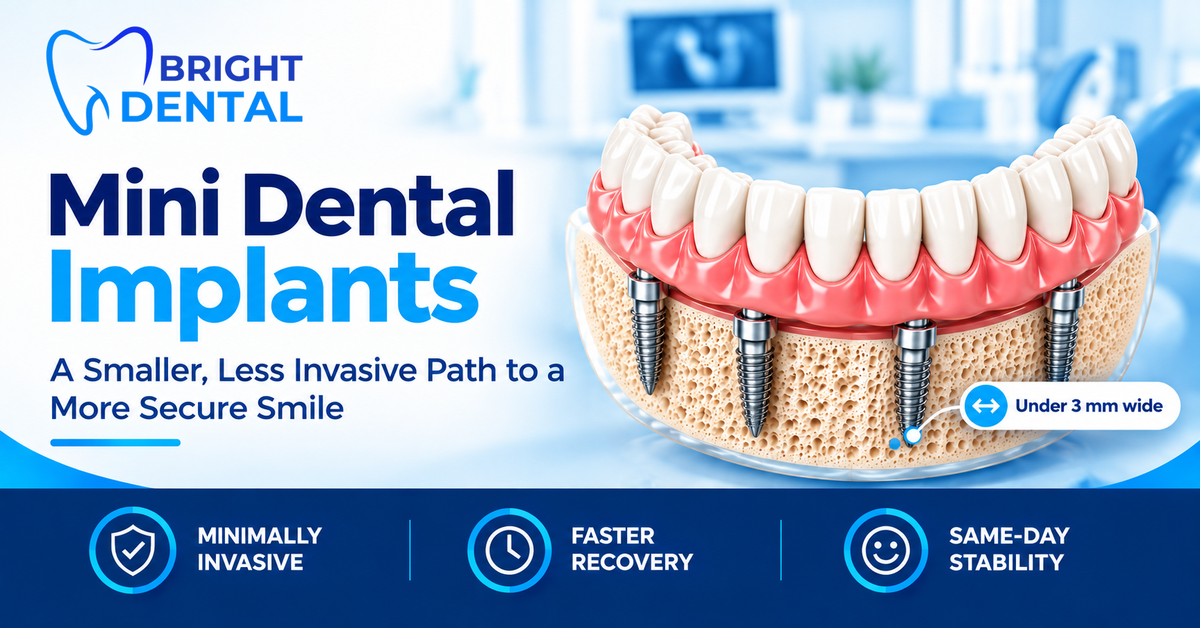

Not every patient is a candidate for standard-sized implants, especially when bone volume is limited or a less invasive option is preferred. Mini dental implants offer a smaller, narrower alternative that can stabilize a loose denture or replace a single tooth with less surgery and a faster recovery. In this guide from Bright Dental, you will learn how they work, who they are best suited for, and how they compare to standard implants.
Quick answer: Mini Dental Implants use a narrower implant post, usually less than 3mm in diameter, placed with a simpler procedure than standard implants. It is most often used to stabilize a lower denture or replace a single small tooth.
What Are Mini Dental Implants?
Mini dental implants are smaller-diameter titanium posts, roughly half the width of a standard implant. Despite the smaller size, they are still surgically anchored into the jawbone and can support a crown, bridge, or denture attachment once healed.
Because they are narrower, they are often placed using a simpler, less invasive technique that does not always require cutting and folding back the gum tissue the way standard implants do.
5 Surprising Benefits of Mini Dental Implants
- Less invasive placement: many cases are done with a minimally invasive technique, avoiding traditional incisions
- Faster recovery: smaller surgical sites generally heal faster than standard implant sites
- Works with less bone: a good option for patients who do not have enough bone volume for standard implants without grafting
- Lower upfront cost: typically less expensive than standard implants, since the procedure is simpler
- Same-day stabilization: dentures can often be snapped onto mini implants the same day they are placed
Who Are These Implants Best Suited For?
Mini Dental Implants are commonly recommended for:
- Patients with a loose lower denture who want it to snap securely in place
- Patients missing a single small tooth, such as a lower front tooth
- Patients who do not qualify for standard implants due to limited bone volume
- Older patients or those who prefer a shorter, less invasive procedure
- Patients looking for a lower-cost alternative to standard implants
They are generally not recommended for replacing a full arch of missing teeth or supporting heavy chewing loads over the back molars, since the narrower post has less surface area for support.
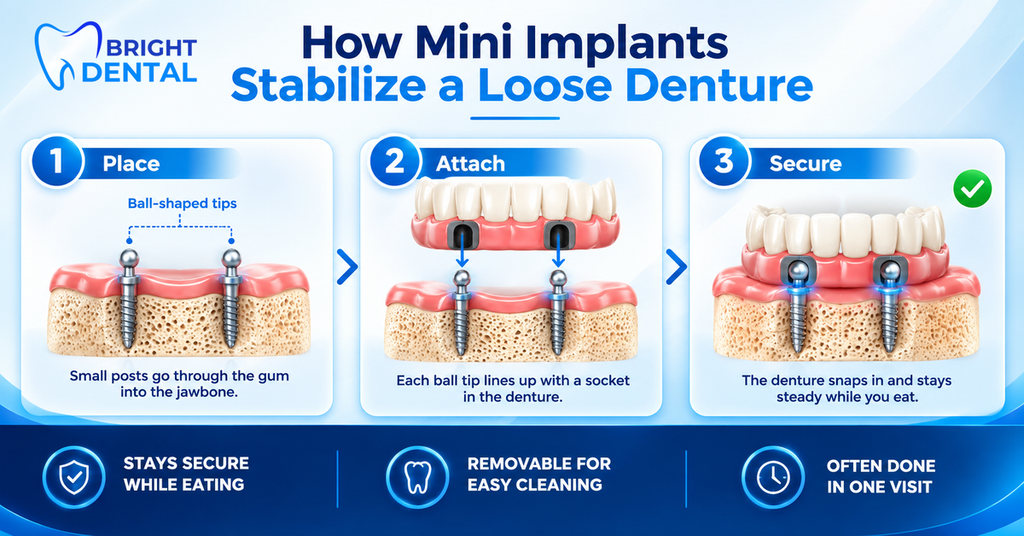
How They Stabilize a Loose Denture
One of the most common uses is securing a lower denture that no longer fits snugly. Several small posts, often four, are placed along the jaw. Each post has a ball-shaped tip that snaps into a matching attachment built into the denture.
This keeps the denture from shifting while eating or speaking, without the cost or healing time of full-arch implants. The denture can still be removed for cleaning each night, but it stays securely in place while worn.
The Procedure: What to Expect
1. Consultation and Imaging
Your dentist evaluates your bone structure and confirms whether this approach fits your case, using X-rays or a 3D scan.
2. Placement
The implant posts are placed directly through the gum into the jawbone, often without the need for stitches, since the incision is minimal or avoided entirely.
3. Attachment
A denture, crown, or other restoration is attached, sometimes on the same day as placement.
4. Healing
Because the procedure is less invasive, healing is typically faster than with standard implants, though your dentist will confirm your individual timeline.
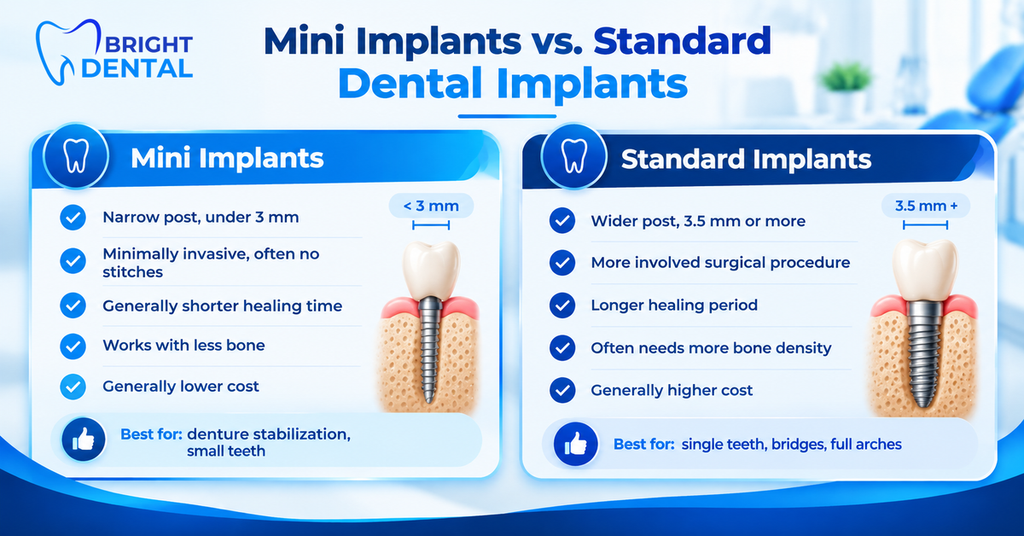
Mini Dental Implants vs. Standard Implants
| Feature | Mini implants | Standard implants |
|---|---|---|
| Diameter | Narrower (under 3mm) | Wider (3.5mm or more) |
| Invasiveness | Minimally invasive, often no stitches | More involved surgical procedure |
| Healing time | Generally shorter | Longer healing period |
| Best for | Denture stabilization, small teeth | Single teeth, bridges, full arches |
| Bone requirements | Works with less bone | Often needs more bone density |
| Cost | Generally lower | Generally higher |
Recovery and Aftercare
Mild soreness for a day or two is common and manageable with over-the-counter pain relief.
Simple aftercare tips:
- Stick to softer foods for the first few days
- Keep the area clean as your dentist instructs
- Avoid smoking, which can slow healing
- Attend your follow-up visit so your dentist can check the attachment and fit
- Continue regular checkups to monitor the implants over time
Frequently Asked Questions
Are mini dental implants permanent?
They are designed to be a long-term solution, though they are generally best suited for lighter loads than standard implants, such as denture stabilization or a single small tooth.
Do mini dental implants hurt?
Most patients report less discomfort than with standard implants, since the procedure is less invasive and often avoids traditional incisions.
Can mini implants replace a full arch of teeth?
They are not typically recommended for a full arch replacement on their own, since they offer less support than standard implants. All-on-4 or full-arch treatment is usually a better fit for that need.
How long does the procedure take?
Many cases are completed in a single appointment, especially when the goal is denture stabilization.
Conclusion
Mini dental implants offer a smaller, less invasive path to a more secure smile, especially for patients who are not candidates for standard implants or who want to stabilize a loose denture without extensive surgery. With a simpler procedure and shorter recovery, many patients find this an approachable first step toward a more stable, confident bite.
Looking for Mini Dental Implants Near Northbrook?
Bright Dental proudly serves patients from Des Plaines, Mount Prospect, and Northbrook. If a loose denture or a missing small tooth is affecting your daily life, our team can determine whether this less invasive option is right for you.
