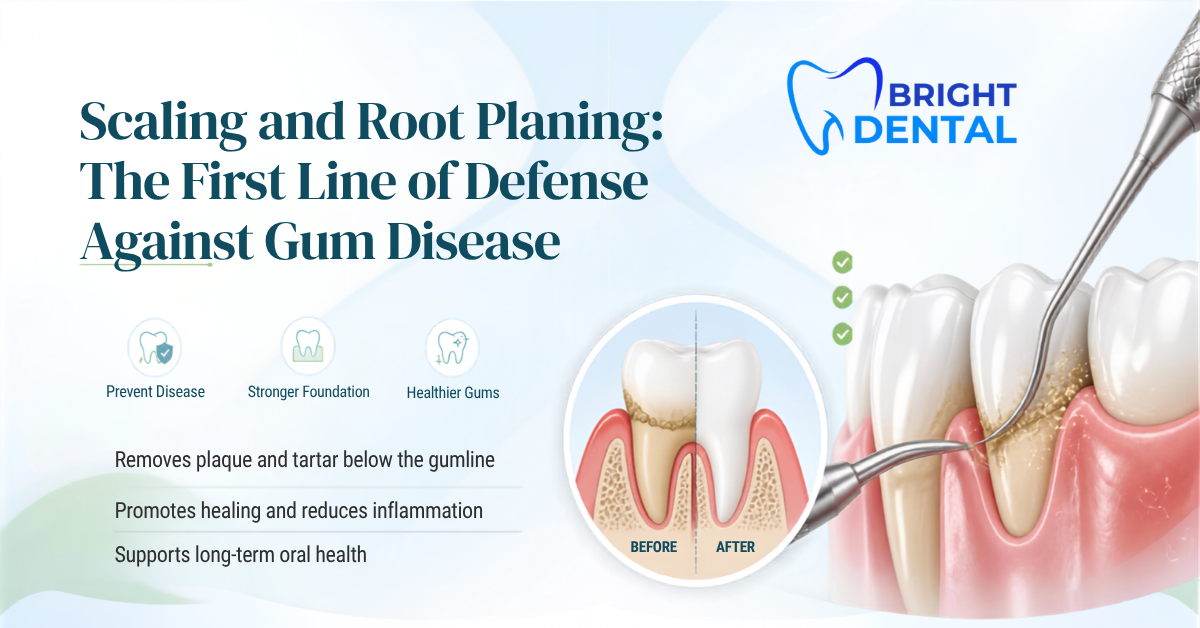

Gum disease often develops gradually, causing symptoms such as bleeding gums, swelling, persistent bad breath, and gum recession. When plaque and tartar accumulate below the gumline, regular cleaning may not be enough.
Scaling and root planing is a non-surgical periodontal treatment that removes harmful buildup beneath the gums and helps improve gum health.
At Bright Dental, we provide personalized gum disease treatment in Des Plaines to help patients manage periodontal concerns and protect their natural teeth.
Quick Answer
Scaling and root planing is a deep cleaning procedure that removes plaque and tartar below the gumline. It is commonly recommended for patients with periodontitis and helps control gum inflammation when combined with proper oral hygiene and follow-up care.
What Is Scaling and Root Planing?
This professional deep cleaning procedure treats areas affected by periodontal disease.
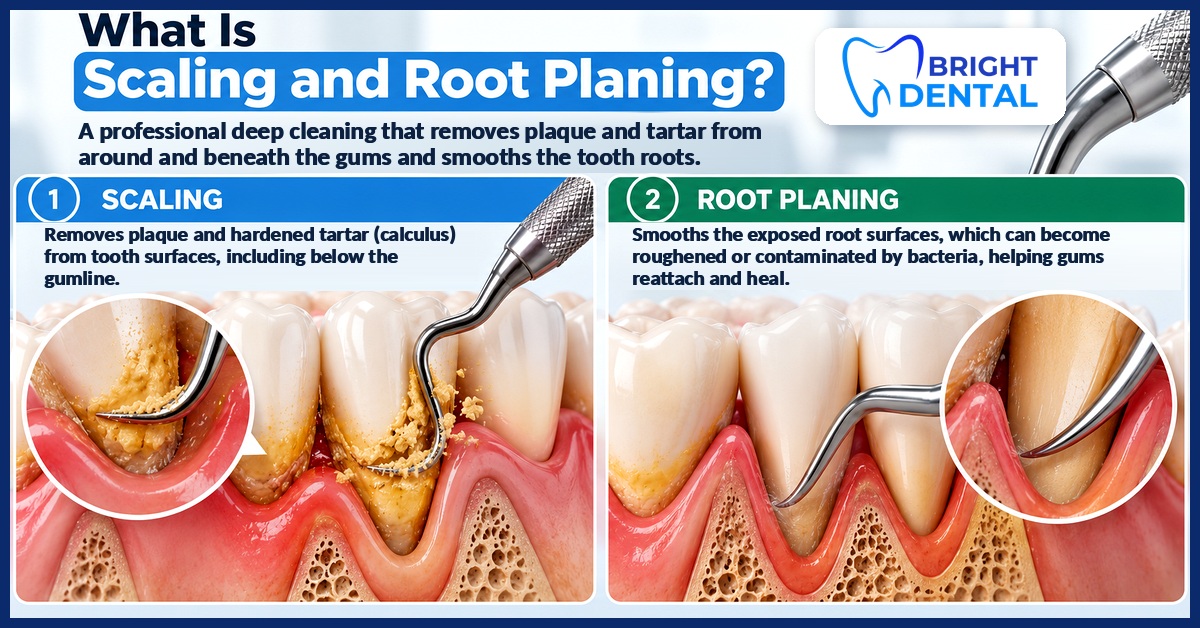
The treatment involves two steps:
- Scaling: Removes plaque and hardened tartar from tooth surfaces, including areas beneath the gums.
- Root planing: Cleans and smooths affected tooth roots to create a healthier environment for surrounding gum tissue.
Unlike routine cleaning, this procedure targets periodontal pockets where bacteria and tartar can accumulate.
For additional information, read the American Dental Association’s guide to scaling and root planing.
How Does Gum Disease Develop?
Gum disease begins when bacterial plaque accumulates around the teeth and gums. Without proper cleaning, plaque hardens into tartar, contributing to inflammation.
Early gum disease, called gingivitis, may cause redness and bleeding. If left untreated, it can progress to periodontitis, affecting the tissues and bone supporting the teeth.
Common warning signs include:
- Bleeding or swollen gums
- Persistent bad breath
- Gum recession
- Tooth sensitivity
- Loose or shifting teeth
- Changes in your bite
Because gum disease does not always cause pain, professional examinations are important for early detection.
Scaling and Root Planing vs. Regular Dental Cleaning
Understanding the deep cleaning vs regular cleaning difference helps patients recognize why periodontal treatment may be necessary.
Regular dental cleaning focuses on removing plaque, tartar, and surface stains to maintain healthy teeth and gums.
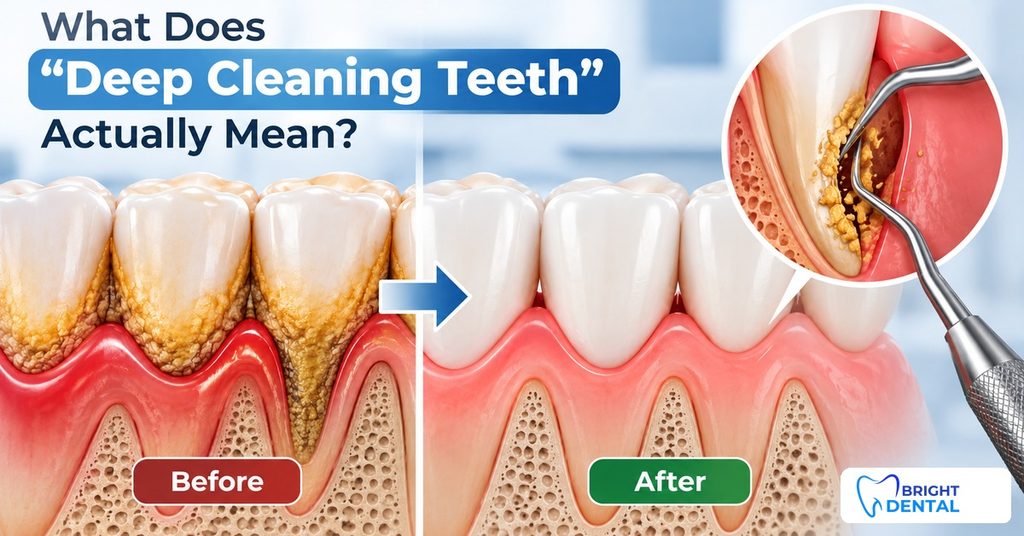
Periodontal deep cleaning targets buildup beneath the gumline and along affected tooth roots when deeper treatment is necessary.
Patients searching for deep cleaning teeth services should understand that treatment recommendations depend on their periodontal condition, not simply the amount of visible tartar. Periodontal cleaning helps remove harmful buildup beneath the gumline, supporting healthier gums and better long-term oral health.
What Happens During the Procedure?
Your dental professional begins by evaluating gum inflammation, periodontal pockets, and overall oral health. Dental imaging may also be recommended.
The procedure generally includes:
- Periodontal evaluation: Examining gum health and identifying areas requiring treatment.
- Local anesthesia: Numbing affected areas when needed for comfort.
- Scaling: Removing plaque and tartar above and below the gumline.
- Root planing: Cleaning affected root surfaces to support healthier gums.
- Follow-up: Monitoring healing and determining whether additional care is necessary.
Depending on the severity of gum disease, treatment may be completed in one appointment or divided into multiple visits.
Is Scaling and Root Planing Painful?
Many patients are concerned about discomfort during deep cleaning.
Local anesthesia can help minimize pain during treatment. Afterward, temporary gum tenderness, sensitivity, or mild bleeding may occur.
Most patients can return to normal daily activities relatively quickly, although individual recovery experiences vary.
Your dental team will provide instructions to help manage discomfort and protect treated areas.
How Long Does Recovery Take?
Recovery depends on gum health, treatment extent, and individual healing.
Some patients experience temporary sensitivity during the first few days. Gum inflammation may gradually improve as the tissues heal.
Aftercare recommendations may include:
- Brushing gently with a soft toothbrush
- Maintaining careful oral hygiene
- Following prescribed treatment instructions
- Avoiding foods that irritate sensitive gums
- Attending recommended follow-up appointments
Contact your dentist if discomfort becomes severe or does not improve as expected.
Benefits of Periodontal Deep Cleaning
When clinically appropriate, this treatment offers several potential benefits.
Removes harmful buildup: Eliminates plaque and tartar from areas that brushing and flossing cannot adequately reach.
Helps reduce inflammation: Removing bacterial deposits can support healthier gum tissue.
Supports periodontal stability: Treatment may help control disease progression when combined with ongoing maintenance.
Improves long-term gum care: Cleaner tooth and root surfaces support effective professional and home care.
Results depend on the severity of periodontal disease and how consistently patients maintain their oral health.
When Is Additional Gum Disease Treatment Needed?
Deep cleaning is often an initial non-surgical approach to managing periodontitis.
However, patients with advanced gum disease, persistent deep pockets, or significant tissue damage may require additional treatment.
Your dentist may recommend periodontal maintenance or other procedures depending on your response to treatment.
Learn more about available approaches in our periodontitis treatment options guide.
Why Follow-Up Care Matters
Completing periodontal treatment does not eliminate the need for regular dental care.
Plaque continues forming daily, and periodontal disease may return or progress without proper maintenance.
Your dentist may recommend:
- Brushing twice daily
- Cleaning between teeth every day
- Regular periodontal maintenance
- Monitoring periodontal pocket measurements
- Attending scheduled dental examinations
For more information, explore our guide to periodontitis treatment in Des Plaines.
Consistent care helps maintain treatment improvements and supports long-term oral health.
Why Choose Bright Dental?
Bright Dental provides personalized periodontal evaluations and treatment planning based on each patient’s gum health.
Our dental team focuses on identifying periodontal concerns, explaining appropriate treatment options, and helping patients maintain healthier gums.
Patients looking for a dentist near Mount Prospect or dental services near Mount Prospect can visit our Des Plaines practice for periodontal care.
We also offer dental services in Des Plaines for patients seeking preventive and restorative dental treatment.
Frequently Asked Questions
Can scaling and root planing cure gum disease?
It can help control periodontitis by removing bacterial deposits, but ongoing maintenance may be necessary to prevent further disease progression.
How often is periodontal deep cleaning needed?
Treatment frequency depends on your gum condition. Your dentist will determine whether additional treatment or periodic periodontal maintenance is appropriate.
Final Thoughts
This non-surgical treatment helps manage periodontal disease by removing harmful buildup beneath the gums.
Ready to Have Your Gums Evaluated?
Early evaluation, appropriate treatment, and consistent oral hygiene can help protect your teeth and supporting tissues.
Bright Dental welcomes patients from Des Plaines, Mount Prospect, Wheeling, Glenview, and Northbrook who need professional gum disease evaluations and periodontal care.
Bright Dental II – Des Plaines
737 W Golf Rd, Des Plaines, IL 60016, USA
Phone: +1 (847) 228-2000

