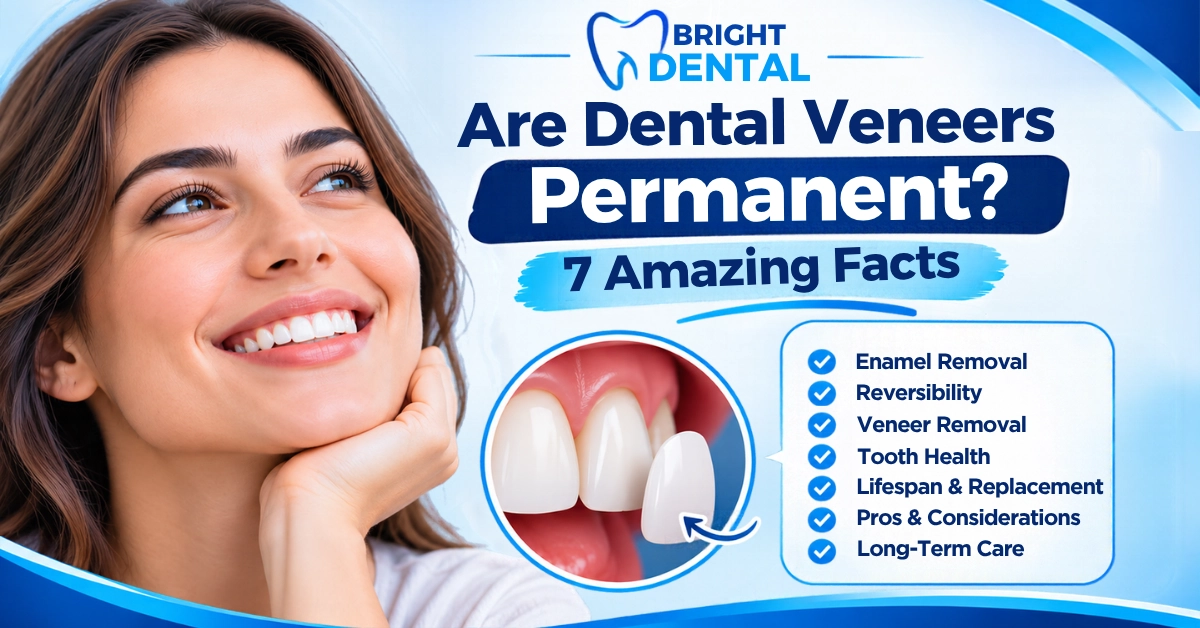

Are dental veneers permanent? If you’re considering veneers to improve chipped, stained, or uneven teeth, understanding their long-term effects is important.
Dental veneers can create a natural-looking smile, but they are not designed to last forever. The treatment itself may be irreversible, while the restorations may eventually require replacement.
At Bright Dental in Des Plaines, Illinois, we help patients understand their cosmetic dentistry options before making treatment decisions.
Quick Answer: Are Dental Veneers Permanent?
Traditional dental veneers are generally considered permanent because placing them usually requires removing a thin layer of natural tooth enamel. Since enamel cannot grow back, this change is irreversible.
However, veneers themselves may wear, chip, or loosen over time and require repair or replacement.
Some minimal-prep or no-prep veneers preserve more enamel, but they are not automatically reversible.
1. Why Are Dental Veneers Permanent?
Dental veneers are thin porcelain or composite coverings bonded to the front surfaces of natural teeth.
Traditional porcelain veneers usually require enamel removal to create space for the restoration and ensure a proper fit.
Because enamel cannot regenerate, prepared teeth may need ongoing restorative coverage.
This explains why are dental veneers permanent is different from asking whether veneers last forever.
According to the American Dental Association’s guide to veneers, conventional veneer treatment is generally irreversible because enamel is removed during preparation.
Does Enamel Grow Back?
No. Natural tooth enamel does not regenerate once removed.
Dentists therefore aim to preserve healthy tooth structure whenever possible while achieving appropriate cosmetic results.
2. Can Dental Veneers Be Removed?
Many patients wonder, can dental veneers be removed if they change their minds?
A dentist can remove an existing veneer, but this does not mean the natural tooth will return to its original condition.
If enamel was removed during preparation, the tooth may require another veneer or suitable restoration.
What Happens During Removal?
Depending on the condition of the veneer and tooth, your dentist may recommend:
- Replacing an old or damaged veneer.
- Repairing minor defects when appropriate.
- Treating decay or other underlying problems.
- Choosing another restoration if additional protection is needed.
Never attempt to remove veneers yourself, as this can damage natural teeth.
3. Are Porcelain Veneers Reversible?
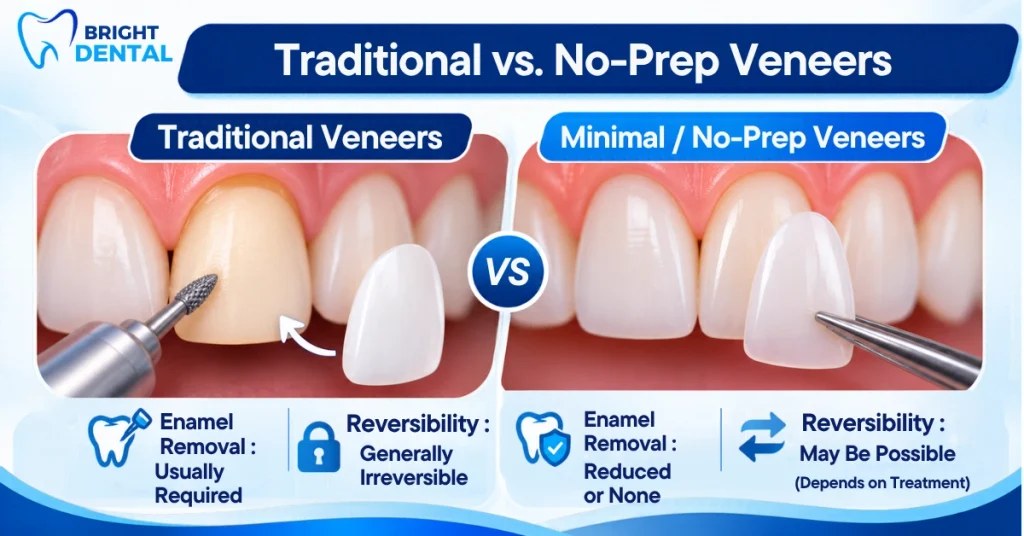
Are porcelain veneers reversible? Traditional porcelain veneers generally are not, because tooth preparation usually involves permanent enamel removal.
However, the amount of preparation depends on tooth shape, position, and treatment goals.
Traditional vs. No-Prep Veneers
| Feature | Traditional Veneers | Minimal/No-Prep Veneers |
|---|---|---|
| Enamel removal | Usually required | Reduced or sometimes none |
| Reversibility | Generally irreversible | Depends on treatment |
| Suitability | Based on dental needs | Not suitable for everyone |
| Maintenance | May need replacement | May need replacement |
Even no-prep veneers are not guaranteed to be reversible because bonding and removal can affect tooth surfaces.
A consultation helps determine the most conservative suitable approach.
4. Do Veneers Damage Your Teeth?
Another common concern is, do veneers damage your teeth over time?
Properly planned veneers do not automatically damage teeth. However, treatment has limitations and possible complications.
Potential risks include:
- Tooth sensitivity after preparation.
- Veneer chipping or loosening.
- Gum irritation.
- Decay around veneer edges.
- Future repair or replacement.
Can Teeth Develop Cavities Under Veneers?
Yes. Veneers cover the visible front surface, but natural tooth structure remains vulnerable to decay.
Poor oral hygiene may allow plaque to accumulate around veneer margins.
Brushing, flossing, and regular dental examinations help protect both the veneers and natural teeth.
5. What Happens to Teeth Under Veneers?
Understanding what happens to teeth under veneers is essential before treatment.
The natural tooth remains beneath the restoration. Veneers improve appearance but do not replace the entire tooth.
With proper care and a well-fitting restoration, the underlying tooth can remain healthy.
However, veneers cannot prevent cavities or gum disease.
Warning Signs to Watch For
Contact your dentist if you experience:
- Persistent tooth pain or sensitivity.
- A loose or cracked veneer.
- Swollen or bleeding gums.
- Discoloration near veneer edges.
- Changes in your bite.
These symptoms require evaluation but do not always mean replacement is necessary.
6. How Long Do Permanent Veneers Last?
It is important to distinguish permanent tooth preparation from restoration lifespan.
Porcelain veneers commonly last approximately 10–15 years, although individual results vary. Composite veneers may require repair or replacement sooner.
Lifespan depends on oral hygiene, bite forces, material, and everyday habits.
For a comparison of materials, pricing, and expected lifespan, read our Dental Veneers 101: Cost, Types, and How Long They Last.
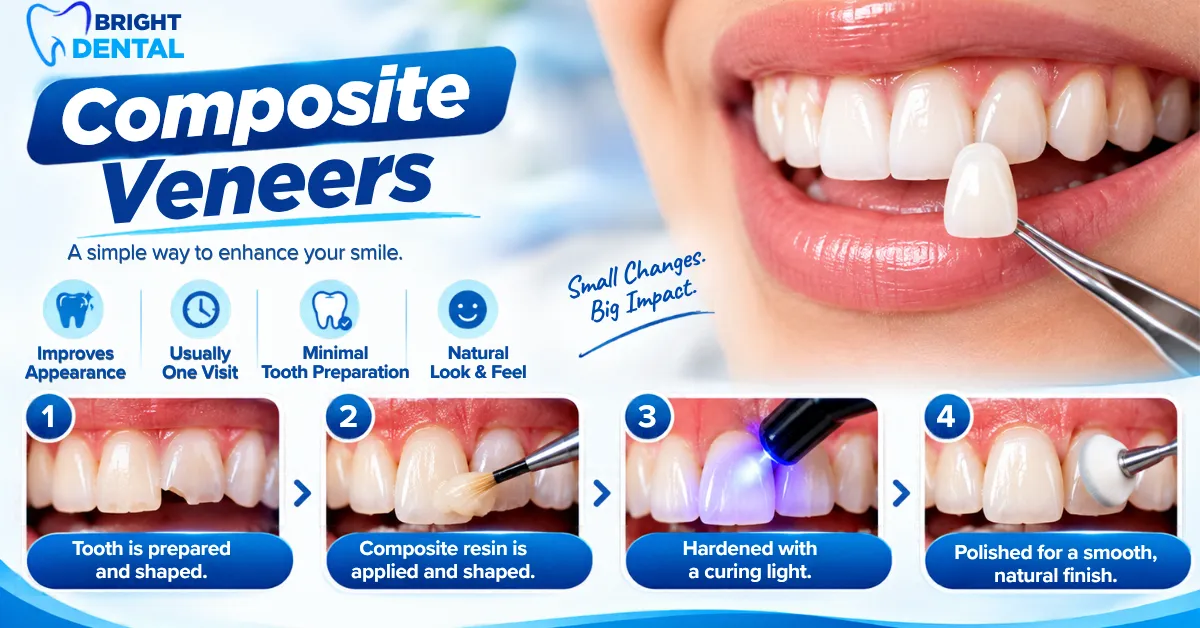
Can Veneers Be Replaced?
Yes. Dentists can often replace veneers when they become damaged or worn.
However, replacement depends on the condition of the underlying tooth. Significant decay or structural damage may require another treatment.
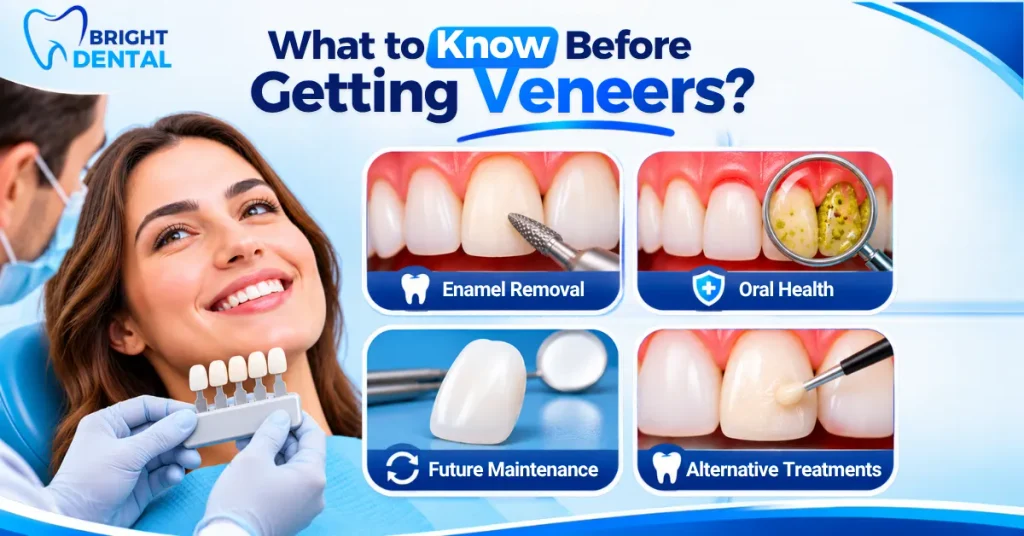
7. What Should You Know Before Getting Veneers?
Before choosing veneers, discuss your dental health, cosmetic goals, and long-term expectations with your dentist.
Important considerations include:
Enamel removal: Ask how much natural tooth structure may need preparation.
Oral health: Cavities and gum disease should be evaluated before cosmetic treatment.
Future maintenance: Veneers may require repairs or replacement.
Alternative treatments: Dental bonding or other conservative procedures may address certain cosmetic concerns.
Explore our Cosmetic Dentistry Services to understand available smile-enhancement options.
How to Maintain Dental Veneers
Long-term care is essential for maintaining veneers and protecting natural teeth.
Follow these practical habits:
- Brush twice daily using fluoride toothpaste.
- Floss every day.
- Avoid chewing ice and other hard objects.
- Wear a night guard if recommended.
- Schedule regular dental checkups.
- Seek dental care if a veneer becomes loose or damaged.
Whitening products generally cannot change the original color of porcelain veneers.
Learn more in our guide, Can You Whiten Veneers or Crowns?.
Why Choose Bright Dental?
At Bright Dental in Des Plaines, Illinois, we focus on personalized cosmetic dental care that considers both your smile goals and long-term oral health.
Dr. Furrukh Ashraf and our dental team help patients understand veneer options, enamel preparation, potential risks, and future maintenance before making treatment decisions.
Our goal is to provide clear guidance, preserve healthy tooth structure whenever possible, and recommend treatments based on your individual dental needs.
Whether you’re considering porcelain veneers or exploring more conservative alternatives, our team can help you make an informed decision.
Frequently Asked Questions
Are dental veneers permanent or temporary?
Traditional veneer treatment is generally irreversible because enamel is often removed. However, the veneers themselves may eventually require replacement.
Can veneers be removed without damaging teeth?
Professional removal is possible, but the outcome depends on the original preparation and tooth condition. The tooth may still require restorative coverage.
Do veneers weaken natural teeth?
Enamel removal changes natural tooth structure, but properly planned veneers do not automatically weaken teeth. Individual dental health and treatment technique matter.
Can cavities form beneath veneers?
Yes. Natural teeth remain susceptible to decay, especially around restoration margins.
Are no-prep veneers reversible?
Not necessarily. Some preserve more enamel, but bonding and removal may still affect tooth surfaces.
Conclusion
So, are dental veneers permanent? Traditional veneer treatment is generally irreversible because it usually involves enamel removal. However, the restorations themselves may eventually need repair or replacement.
Understanding these differences helps patients make informed cosmetic dental decisions.
A professional consultation can determine whether veneers or a more conservative treatment is suitable for your smile.
Considering Dental Veneers? Visit Bright Dental!
Wondering are dental veneers permanent and whether they are right for your teeth?
At Bright Dental in Des Plaines, our team can assess your oral health, explain veneer preparation, and discuss available cosmetic treatments.
We welcome patients from Des Plaines, Mount Prospect, Northfield, Lincolnshire, and Deerfield.
Bright Dental II – Des Plaines
737 W Golf Rd, Des Plaines, IL 60016, USA
Phone: +1 (847) 228-2000
