
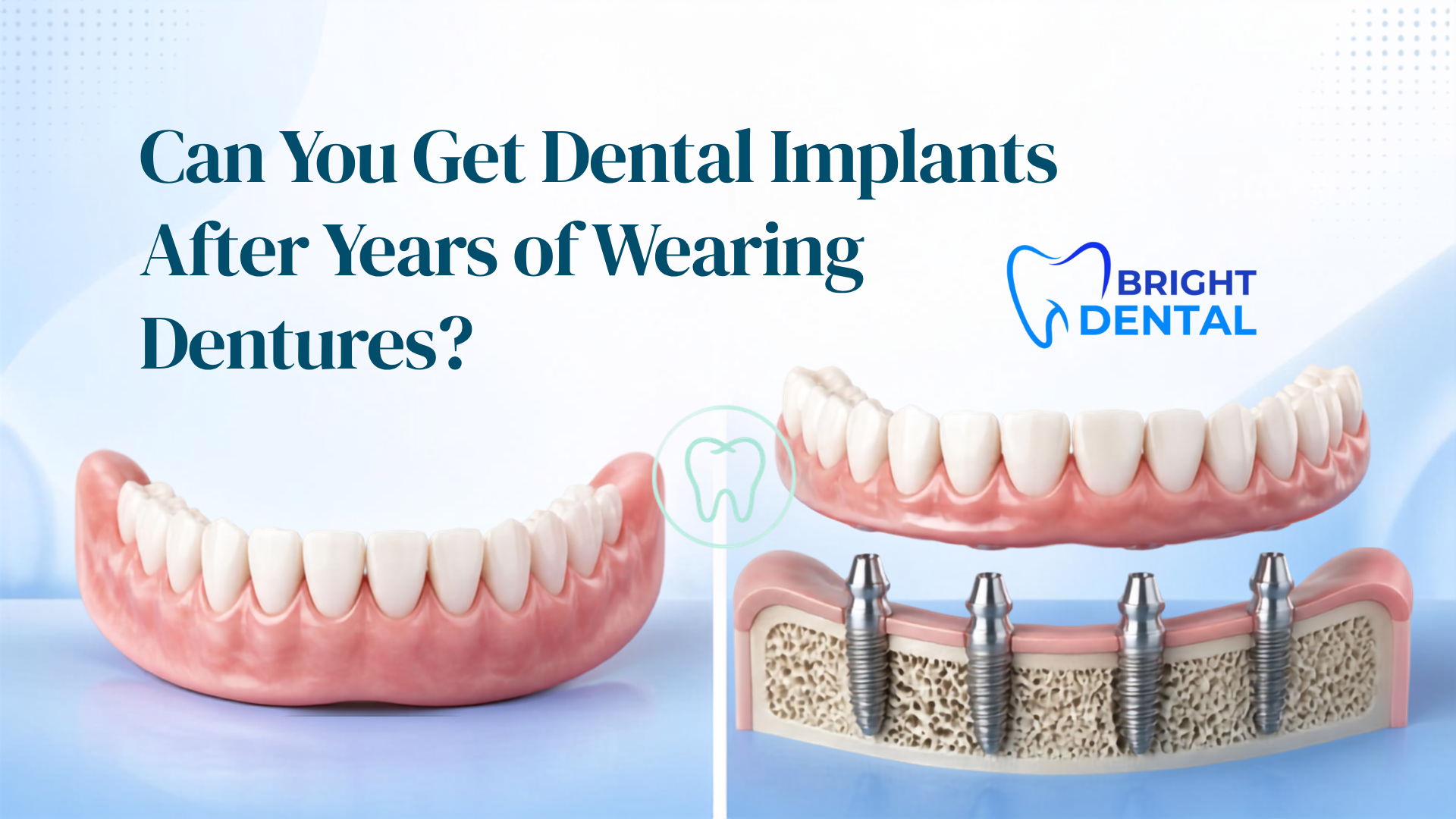

If you’ve worn dentures for several years, or even decades, you may assume implants are no longer an option for you. It’s a common misconception, and the truth is that dental implants after dentures are possible for many patients, though the path often looks a little different than it does for someone who has never worn dentures at all.
At Bright Dental, we regularly evaluate long-term denture wearers who are curious about switching from dentures to implants. This guide explains what changes in your mouth over years of denture wear, how that affects implant candidacy, and what the process typically looks like if you’re ready to explore a more permanent solution.
Why Long-Term Denture Wear Changes Your Candidacy
Dentures replace the visible part of missing teeth, but they don’t replace the tooth roots. Without tooth roots stimulating the jawbone the way natural teeth do, the bone in that area gradually begins to shrink, a process known as bone loss or bone resorption. This is one of the most important factors your dentist will evaluate before recommending implants.
Understanding Bone Loss From Dentures
Bone loss from long-term denture wear tends to be gradual, which is why many patients don’t notice it happening. Over the years, it can lead to:
- A denture that fits more loosely than it used to
- Changes in facial structure, including a sunken appearance around the mouth
- Reduced bone volume in the areas where implants would ideally be placed
This doesn’t necessarily rule out implants, but it does mean your dentist will need to assess how much bone is available and whether additional steps are needed before implants can be placed.
Can You Still Get Implants If You Have Bone Loss?
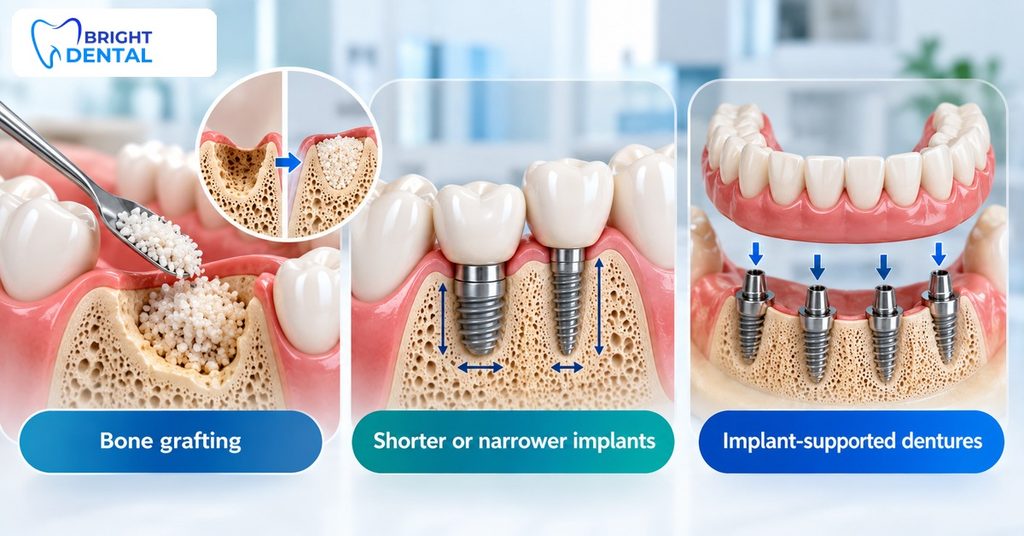
In many cases, yes. Bone loss doesn’t automatically disqualify someone from getting implants; it simply changes what the treatment plan looks like. Depending on how much bone has been lost, your dentist may recommend:
- Bone grafting, which adds bone material to rebuild volume in areas where it’s needed before implants are placed
- Shorter or narrower implants, designed to work with less available bone
- Implant-supported dentures, which use a smaller number of implants to anchor a removable or fixed denture, often requiring less bone than a full set of individual implants
- For patients considering dental implants after dentures, a detailed jawbone evaluation can help determine whether bone grafting or an alternative implant approach is appropriate.
A thorough evaluation, usually including a 3D scan of your jawbone, is the only reliable way to know which approach fits your situation.
Switching From Dentures to Implants: What the Process Looks Like
Switching from dentures to implants typically follows a similar overall process for most patients, regardless of how long they’ve worn dentures, though the initial evaluation phase tends to be more detailed for long-term wearers:
- Initial evaluation and imaging. Your dentist reviews your jawbone density and overall oral health using digital imaging to determine candidacy.
- Treatment planning. Based on your bone volume, your dentist recommends the appropriate implant approach, including whether bone grafting is needed first.
- Bone grafting, if needed. This step allows time for the grafted bone to heal and integrate before implants are placed.
- Implant placement. Implants are surgically positioned in the jawbone, where they’ll gradually fuse with the bone through a process called osseointegration.
- Healing period. This typically takes a few months, allowing the implants to become fully stable.
- Final restoration. Once healed, your implants are fitted with crowns, a bridge, or an implant-supported denture, depending on your treatment plan.
For additional information about implant treatment, explore the American Dental Association’s dental implant guide.
Ready to See If Dental Implants After Dentures Are Right for You in Wheeling?
If you’ve been wearing dentures for years and want to explore whether implants are a realistic option for you, an evaluation is the best place to start.
Implant-Supported Dentures: A Middle-Ground Option
For patients who have experienced significant bone loss or who prefer a less extensive procedure, implant supported dentures offer a middle ground between traditional dentures and a full set of individual implants. This approach uses a smaller number of implants to anchor a denture in place, significantly improving stability and chewing function compared to a traditional removable denture, without requiring as much bone as individual implants for every missing tooth. For people considering dental implants after dentures, understanding the differences between removable and fixed implant-supported restorations can help them discuss their preferences with their dentist. We cover the details of this option, along with candidacy considerations, on our implant-supported dentures options page.

For patients weighing a full-arch approach, our earlier comparison of dentures vs All-on-4 implants breaks down how each option compares in terms of comfort, stability, and long-term function. The transition to dental implants after dentures may also require some adjustments in daily oral care, depending on the type of restoration chosen.
What If You Don’t Have Enough Bone for Traditional Implants?
Patients who are told they don’t have enough bone for traditional implants aren’t necessarily out of options. In addition to bone grafting, some patients are candidates for mini implants, which use a narrower post and can often be placed with less bone volume than traditional implants require. Our guide comparing mini implants vs traditional options explains how each works and who tends to be a good fit for each approach.
Benefits of Switching From Dentures to Implants
Patients who make the switch from long-term denture wear to implants often notice several improvements, including:
- More stable, secure fit with no slipping while eating or speaking
- Improved chewing ability and a wider range of foods that are comfortable to eat
- Slower future bone loss, since implants help stimulate the jawbone the way natural tooth roots do
- Less reliance on denture adhesives
- A more natural look and feel compared to a removable denture
Is It Ever Too Late to Switch?
Many patients assume that after years of denture wear, too much time has passed to consider implants. While significant bone loss can make treatment more involved, it’s rarely an absolute barrier. With today’s bone grafting techniques, mini implants, and implant-supported denture options, many long-term denture wearers are still good candidates for a more permanent solution. The only way to know for certain is through a personalized evaluation. Choosing dental implants after dentures is a personal decision that should consider your comfort, lifestyle, and long-term oral health goals.
Final Thoughts
Wearing dentures for years doesn’t automatically mean implants are off the table. While bone loss is a real factor that needs to be evaluated, modern treatment options, from bone grafting to implant-supported dentures to mini implants, give many long-term denture wearers a realistic path toward a more stable, permanent solution. If you’re curious whether dental implants after dentures could work for you, the best next step is a thorough evaluation of your jawbone and overall oral health.

