
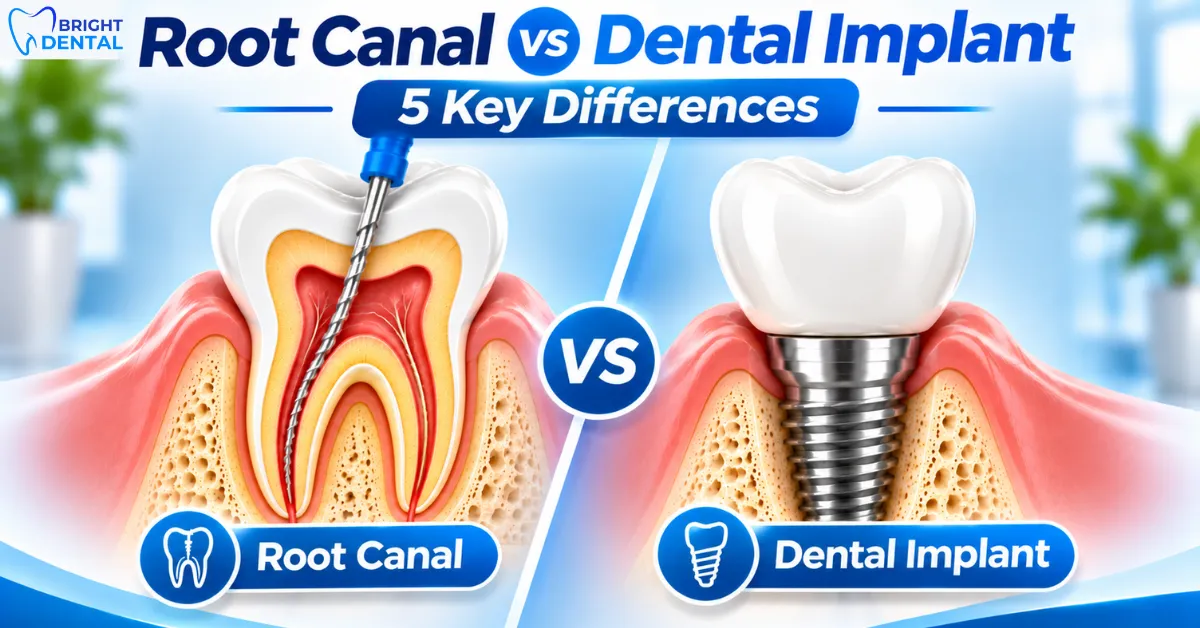

When a tooth becomes severely infected or damaged, choosing the right treatment is important. Should you save your natural tooth with a root canal or replace it with a dental implant?
Understanding root canal vs dental implant treatment can help you make an informed decision. Root canal therapy preserves a damaged tooth, while a dental implant replaces a missing or extracted tooth.
At Bright Dental in Des Plaines, Illinois, we help patients understand their treatment options. Here are five important differences to consider.
Quick Answer: Root Canal vs Dental Implant
Root canal vs dental implant treatment depends on whether your natural tooth can be saved.
A root canal is generally worth considering when the tooth can be predictably restored. It removes infected pulp while preserving the natural tooth.
A dental implant may be recommended when a tooth is missing or too severely damaged to save.
Neither treatment is universally better. Your dentist must evaluate tooth structure, bone support, gum health, and long-term prognosis.
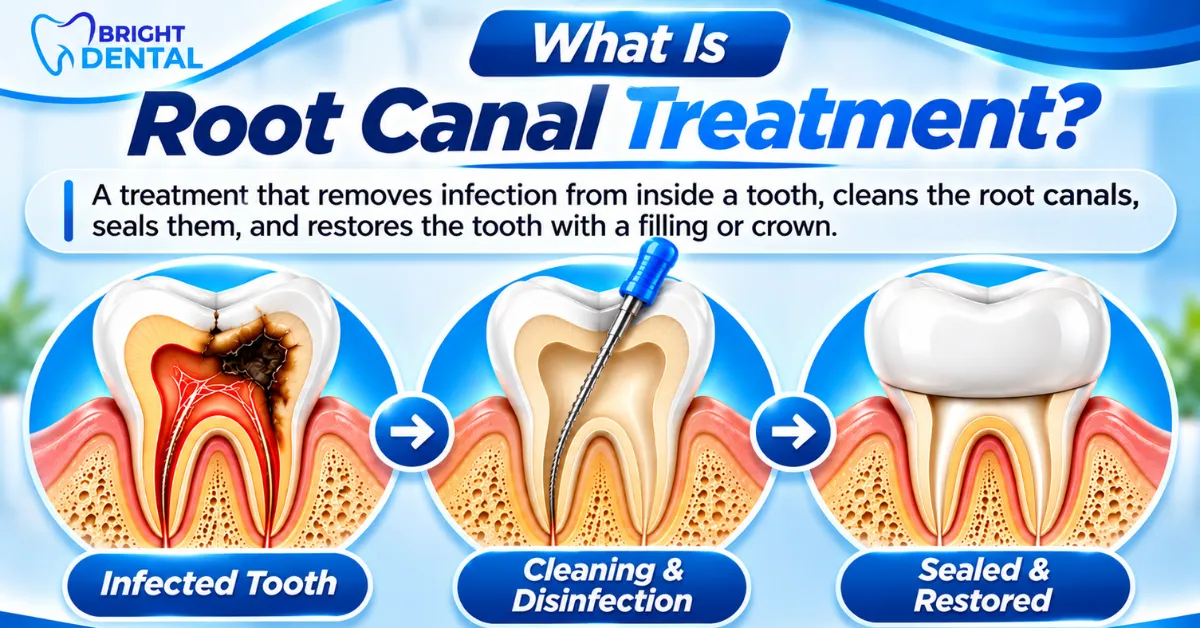
What Is Root Canal Treatment?
Root canal treatment removes infected or inflamed pulp from inside a tooth.
During the procedure, the dentist cleans and disinfects the root canals before sealing them. A filling or crown restores the tooth afterward.
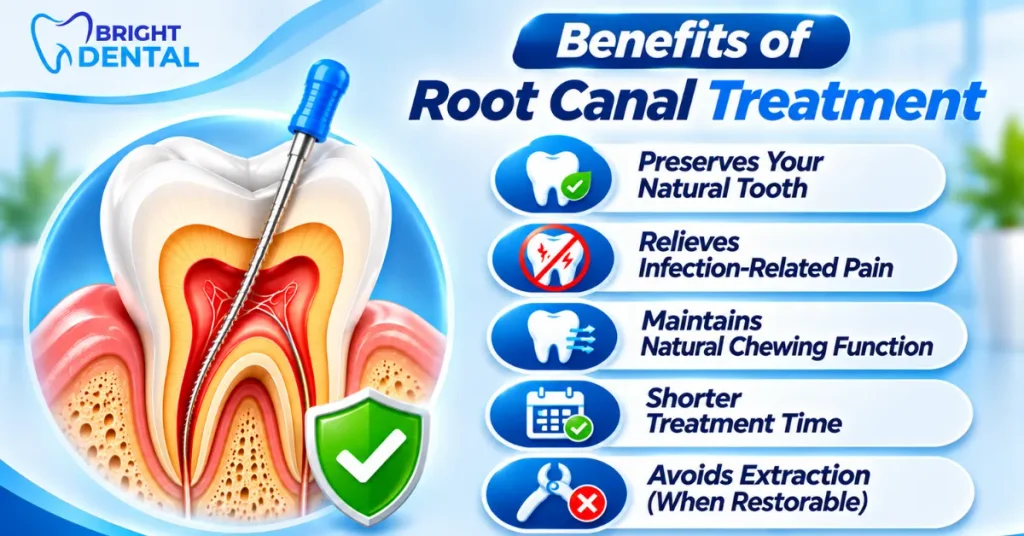
Benefits of Root Canal Treatment
- Preserves your natural tooth.
- Helps relieve infection-related pain.
- Maintains natural chewing function.
- Usually involves shorter overall treatment time.
- Avoids extraction when the tooth is restorable.
However, severe fractures or extensive structural damage may make tooth preservation impossible.
What Is a Dental Implant?
A dental implant is an artificial tooth root, commonly made from titanium, surgically placed into the jawbone.
The implant integrates with surrounding bone through a process called osseointegration. Once sufficiently healed, it supports a replacement crown.
Benefits of Dental Implants
- Replace missing or non-restorable teeth.
- Provide stable chewing support.
- Help maintain bone around the implant.
- Offer natural-looking tooth replacement.
- Avoid preparing neighboring healthy teeth in many cases.
Implants require surgery, adequate bone support, and regular maintenance.
Root Canal vs Dental Implant: 5 Key Differences
1. Saving a Natural Tooth vs Replacing It
The main difference between root canal vs dental implant treatment is tooth preservation.
A root canal keeps your existing tooth and natural root. This is generally preferable when the tooth has a reasonable long-term prognosis.
A dental implant replaces a tooth that cannot be saved or is already missing.
Extraction may become necessary when severe fractures, advanced decay, or insufficient tooth structure prevent successful restoration.
2. Procedure and Treatment Time
The root canal treatment vs dental implant process involves different steps.
Root canal treatment includes removing infected pulp, cleaning the canals, sealing them, and restoring the tooth. Some cases require one appointment, while others need additional visits.
Dental implant treatment may involve extraction, surgical placement, healing, and crown attachment.
Implant healing often takes several months, although timelines vary. In selected cases, immediate implant placement may be possible.
3. Pain and Recovery
Patients comparing root canal vs dental implant procedures often worry about pain.
Both treatments are generally performed under local anesthesia to minimize discomfort.
After a root canal, mild tenderness may last several days. Most patients return to normal activities relatively quickly.
Implant surgery may cause temporary swelling, soreness, or bruising. Initial recovery usually takes days, but bone integration requires longer.
Severe or worsening pain, fever, or increasing swelling should be evaluated promptly.
4. Cost and Affordability
When deciding whether to save tooth or get dental implant treatment, cost matters.
A root canal with a final restoration is often less expensive than extraction followed by implant placement and a crown.
Dental implant costs may include:
- Tooth extraction.
- Implant surgery.
- Bone grafting, when necessary.
- Abutment and crown.
- Follow-up appointments.
Actual costs depend on treatment complexity and insurance benefits.
Explore our dental implants cost guide for additional information.
5. Longevity and Maintenance
Both treatments can provide long-lasting results.
A properly restored root canal-treated tooth may function for decades with good oral hygiene and regular dental care.
Dental implants also have strong long-term survival outcomes, although crowns and other components may eventually need replacement.
Neither option guarantees lifetime success.
Natural teeth remain vulnerable to decay, fractures, and gum disease. Implants can develop inflammation, bone loss, or mechanical problems.
Read our guide on how long dental implants last.
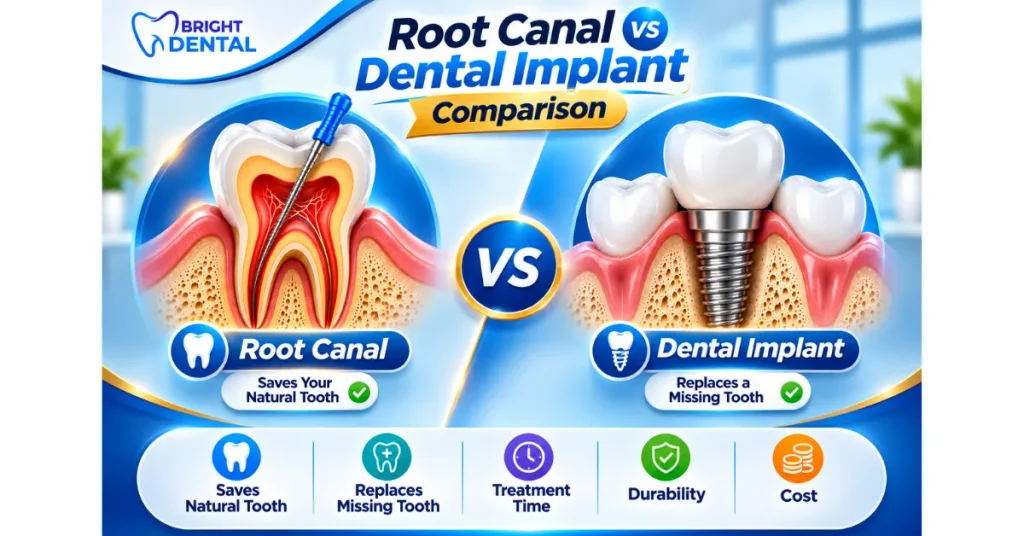
Root Canal vs Dental Implant: Comparison Table
| Feature | Root Canal | Dental Implant |
|---|---|---|
| Purpose | Save natural tooth | Replace missing tooth |
| Natural root | Preserved | Replaced |
| Surgery | Usually unnecessary | Required |
| Recovery | Usually shorter | Longer overall |
| Cost | Often lower | Often higher |
| Longevity | Potentially decades | Potentially decades |
| Maintenance | Oral hygiene and checkups | Implant cleaning and checkups |
Root Canal vs Tooth Extraction: When Is Extraction Needed?
The decision about root canal vs tooth extraction depends on whether the tooth can be restored successfully.
Extraction may be recommended for:
- Severe vertical root fractures.
- Extensive, non-restorable decay.
- Advanced periodontal damage.
- Insufficient remaining tooth structure.
- Teeth with an unfavorable long-term prognosis.
An unsuccessful previous root canal does not always require extraction. Retreatment or endodontic surgery may still be possible.
The American Association of Endodontists provides information about saving natural teeth and considering dental implants.
Can You Get a Dental Implant After a Root Canal?
Yes. A dental implant after root canal treatment may be appropriate if the previously treated tooth becomes impossible to preserve.
For example, a severe fracture or extensive damage may require extraction.
Your dentist will evaluate bone support, gum health, infection, and healing before recommending implant placement.
Some patients may require bone grafting or additional healing time.
Which Treatment Is Right for You?
Choosing between root canal vs dental implant treatment requires a professional examination.
Your dentist should consider:
- Tooth condition: Can the natural tooth be restored?
- Bone and gum health: Is there adequate support?
- Treatment time: How many appointments are needed?
- Cost: What is the complete treatment estimate?
- Long-term prognosis: Which option offers a predictable outcome?
If tooth preservation is uncertain, an endodontic evaluation may be helpful.
Why Choose Bright Dental?
At Bright Dental in Des Plaines, Illinois, Dr. Furrukh Ashraf brings over 25 years of dental experience to patient care.
Our team emphasizes careful examinations, patient education, and personalized treatment planning.
Whether you need an evaluation for tooth pain or are considering tooth replacement, we help you understand the available options before making a decision.
Frequently Asked Questions
1. Is a root canal better than a dental implant?
A root canal is generally worth considering when the natural tooth can be predictably saved. An implant may be suitable when preservation is no longer possible.
2. Which procedure is more painful?
Both treatments use local anesthesia. Implant surgery generally involves more extensive healing, although individual recovery experiences vary.
3. Is a dental implant more expensive?
Often, yes. Implant treatment may require extraction, surgery, and a replacement crown. Costs depend on individual needs.
4. How long does a root canal-treated tooth last?
A properly restored tooth may last for decades, but longevity depends on tooth structure, oral hygiene, and maintenance.
5. Can a failed root canal be replaced with an implant?
Yes, when the tooth cannot be saved and the patient is a suitable candidate for implant treatment.
Conclusion
The choice between root canal vs dental implant treatment depends on tooth condition, long-term prognosis, and individual needs.
Root canal therapy can preserve a restorable natural tooth, while dental implants offer a replacement when tooth preservation is no longer possible.
A professional examination helps determine the most appropriate treatment.
Schedule Your Consultation at Bright Dental
Experiencing tooth pain or considering dental implants?
Bright Dental welcomes patients from Des Plaines, Mount Prospect, Arlington Heights, Buffalo Grove, and Deerfield.
Our team can evaluate your oral health and discuss suitable treatment options.
This article is for educational purposes and does not replace professional dental advice.
Bright Dental II – Des Plaines
737 W Golf Rd, Des Plaines, IL 60016
Phone: +1 (847) 228-2000
