
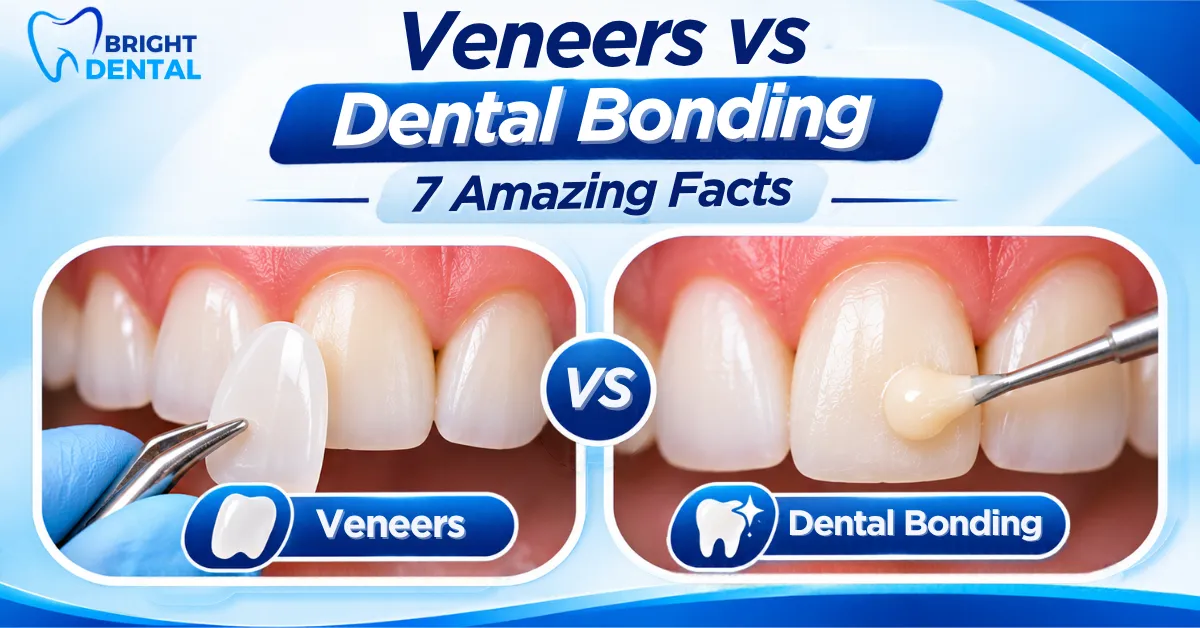

If you want to fix chipped, uneven, or discolored teeth, choosing between veneers vs dental bonding can feel confusing. Both treatments can improve your smile, but they differ in cost, appearance, durability, and tooth preparation.
At Bright Dental in Des Plaines, Illinois, we help patients explore cosmetic dental treatments based on their oral health and individual goals.
Quick Answer: Veneers vs Dental Bonding
Dental bonding uses tooth-colored composite resin to repair small chips, reshape teeth, or close minor gaps. It usually requires little or no enamel removal and can often be completed in one appointment.
Porcelain veneers are custom-made shells bonded to the front surfaces of teeth. They can address broader cosmetic concerns and generally offer better stain resistance, but they usually require enamel preparation.
The right option depends on your teeth, budget, and desired results.
1. How Do Veneers and Dental Bonding Work?
Understanding veneers vs dental bonding starts with how each treatment changes your teeth.
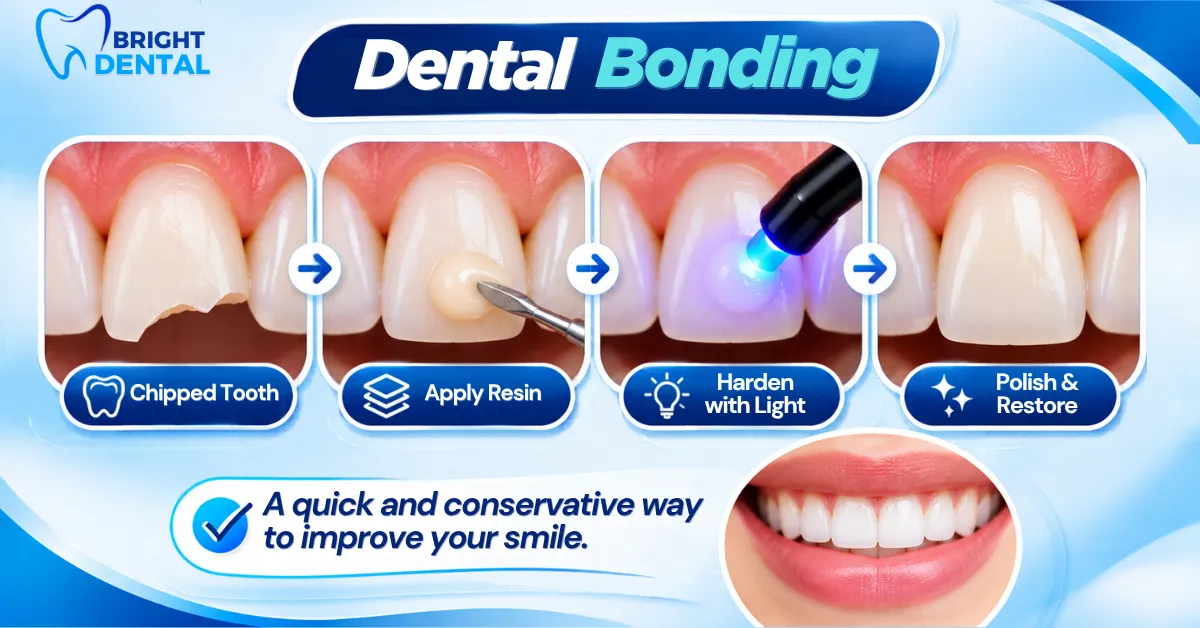
Dental Bonding
A dentist applies tooth-colored composite resin directly to the tooth, shapes it, hardens it with a curing light, and polishes the surface.
Bonding is commonly used for small cosmetic improvements without extensive tooth preparation.
Dental Veneers
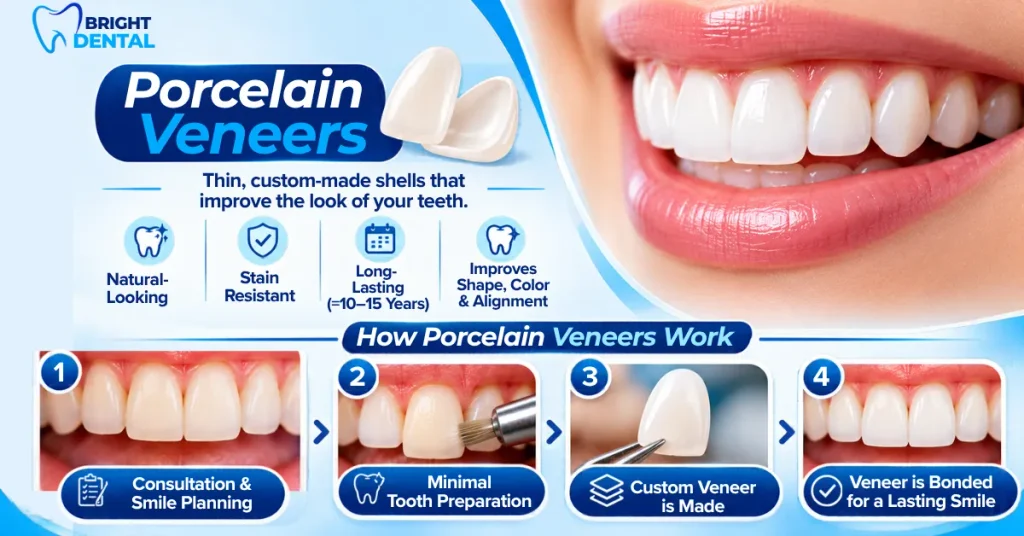
Veneers cover the visible front surface of a tooth. Porcelain veneers are usually custom-made, while composite veneers may be sculpted directly onto teeth.
Because composite veneers and dental bonding can use similar materials, the distinction often involves how much of the tooth is covered.
2. Which Treatment Costs Less?
When comparing dental bonding vs veneers cost, bonding generally has a lower initial price.
Porcelain veneers often cost more because they involve customized materials, fabrication, and additional planning.
However, the total expense depends on:
- Number of teeth treated.
- Treatment material.
- Complexity of the cosmetic concern.
- Additional dental work required.
- Future maintenance or replacement.
Bonding may be more affordable initially, but repairs and touch-ups can add to long-term expenses.
A consultation provides the most accurate estimate for your treatment.
For additional information about veneer pricing, visit our Dental Veneers 101: Cost, Types, and How Long They Last.
3. Which Option Looks More Natural?
Both treatments can produce natural-looking results when carefully planned.
When comparing porcelain veneers vs composite bonding, porcelain offers excellent translucency and stain resistance.
Composite bonding can also match natural tooth color, especially when repairing a small chip or adjusting one tooth.
However, composite resin may discolor or lose its polish over time.
The most suitable choice depends on your existing teeth and how much cosmetic change you want.
A professional consultation can help you compare veneers vs dental bonding and choose the treatment that best matches your natural smile.
4. How Long Do Veneers and Bonding Last?
Patients often ask, how long does dental bonding last compared with veneers?
Dental bonding commonly lasts several years before it needs polishing, repair, or replacement. Some restorations last longer, depending on their location and the forces placed on them.
Porcelain veneers often last approximately 10–15 years, although individual outcomes vary.
Neither treatment is guaranteed to last a specific number of years.
Factors affecting durability include:
- Teeth grinding or clenching.
- Biting hard objects.
- Oral hygiene.
- Restoration size and location.
- Regular dental checkups.
5. Which Treatment Requires More Tooth Preparation?
One of the most important differences in veneers vs dental bonding is how much natural tooth structure may need to be changed.
Bonding Usually Preserves More Enamel
Cosmetic bonding often requires little or no enamel removal, making it a more conservative option for suitable cases.
Traditional Veneers Usually Require Preparation
Porcelain veneers commonly involve removing a thin layer of enamel to create room for the restoration.
Since enamel cannot grow back, this preparation is generally irreversible.
The American Dental Association’s guide to dental veneers explains how veneer treatment works and why enamel preparation is an important consideration.
Learn more in our guide to Are Dental Veneers Permanent?.
Your dentist can explain whether a conservative approach is possible for your teeth.
6. Is Dental Bonding Better for Chipped Teeth?
Dental bonding for chipped teeth is often a suitable option when the damage is minor and enough healthy tooth structure remains.
A dentist can add composite resin to rebuild the missing area and blend it with the surrounding enamel.
Veneers may be considered when several front teeth need cosmetic changes or when discoloration, shape, and symmetry are concerns.
However, severe fractures, untreated decay, or significant bite problems may require other dental treatments.
The extent of damage should always be evaluated before choosing a cosmetic procedure.
7. Which Option Is Easier to Repair and Maintain?
Maintenance is another important factor when comparing veneers vs dental bonding.
Composite bonding is often easier to repair because a dentist may be able to add or reshape resin.
Porcelain veneers are more stain-resistant but may require replacement if they become significantly cracked or damaged.
Both treatments need proper daily care:
- Brush twice daily with fluoride toothpaste.
- Floss every day.
- Avoid chewing ice or hard objects.
- Wear a night guard if recommended.
- Attend regular dental examinations.
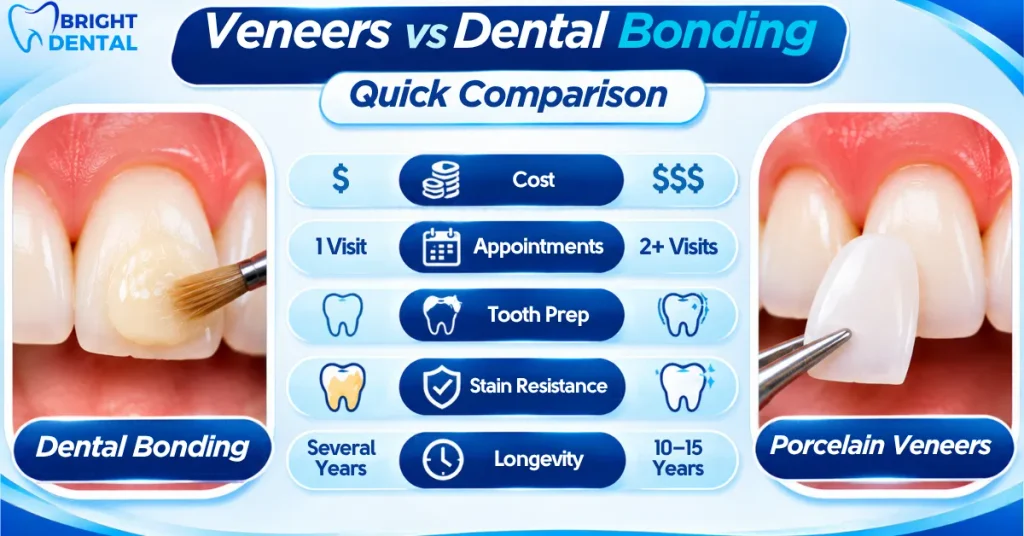
Veneers vs Dental Bonding: Quick Comparison
| Feature | Dental Bonding | Porcelain Veneers |
|---|---|---|
| Initial cost | Generally lower | Generally higher |
| Best suited for | Minor cosmetic repairs | Broader front-tooth improvements |
| Tooth preparation | Often minimal | Usually enamel removal |
| Appointments | Often one | Commonly two or more |
| Stain resistance | Lower | Higher |
| Repairs | Often easier | Replacement may be needed |
| Longevity | Several years; varies | Often 10–15 years; varies |
Which Treatment Is Right for Your Smile?
Choosing veneers vs dental bonding depends on your dental condition and cosmetic priorities.
Bonding may be worth considering if you want to repair a small chip, close a minor gap, or make a conservative improvement.
Porcelain veneers may be suitable if you want to improve the appearance of several front teeth and prefer a restoration with greater stain resistance.
Neither option is automatically better for everyone.
A dentist should examine your teeth, gums, and bite before recommending treatment.
Why Choose Bright Dental?
At Bright Dental in Des Plaines, we focus on personalized cosmetic dental care and informed treatment decisions.
Dr. Furrukh Ashraf and our dental team can assess your oral health, discuss cosmetic concerns, and explain the benefits and limitations of different treatment options.
Our goal is to help you understand your choices while preserving healthy tooth structure whenever possible.
Explore our Cosmetic Dentistry Services to learn more about smile-enhancement treatments.
Frequently Asked Questions
Is dental bonding cheaper than veneers?
Dental bonding generally has a lower initial cost than porcelain veneers. Actual pricing depends on the number of teeth and treatment complexity.
Can dental bonding look as natural as veneers?
Yes. Bonding can look natural when the resin is carefully matched and shaped. Porcelain veneers may offer greater stain resistance and translucency.
Does dental bonding damage natural teeth?
Bonding often requires little or no enamel removal. However, preparation varies, and professional assessment is necessary.
Can bonding be replaced with veneers later?
Sometimes. A dentist must evaluate the tooth structure and existing restoration before recommending veneers.
Which is better for small gaps between teeth?
Both may help with certain small gaps. The best treatment depends on the gap size, bite, and tooth alignment.
Conclusion
When comparing veneers vs dental bonding, the main differences involve cost, preparation, durability, appearance, and repair needs.
Dental bonding may be suitable for smaller cosmetic changes, while porcelain veneers can offer broader coverage and greater stain resistance.
The best choice depends on your natural teeth, oral health, and treatment goals.
Ready to Improve Your Smile?
Considering cosmetic treatment but unsure which option is right for you?
At Bright Dental in Des Plaines, Illinois, our team can evaluate your smile and discuss suitable treatment options.
We welcome patients from Des Plaines, Mount Prospect, Buffalo Grove, Wilmette, and Prospect Heights.
Bright Dental II – Des Plaines
737 W Golf Rd, Des Plaines, IL 60016, USA
Phone: +1 (847) 228-2000
