
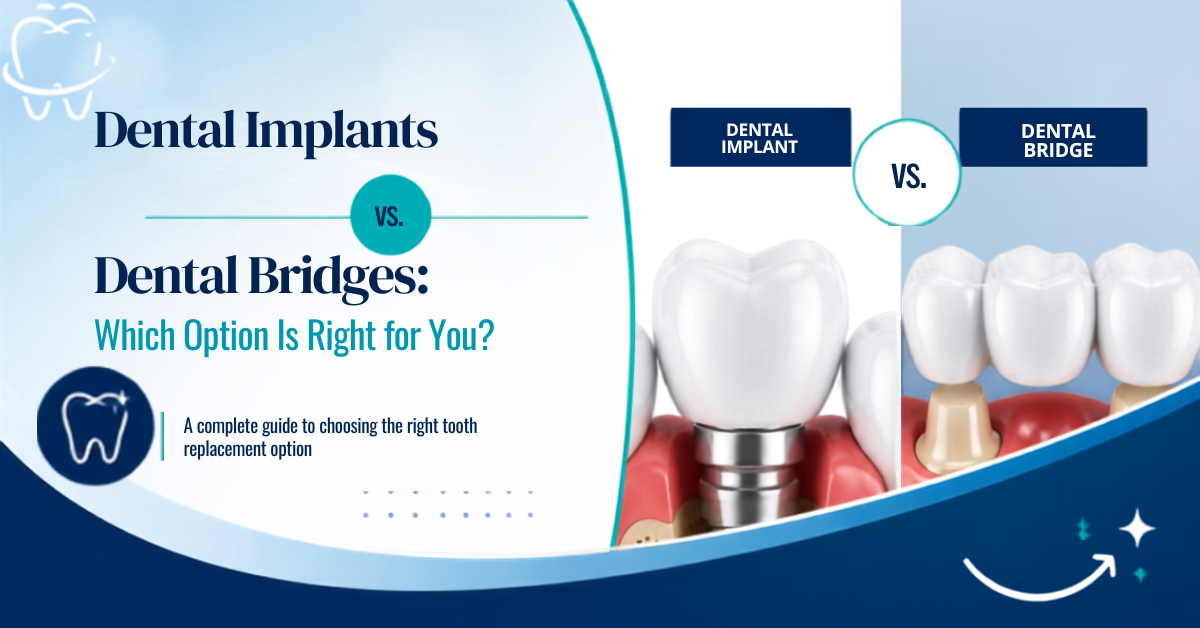

Losing a tooth, whether from decay, injury, or extraction, leaves you with an important decision to make about how to replace it. Two of the most common solutions are dental implants and dental bridges, and comparing dental implants vs dental bridges side by side is often the best way to figure out which option fits your situation.
At Bright Dental, we walk patients through this decision regularly, since both options can produce excellent results, but they work very differently and suit different circumstances. This guide breaks down how each option works, how they compare on cost and durability, and what typically makes one a better fit than the other.
How Dental Implants Work
A dental implant replaces both the visible crown of a missing tooth and its root. A titanium post is surgically placed into the jawbone, where it fuses with the bone over several months through a process called osseointegration. Once healed, a custom crown is attached to the implant, creating a replacement tooth that functions and looks very similar to a natural one.
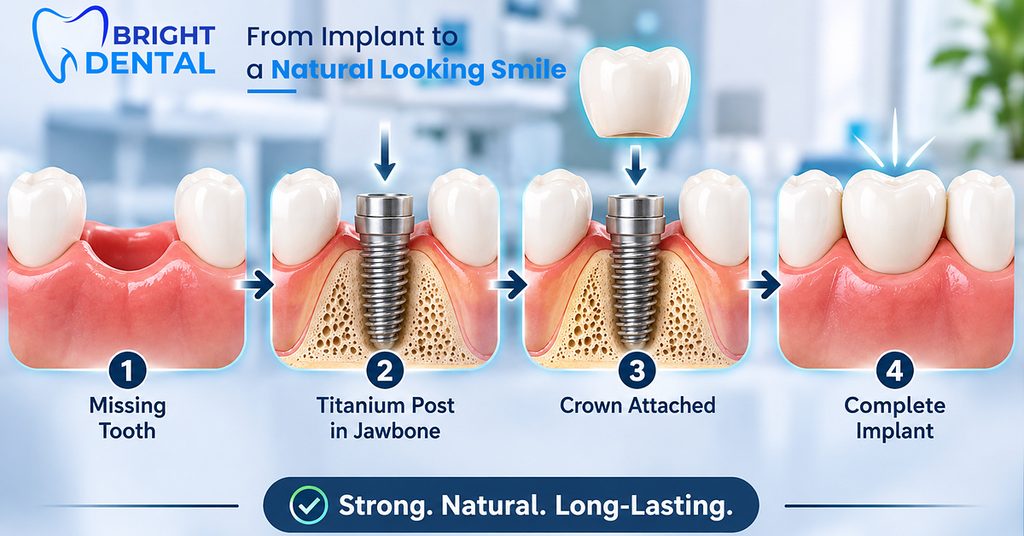
Because implants replace the tooth root, they also help maintain the jawbone’s natural density in that area, something that becomes especially relevant when comparing long-term outcomes between the two options.
How Dental Bridges Work
A dental bridge replaces one or more missing teeth by anchoring an artificial tooth, called a pontic, between two crowns placed on the natural teeth adjacent to the gap. Those adjacent teeth, called abutment teeth, need to be prepared and reshaped to support the crowns that hold the bridge in place. Once fitted, a bridge is a fixed restoration, meaning it isn’t removable and functions similarly to natural teeth for chewing and speaking. Understanding the structural differences between dental implants vs dental bridges can help patients ask more informed questions during their dental consultation.
Implant vs Bridge Comparison: Key Differences
When it comes to an implant vs bridge comparison, a few core differences tend to guide the decision:
- Impact on neighboring teeth. Implants stand independently and don’t require altering adjacent healthy teeth. Bridges require reshaping the abutment teeth on either side of the gap to support the crowns.
- Bone preservation. Because an implant replaces the tooth root, it helps stimulate and preserve jawbone density in that area. A bridge sits above the gum line and doesn’t provide this same stimulation, which means bone loss can continue in the area beneath a bridge over time.
- Procedure type. Implants require a minor surgical procedure and a healing period of several months. Bridges are a non-surgical, restorative procedure that can typically be completed in two visits over a few weeks.
- Longevity. With proper care, implants often last decades, in many cases a lifetime. Bridges typically last 10 to 15 years, though this varies based on oral hygiene and the health of the abutment teeth.
- Candidacy requirements. Implants require sufficient jawbone density to support the post; patients with significant bone loss may need bone grafting first. Bridges require the adjacent teeth to be healthy and strong enough to support crowns.
Bridge vs Implant Cost: What to Know
Bridge vs implant cost is one of the most common factors patients weigh when comparing the two options. In general, dental bridges tend to have a lower upfront cost than implants, since the procedure is less involved and doesn’t require a surgical placement or a separate healing period before the final restoration.
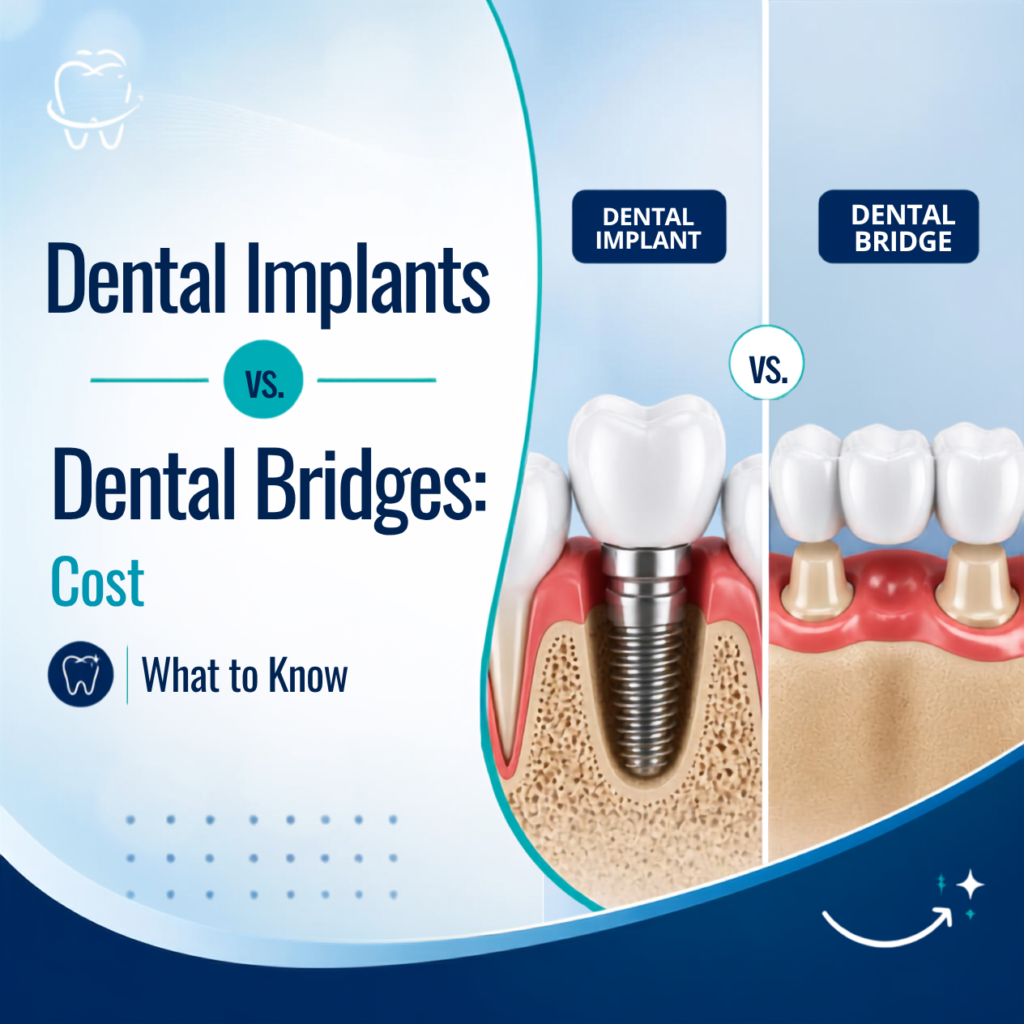
Implants typically involve a higher upfront investment due to the surgical component, the implant post itself, and the healing time required before the final crown is placed. However, because implants often last significantly longer than bridges, and bridges may eventually need replacement or repair, the overall cost over a patient’s lifetime can look different than the upfront price alone suggests. Your dentist can walk you through a personalized cost estimate for both options based on your specific case. When comparing dental implants vs dental bridges, the total cost depends on the treatment complexity, materials used, and long-term maintenance needs.
Ready to Compare Your Options Near Winnetka and Lincolnshire?
Every case is different, and the right choice between implants and bridges depends on your specific tooth, bone health, and goals. Our team welcomes patients from Des Plaines, Prospect Heights, Winnetka and Lincolnshire to schedule a personalized consultation.
Book a Tooth Replacement Consultation Near Winnetka and Lincolnshire
Pros and Cons of Dental Bridges
Weighing the pros and cons of dental bridges can help clarify whether this option fits your situation:
Pros:
- Lower upfront cost compared to implants
- No surgical procedure required
- Shorter overall treatment timeline, often completed within a few weeks
- Well-established, reliable option with decades of clinical use
Cons:
- Requires reshaping and permanently altering the adjacent healthy teeth
- Doesn’t prevent bone loss in the area of the missing tooth
- Typically needs replacement after 10 to 15 years
- Abutment teeth can be more vulnerable to future decay or damage due to the crown preparation
Pros and Cons of Dental Implants
Implants come with their own set of trade-offs to consider:
Pros:
- Doesn’t require altering or affecting neighboring healthy teeth
- Helps preserve jawbone density over time
- Can last decades with proper care
- Functions and feels very similar to a natural tooth
Cons:
- Higher upfront cost compared to bridges
- Requires a surgical procedure and a healing period of several months
- Requires adequate jawbone density, which may mean additional treatment like bone grafting for some patients
- Longer overall treatment timeline from start to finish
For more information about dental implants and their benefits, explore the American Dental Association’s dental implant guide.
What’s the Best Option for a Missing Tooth in Your Case?
Determining the best option for a missing tooth really comes down to a few personal factors: the condition of your jawbone, whether your neighboring teeth are already healthy or already compromised, your budget and timeline, and your long-term goals for the tooth. Patients with strong, healthy adjacent teeth and a shorter timeline in mind sometimes lean toward a bridge, while patients focused on long-term bone health and a more permanent solution often lean toward an implant. A personalized evaluation, including an exam and imaging, is the only reliable way to know which option truly fits your specific tooth and bite.
When a Bridge Might Be the Better Choice
A bridge may be a better fit if your adjacent teeth already have large fillings or crowns, since preparing them for a bridge causes less additional impact than it would on otherwise healthy teeth. Bridges can also be a good option for patients who aren’t candidates for implant surgery due to certain health conditions, or those looking for a faster overall treatment timeline. Our detailed look at the cosmetic benefits of dental bridges covers how modern bridges are designed to blend seamlessly with your smile.
When an Implant Might Be the Better Choice
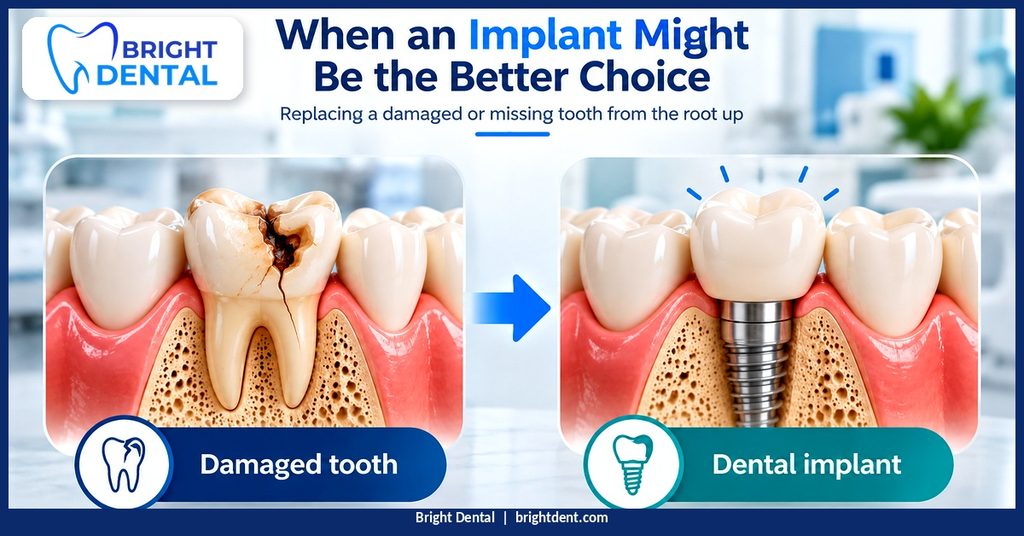
An implant is often the stronger long-term choice for patients with healthy adjacent teeth that shouldn’t be altered unnecessarily, and for those prioritizing bone preservation and long-term durability over a lower upfront cost. For patients missing several teeth in one area, an implant-supported bridge option can combine some of the stability benefits of implants with a bridge-style restoration, offering a middle ground worth discussing with your dentist.
For patients missing several teeth in a row, an implant-supported bridge may be a suitable fixed replacement option. Learn more about the procedure, its benefits, and what to expect in our complete guide to implant-supported bridges. When considering dental implants vs dental bridges, patients should also discuss their jawbone health and treatment expectations with their dentist.
Tooth Replacement Options at Bright Dental
Bright Dental offers a full range of tooth replacement options, including both dental implants and dental bridges, for patients throughout the Des Plaines area and nearby communities including Winnetka and Lincolnshire. You can learn more about our full range of dental implants in Des Plaines to see how implant treatment is structured from consultation through final restoration.
Final Thoughts
There’s no universally “better” choice between dental implants and dental bridges; the right option depends on your bone health, the condition of your neighboring teeth, your budget, and how important long-term bone preservation is to you. Bridges offer a faster, more affordable path to replacing a missing tooth, while implants offer superior long-term durability and better protection for your overall oral health. A personalized consultation is the best way to weigh implant vs bridge comparison factors specific to your case and find the option that’s truly right for you. Choosing between dental implants vs dental bridges depends on your oral health, budget, and long-term tooth replacement goals.

