
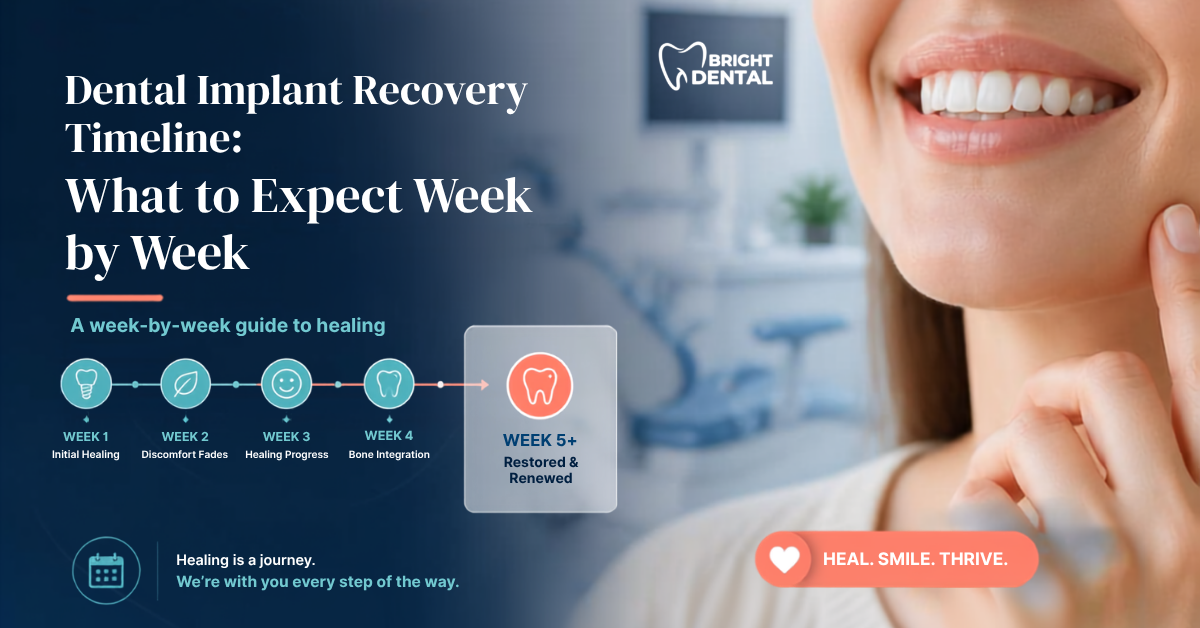

Once you’ve decided to move forward with dental implants, it’s natural to want a clear picture of what recovery actually looks like. Understanding the dental implant recovery timeline can help you plan your schedule, set realistic expectations, and know which symptoms are a normal part of healing versus something worth calling your dentist about.
At Bright Dental, we walk every implant patient through what to expect at each stage of recovery, since the implant healing process isn’t a single event but a series of steps that unfold over several months. Here’s a week-by-week breakdown of what most patients experience.
Days 1 to 3: The Initial Healing Phase
The first few days after implant placement are typically the most noticeable in terms of discomfort. During this window, it’s common to experience:
- Swelling around the surgical site, which often peaks around day two or three
- Mild to moderate soreness, generally manageable with prescribed or over-the-counter pain relief
- Some minor bleeding or oozing, which should taper off within the first day
- Bruising on the face or gums in some patients
Swelling after dental implant surgery is one of the most common concerns patients ask about, and it’s a normal part of your body’s healing response rather than a sign that something is wrong. Applying a cold compress in short intervals during the first 24 hours can help keep swelling manageable.
Days 4 to 7: Early Recovery Continues
By the end of the first week, most patients notice swelling and bruising beginning to subside. Soreness typically continues to improve day by day, and many patients feel comfortable returning to work or normal daily activities within a few days, depending on the extent of the procedure and their job’s physical demands.
During this stage of dental implant recovery days, it’s important to continue following your aftercare instructions closely, since the surgical site is still healing on the surface even though initial pain and swelling are decreasing.
Ready to Start Your Implant Journey Near Northbrook?
If you’re considering implants and want a clear picture of what recovery will look like for your specific case, our Northbrook-area patients can schedule a consultation to get started.
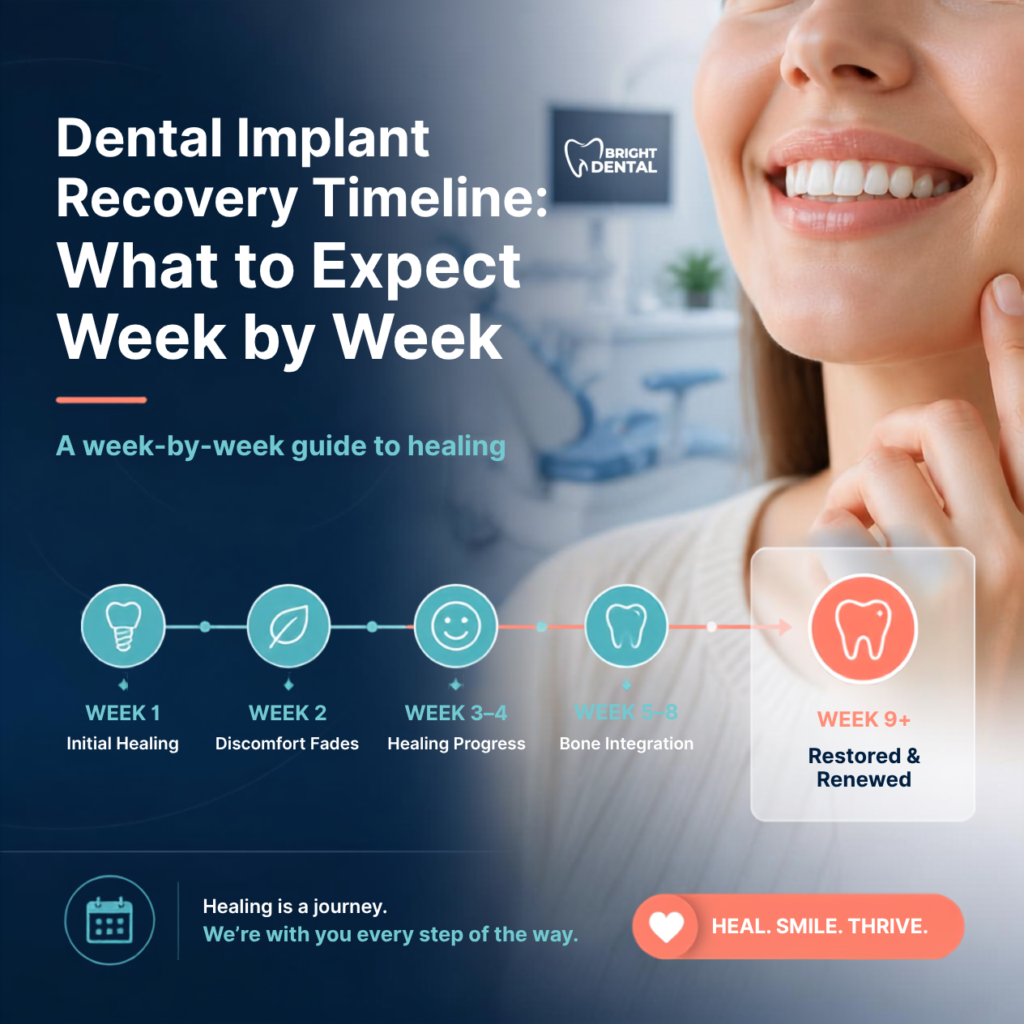
Week 2: Surface Healing Progresses
By the second week, most of the visible swelling and bruising has resolved for the majority of patients. Any stitches, if used, are often removed or begin to dissolve around this time, depending on the type used. While the surface tissue is healing well by this point, it’s important to remember that the implant itself is still in a much earlier stage of fusing with the jawbone beneath the gum line.
Weeks 3 to 4: Soft Tissue Healing Completes
By the end of the first month, the soft tissue around the implant site has typically healed on the surface, and most patients feel back to their normal routine with little to no discomfort. This doesn’t mean the implant is fully integrated yet. Beneath the surface, a much slower process is still underway.
Months 2 to 3: Osseointegration Takes Place
This stage is where the real work of healing happens, even though it’s largely invisible day to day. Osseointegration, the process by which the implant fuses directly with the surrounding jawbone, generally continues over the course of several months. This is the single most important factor in how long implants take to heal, since the implant needs a stable, fully integrated bond with the bone before it can support a permanent crown.
Our detailed look at osseointegration and implant healing explains the biological process in more depth and why patience during this stage matters so much for long-term implant success.
Months 3 to 6: Final Healing and Restoration
For most patients, osseointegration is complete somewhere between three and six months after placement, though this can vary based on factors like bone density, overall health, and whether bone grafting was needed as part of the treatment plan. Once your dentist confirms the implant is fully integrated, usually through a follow-up exam and imaging, the final restoration, typically a custom crown, is placed on top of the implant, completing the process.
Factors That Can Affect Your Personal Recovery Timeline
While the stages above reflect a general dental implant recovery timeline, individual healing varies based on several factors:
- Bone density and quality, which affects how quickly and securely the implant integrates
- Whether bone grafting was required, which can add several months to the overall timeline
- Overall health conditions, such as diabetes or smoking, which can slow healing
- Number of implants placed, since a single implant generally heals faster than multiple implants or a full-arch restoration
- How closely aftercare instructions are followed during the initial recovery period
Dental Implant Aftercare Tips for a Smoother Recovery
Following your dentist’s aftercare instructions closely plays a significant role in how comfortable and successful your recovery is. General dental implant aftercare tips include:
- Stick to soft foods for the first several days, gradually reintroducing firmer foods as advised
- Avoid smoking, which significantly slows healing and increases the risk of implant complications
- Keep the surgical area clean by gently rinsing as instructed, without disturbing the site
- Avoid strenuous exercise for the first few days to reduce swelling and bleeding
- Take any prescribed medications as directed, including antibiotics if given
- Attend all follow-up appointments so your dentist can monitor healing progress
When to Contact Your Dentist During Recovery
While some swelling, soreness, and minor bleeding are expected, certain symptoms warrant a call to your dentist, including:
- Swelling that worsens significantly after the first few days rather than improving
- Fever or signs of infection
- Persistent or worsening pain that isn’t managed by prescribed medication
- Any signs that the implant feels loose or unstable
Catching potential issues early is one of the best ways to protect your investment and keep your recovery on track.
Life After Full Healing
Once osseointegration is complete and your final restoration is in place, day-to-day care for an implant looks very similar to caring for a natural tooth: regular brushing, flossing, and routine dental visits. Our guide on daily care for implants covers the specific habits that help protect your implant’s longevity well beyond the initial recovery period.
If you’re also considering dental implants in Des Plaines for multiple missing teeth or a full-arch restoration, keep in mind that timelines can look somewhat different for more complex cases, and your dentist can walk you through a personalized schedule during your consultation.
Final Thoughts
The dental implant recovery timeline unfolds in stages: an initial healing period marked by swelling and soreness, followed by weeks of surface healing, and then several months of osseointegration happening beneath the gum line before your final restoration is placed. While every patient’s timeline looks a little different depending on their individual health and treatment plan, understanding these general stages can help you know what’s normal and feel more confident throughout the process. If you have questions about your specific recovery expectations, your dental team is the best resource for a personalized timeline.

