
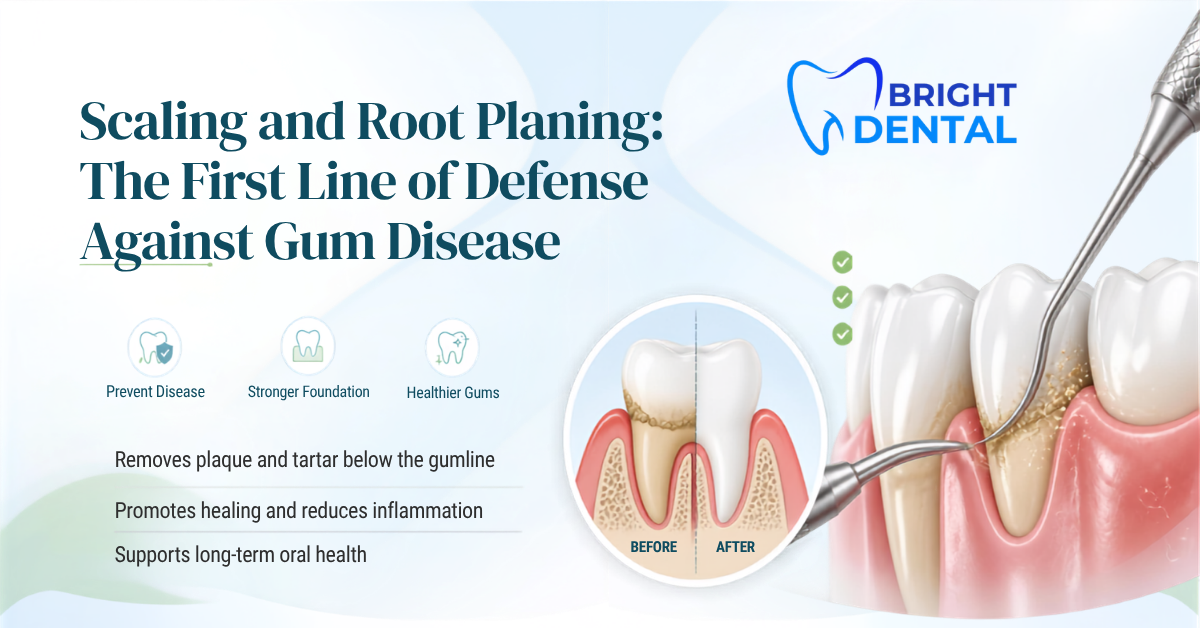

Gum disease can develop gradually, sometimes without causing significant pain in its early stages. Bleeding while brushing, swollen gums, persistent bad breath, gum recession, or changes around the teeth can all be signs that something is wrong. When plaque and hardened tartar build up below the gumline, a routine dental cleaning may not be enough to address the problem.
This is where scaling and root planing can play an important role.
Often called a deep cleaning, scaling and root planing is a non-surgical periodontal treatment designed to remove plaque and tartar from areas below the gumline and clean the tooth roots. The treatment may be recommended when gum disease has progressed beyond the stage that can be managed with routine preventive cleaning alone.
For patients looking for gum disease treatment in Des Plaines, understanding what this procedure involves can make the treatment process feel much more manageable.
What Is Scaling and Root Planing?
Scaling and root planing is a professional periodontal cleaning that focuses on the areas around and beneath the gums.
The treatment has two main components:
Scaling
Scaling involves removing plaque and hardened tartar, also called calculus, from tooth surfaces. When gum disease is present, buildup can extend below the gumline into periodontal pockets where normal brushing and flossing cannot adequately reach.
Dental professionals use specialized instruments to carefully remove these deposits from the affected areas.
Root Planing
Root planing focuses on the exposed root surfaces of the teeth. These surfaces can become roughened or contaminated by bacterial buildup when periodontal disease progresses.
During root planing, the root surfaces are carefully cleaned and smoothed. This creates a cleaner environment around the teeth and can support healthier gum tissue.
Bright Dental describes scaling and root planing as a non-surgical treatment that targets plaque and tartar both above and below the gumline.
How Does Gum Disease Develop?
Gum disease typically begins with plaque, a bacterial film that forms continuously on the teeth.
When plaque is not effectively removed, it can harden into tartar. Tartar cannot be completely removed with ordinary brushing and flossing, which is why professional dental care is important.
The progression may look like this:
- Plaque accumulates around the gumline.
- Gums become irritated and inflamed.
- Gingivitis develops, often causing redness or bleeding.
- Without appropriate care, inflammation can progress into periodontitis.
- Periodontal pockets can develop between the teeth and gums.
- These pockets can provide additional space for bacteria and buildup.
- Advanced disease can affect the tissues and bone supporting the teeth.
Not everyone progresses through these stages in exactly the same way. Your dentist must evaluate your gums, periodontal pockets, dental history, and other risk factors to determine the appropriate treatment.
Bright Dental’s periodontal information notes that gum disease can cause symptoms such as bleeding, swollen or tender gums, persistent bad breath, gum recession, pus, loose teeth, and changes in the way teeth fit together.
Signs You May Need Gum Disease Treatment
Gum disease does not always cause obvious discomfort. That makes regular dental examinations especially important.
You should consider scheduling a dental evaluation if you notice:
- Gums that bleed during brushing or flossing
- Red, swollen, or tender gums
- Persistent bad breath
- Gums pulling away from the teeth
- Increased tooth sensitivity
- Pus around the gums
- Teeth that feel loose
- Changes in your bite
- Increasing spaces between teeth
- A noticeable change in the appearance of your gums
Some symptoms can have causes other than periodontal disease, so they should not be treated as a diagnosis. A dental professional can examine your gums and determine whether periodontal treatment is appropriate.
For patients considering dental services in Des Plaines, an evaluation can help identify gum problems before they become more difficult to manage.
Scaling and Root Planing vs. Regular Dental Cleaning
One of the most common questions patients have is the difference between a routine cleaning and periodontal deep cleaning.
The distinction is primarily where and why the cleaning is performed.
Regular Dental Cleaning
A routine cleaning, also called prophylaxis, is generally intended for maintaining healthy gums and teeth. It focuses on removing plaque, tartar, and stains from accessible tooth surfaces as part of preventive dental care.
Scaling and Root Planing
Scaling and root planing is designed for patients who have periodontal concerns requiring treatment below the gumline.
It may involve cleaning:
- Above the gumline
- Below the gumline
- Within periodontal pockets
- Along affected root surfaces
This is why the deep cleaning vs regular cleaning distinction matters. A deep cleaning is not simply a more thorough version of an ordinary cleaning; it is a periodontal treatment performed when clinical findings indicate that deeper cleaning is necessary.
Bright Dental lists both routine dental cleanings and Deep Cleaning / Scaling & Root Planing as separate services, reflecting their different purposes.
What Does “Deep Cleaning Teeth” Actually Mean?
When patients search for deep cleaning teeth, they are usually referring to scaling and root planing.
The term “deep cleaning” can sound intimidating, but it simply describes professional cleaning of areas that extend deeper around the teeth and beneath the gumline.
The goal is not to make the procedure more aggressive than necessary. Instead, treatment is focused on areas where plaque, tartar, and bacterial contamination have accumulated and cannot be adequately managed with routine home care.
The exact extent of treatment depends on your periodontal condition.
What Happens During Scaling and Root Planing?
Your dentist or periodontal care provider will first evaluate your gum health and determine which areas require treatment.
Depending on your individual needs, the process may include:
1. Periodontal Evaluation
Your gums are examined for inflammation, recession, pocketing, bleeding, and other signs of periodontal disease.
Dental X-rays may also be used when appropriate to evaluate the supporting structures around the teeth.
2. Local Anesthetic
Because scaling and root planing involves cleaning below the gumline, local anesthesia may be used to improve comfort.
3. Scaling
Plaque and tartar are carefully removed from the affected tooth surfaces, including areas beneath the gums.
4. Root Planing
The root surfaces are cleaned and smoothed to create a healthier environment around the teeth.
5. Follow-Up Evaluation
Your dentist may recommend a follow-up appointment to assess how your gums are responding and determine whether additional periodontal care or maintenance is appropriate.
Bright Dental notes that scaling and root planing may be performed in sections of the mouth and may require one or more visits depending on the patient’s needs.
Is Scaling and Root Planing Painful?
Many patients worry that deep cleaning will be painful.
Because the treatment involves the areas beneath the gums, local anesthesia can be used to help keep you comfortable during the procedure. After treatment, it is possible to experience temporary tenderness, gum sensitivity, or other mild discomfort.
Your experience can vary depending on the condition of your gums, the extent of treatment, and your individual sensitivity.
If you are particularly anxious about dental treatment, tell your dental team before the procedure. They can explain the process and discuss appropriate comfort measures.
How Long Does Scaling and Root Planing Take?
There is no single treatment time that applies to every patient.
The length of an appointment depends on factors such as:
- The number of teeth being treated
- The number and depth of periodontal pockets
- The amount of tartar present
- Whether the treatment is divided into sections
- Your overall periodontal condition
Some patients may complete treatment in one appointment, while others may need multiple visits. Bright Dental’s periodontal information notes that treatment may be divided into sections or quadrants based on individual needs.
What Should You Expect After Deep Cleaning?
Your gums need time to recover after scaling and root planing.
You may notice temporary:
- Gum tenderness
- Increased sensitivity
- Mild bleeding
- Sensitivity to hot or cold
- Changes in how the teeth feel as inflammation decreases
Your dental professional will provide personalized aftercare instructions.
Common recommendations may include maintaining careful oral hygiene, following any prescribed instructions, and avoiding anything your dental team specifically advises against during the initial healing period.
If sensitivity or discomfort seems unusually severe or does not improve as expected, contact your dental office for guidance.
When Is Gum Disease Treatment Necessary?
Treatment decisions should be based on a professional periodontal evaluation rather than symptoms alone.
Scaling and root planing may be considered when periodontal disease has created areas below the gumline that cannot be adequately treated with routine cleaning.
For patients with more advanced disease, scaling and root planing may be one part of a broader treatment plan. Depending on the findings, additional periodontal therapies may sometimes be considered.
Bright Dental’s periodontal treatment information explains that non-surgical treatment is commonly used as an initial approach, while more advanced cases may require additional procedures when deep pockets or significant tissue and bone damage remain.
If you want to understand the broader treatment process, Bright Dental’s guide to periodontitis treatment options explains how periodontal care can progress from non-surgical treatment to more advanced options when necessary.
Ready to Have Your Gums Evaluated?
If you have bleeding gums, persistent bad breath, gum recession, or have been told you may need a deep cleaning, a professional evaluation can help determine what is happening and which treatment is appropriate.
What Can Happen If Gum Disease Is Left Untreated?
Gum disease should not be ignored simply because it is not painful.
As periodontal disease progresses, inflammation and infection can affect the tissues supporting the teeth. Advanced disease can contribute to gum recession, periodontal pocketing, bone loss, tooth mobility, and eventually tooth loss.
The earlier the condition is identified, the more opportunity your dental team has to develop an appropriate treatment and maintenance plan.
Bright Dental’s educational materials emphasize that periodontal disease can affect the gums and bone supporting the teeth and may eventually contribute to tooth loss when left untreated.
Benefits of Periodontal Deep Cleaning
When scaling and root planing is clinically appropriate, treatment can provide several important benefits.
Removes Hard-to-Reach Buildup
Professional instruments allow dental professionals to reach areas below the gumline that cannot be adequately cleaned with a toothbrush.
Helps Control Gum Inflammation
Removing plaque and tartar from periodontal pockets can support improved gum health when combined with appropriate home care and follow-up treatment.
Creates a Cleaner Root Surface
Root planing smooths affected root surfaces, helping create an environment that is easier to maintain.
Supports Long-Term Periodontal Care
Scaling and root planing is not necessarily the end of periodontal treatment. Depending on your condition, follow-up periodontal maintenance may be recommended to help monitor your gums and control future buildup.
Why Follow-Up Care Matters
Treating gum disease is not simply about completing one deep cleaning appointment.
Periodontal disease requires ongoing attention because plaque continues to form every day.
Your long-term plan may include:
- Brushing twice daily
- Cleaning between the teeth every day
- Professional periodontal maintenance
- Monitoring gum pocket measurements
- Regular dental examinations
- Following personalized home-care recommendations
Bright Dental recommends ongoing periodontal maintenance after active periodontal treatment, with the frequency determined according to the patient’s individual needs.
For a deeper look at periodontal treatment and diagnosis, you can also explore Bright Dental’s guide to periodontitis treatment, which covers symptoms, diagnosis, non-surgical treatment, and additional options for more advanced disease.
How Regular Dental Visits Help Prevent Gum Disease
Preventive dental visits give your dental team an opportunity to identify changes before they become more serious.
During routine care, your dentist can assess your teeth and gums, identify plaque and tartar buildup, monitor areas of concern, and provide recommendations for improving your home-care routine.
Professional cleaning is also important because tartar cannot simply be brushed away once it has hardened.
Regular visits do not guarantee that gum disease will never develop, but they are an important part of maintaining oral health and identifying problems early.
Choosing Periodontal Care in Des Plaines
If you live in Des Plaines and are experiencing signs of gum disease, choosing a dental practice with periodontal treatment options can make it easier to receive evaluation and ongoing care in one location.
Bright Dental provides periodontal services in Des Plaines, including scaling and root planing, periodontal maintenance, laser-assisted gum therapy, and other periodontal treatments.
Patients searching for a dentist near Mount Prospect or dental services near Mount Prospect may also consider Bright Dental in nearby Des Plaines for comprehensive dental and periodontal care.
The most important factor is finding care that is appropriate for your individual condition rather than choosing treatment based solely on a symptom or online search.
When Should You See a Dentist?
Do not wait for severe pain before seeking dental advice.
Schedule an evaluation if you notice:
- Bleeding that repeatedly occurs when brushing or flossing
- Persistent gum swelling or redness
- Ongoing bad breath
- Receding gums
- Tooth sensitivity that concerns you
- Loose or shifting teeth
- Pus around the gums
- Changes in your bite
- A previous diagnosis of gum disease
A dentist can determine whether these symptoms are related to periodontal disease and whether scaling and root planing or another treatment is appropriate.
Protect Your Gums Before Problems Progress
Scaling and root planing can be an important first step in managing periodontal disease when plaque and tartar have accumulated below the gumline. Unlike a regular dental cleaning, it is designed to address areas affected by periodontal disease and clean deeper around the teeth.
The best treatment depends on your individual oral health. Some patients may need scaling and root planing, while others may require preventive care, periodontal maintenance, or additional treatment based on the severity of their condition.
If you are experiencing signs of gum disease or have been advised that you need a deep cleaning, don’t ignore the recommendation. An evaluation can help you understand your gum health and determine the next appropriate step.
For patients seeking gum disease treatment in Des Plaines, Bright Dental offers comprehensive periodontal care focused on protecting the health and support of your natural teeth.

