

Sleep-related breathing disorders can affect more than your energy levels. Some people also experience nighttime grinding, dry mouth, jaw discomfort, and changes in oral health.
Understanding sleep apnea and teeth can help patients recognize possible warning signs and seek professional advice.
At Bright Dental in Des Plaines, dental examinations help identify oral concerns that may require treatment or further medical evaluation.
This guide explains seven dental warning signs, treatment options, and practical prevention tips.
Quick Answer: Can Sleep Disorders Affect Oral Health?
Yes. Obstructive sleep apnea may occur alongside nighttime grinding, persistent mouth dryness, and jaw discomfort.
However, these symptoms have several possible causes. They do not automatically indicate a breathing disorder.
Dentists can identify oral warning signs, while qualified medical professionals diagnose sleep-related breathing conditions through appropriate testing.
What Is Obstructive Sleep Apnea?
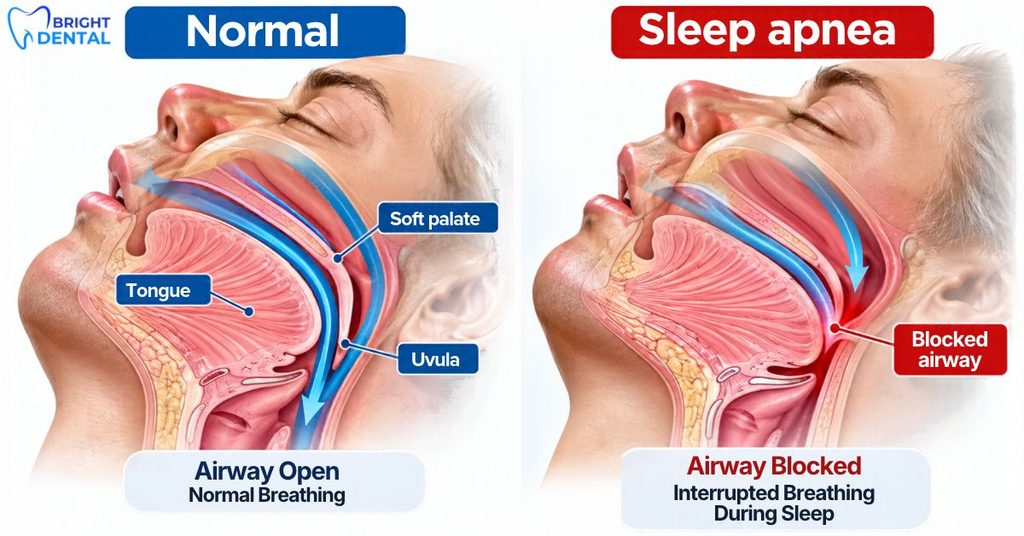
Obstructive sleep apnea (OSA) occurs when upper airway tissues repeatedly restrict airflow during sleep.
These interruptions may reduce sleep quality and contribute to daytime fatigue.
Common symptoms include:
- Loud, frequent snoring
- Gasping or choking during sleep
- Excessive daytime sleepiness
- Morning headaches
- Difficulty concentrating
- Unrefreshing sleep
Untreated OSA is associated with cardiovascular and other health risks.
Understanding the relationship between sleep apnea and teeth may encourage patients to discuss both dental symptoms and sleep quality with healthcare professionals.
7 Important Dental Warning Signs
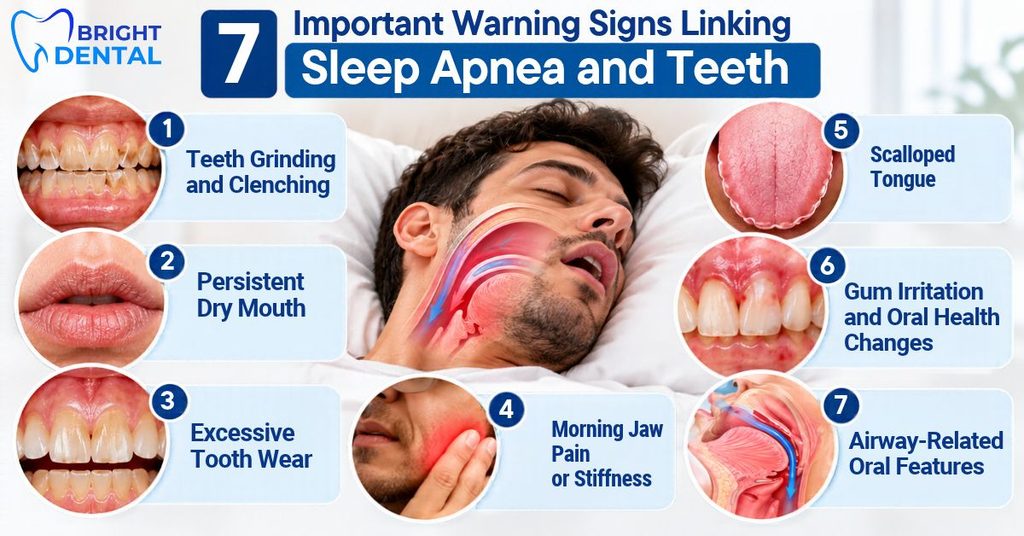
1. Teeth Grinding During Sleep
Sleep bruxism involves involuntary grinding or clenching during sleep.
Repeated grinding may cause worn enamel, chipped surfaces, tooth sensitivity, and jaw discomfort.
Research has identified associations between bruxism and sleep-disordered breathing, although one condition does not necessarily cause the other.
If you grind your teeth and frequently snore, discuss both symptoms with your healthcare provider.
2. Persistent Dry Mouth
Mouth breathing during sleep may leave your mouth feeling dry when you wake up.
Saliva helps protect enamel, neutralize acids, and remove food particles.
Reduced saliva may increase the risk of cavities, gum irritation, and unpleasant breath.
Persistent dryness deserves professional attention, especially when accompanied by disrupted sleep.
3. Unexplained Tooth Wear
Flattened biting surfaces, chipped enamel, or unusual sensitivity may indicate repeated grinding.
However, tooth wear can also result from acidic foods, reflux, and other dental conditions.
Your dentist can evaluate possible causes and recommend appropriate protection.
4. Jaw Pain and Morning Headaches
Some patients experience tight jaw muscles, facial discomfort, or headaches after waking.
These symptoms may occur with bruxism or temporomandibular disorders.
Although they are not specific to OSA, recurring discomfort should be evaluated.
5. Scalloped Tongue
A scalloped tongue has small indentations along its edges.
These marks develop when the tongue presses against nearby teeth.
Tongue scalloping can occur for several reasons and cannot independently diagnose a breathing disorder.
Dentists consider this finding alongside other symptoms and examination results.
6. Gum Irritation and Bad Breath
Persistent mouth dryness may contribute to gum discomfort and unpleasant breath.
However, plaque accumulation, gum disease, medications, and other conditions can cause similar symptoms.
Routine dental examinations help identify the underlying problem.
7. Changes in Jaw Comfort or Bite
Repeated clenching may contribute to jaw muscle fatigue and discomfort.
Some patients also notice changes in how their teeth meet.
These symptoms have several possible causes and require professional assessment.
How Dentists Identify Possible Warning Signs
Dental examinations may reveal oral findings associated with disrupted breathing during sleep.
Your dentist may evaluate:
- Tooth wear patterns
- Jaw position and anatomy
- Tongue appearance
- Signs of dry mouth
- Gum health
- Symptoms of nighttime grinding
Your dental team may also ask about snoring, fatigue, and sleep quality.
The connection between sleep apnea and teeth does not mean dental symptoms alone can confirm OSA.
A qualified medical professional may recommend sleep testing when appropriate.
Treatment Options for Sleep-Related Breathing Problems
Treatment depends on condition severity, medical history, and individual needs.
Custom Oral Appliance Therapy
A mandibular advancement device gently positions the lower jaw forward during sleep.
This may help maintain airflow in suitable patients with obstructive sleep apnea.
Custom, adjustable appliances may be recommended for certain adults who cannot tolerate CPAP or prefer an alternative.
Treatment should involve a qualified sleep physician and dentist.
CPAP Therapy
Continuous positive airway pressure (CPAP) delivers pressurized air to help keep the airway open.
It remains an important treatment, particularly for many patients with moderate or severe OSA.
Night Guards for Grinding
A protective night guard may help reduce damage caused by clenching or grinding.
However, an ordinary night guard does not treat airway obstruction.
Patients should understand the difference between protecting dental structures and treating a breathing disorder.
How to Protect Your Oral Health
Good daily habits help reduce dental complications.
Brush and floss regularly: Brush twice daily with fluoride toothpaste and clean between your teeth.
Manage dry mouth: Stay hydrated and discuss persistent dryness with your dentist.
Attend dental examinations: Regular visits help identify enamel wear, cavities, and gum problems.
Follow appliance instructions: Clean prescribed devices properly and attend recommended follow-up appointments.
Discuss sleep symptoms: Tell your healthcare provider about frequent snoring, nighttime gasping, or significant daytime fatigue.
Managing sleep apnea and teeth concerns may require cooperation between dental and medical professionals.
When Should You Seek Professional Help?
Schedule an evaluation if you experience frequent snoring, nighttime gasping, significant daytime sleepiness, or unexplained dental damage.
A dental appointment can assess oral symptoms, while medical sleep testing helps determine whether OSA is present.
Do not rely on an ordinary mouthguard to treat suspected breathing interruptions.
For additional information, visit the National Heart, Lung, and Blood Institute’s Sleep Apnea Guide.
Why Choose Bright Dental?
25 Years of Local Experience: Dr. Furrukh Ashraf has served the Des Plaines community for over two decades, providing personalized dental care.
At Bright Dental, patients receive evaluations for grinding, tooth wear, jaw discomfort, and other oral health concerns.
Our team can identify potential warning signs and discuss appropriate next steps.
Explore our General Dentistry Services, Specialty & Premium Services, and Contact Page.
Frequently Asked Questions
1. Can Sleep Apnea Cause Grinding?
These conditions may occur together, but a direct causal relationship is not established for every patient.
2. Can Dentists Diagnose OSA?
Dentists can screen for warning signs, but diagnosis requires appropriate medical evaluation and sleep testing.
3. Why Do I Wake Up With a Dry Mouth?
Mouth breathing, medications, dehydration, and other conditions may contribute to dryness.
4. Can a Night Guard Treat Breathing Problems?
No. Standard night guards protect against grinding but do not treat airway obstruction.
5. Are Oral Appliances Effective?
Custom mandibular advancement devices may help suitable patients when prescribed and monitored appropriately.
6. Can Nighttime Grinding Cause Permanent Damage?
Repeated grinding may contribute to lasting enamel wear, tooth fractures, and sensitivity.
Conclusion
Understanding sleep apnea and teeth is important because some oral symptoms may occur alongside breathing disturbances during sleep.
Grinding, dry mouth, jaw discomfort, and tooth wear deserve professional attention, but none independently confirms OSA.
Dental examinations and appropriate medical testing can help identify problems and guide treatment. Take the next step toward healthier teeth and better-informed care.
Concerned About Sleep Apnea and Your Dental Health?
Are you experiencing nighttime grinding, morning jaw pain, dry mouth, or unexplained tooth wear?
At Bright Dental, our team can evaluate your oral health, discuss possible dental concerns, and recommend appropriate next steps. If your symptoms suggest a sleep-related breathing disorder, medical evaluation may also be necessary.
We proudly welcome patients from Des Plaines, Mount Prospect, Wheeling, Glenview, Northbrook, Buffalo Grove, Riverwoods, Glencoe, and Vernon Hills.
Bright Dental II – Des Plaines : 737 W Golf Rd, Des Plaines, IL 60016, USA
Phone: +1 (847) 228-2000

