
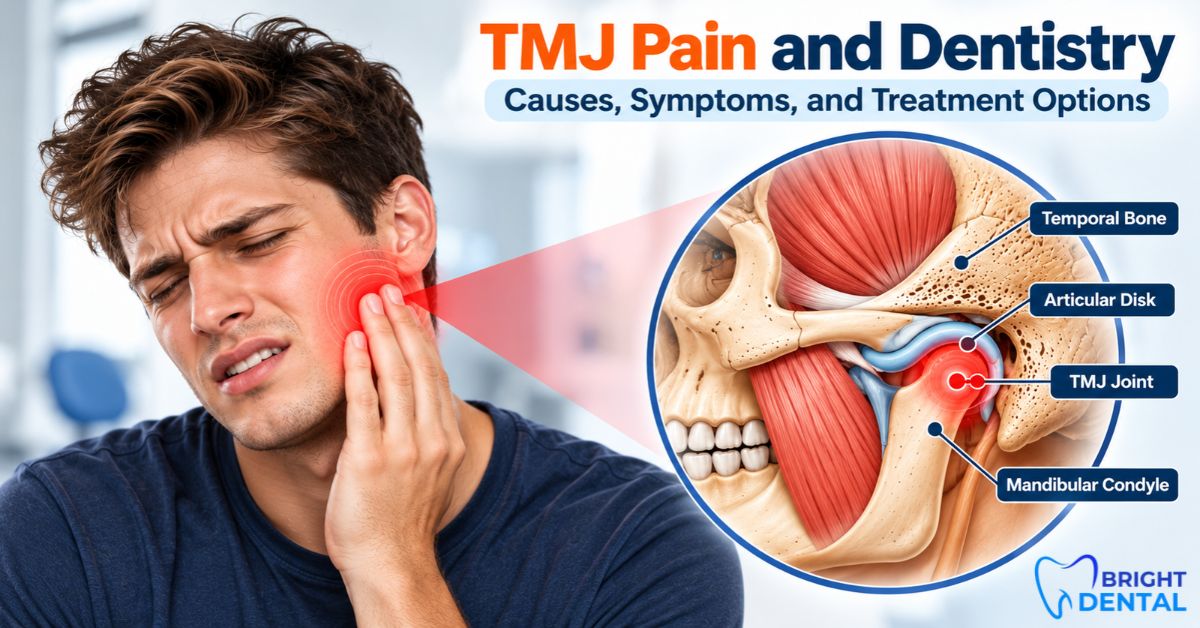

Jaw pain can make everyday activities like eating, speaking, and yawning uncomfortable. Some people also experience headaches, facial tenderness, clicking sounds, or difficulty opening their mouths.
Understanding TMJ pain and dentistry can help patients recognize symptoms and explore appropriate treatment options.
At Bright Dental in Des Plaines, dental examinations can help identify jaw-related concerns and determine whether further evaluation is necessary.
This guide covers common causes, warning signs, and seven practical approaches to managing jaw discomfort.
Quick Answer: Can a Dentist Help With Jaw Pain?
Yes. Dentists can examine jaw movement, identify signs of teeth grinding, and evaluate possible dental causes of discomfort.
TMJ pain and dentistry are closely connected because dentists can help assess jaw symptoms and recommend appropriate next steps.
Many patients improve with conservative care, including self-care, physical therapy, and reducing clenching habits.
However, treatment depends on the underlying cause. Not every patient needs a “TMJ night guard” or invasive procedure.
What Is the Temporomandibular Joint?
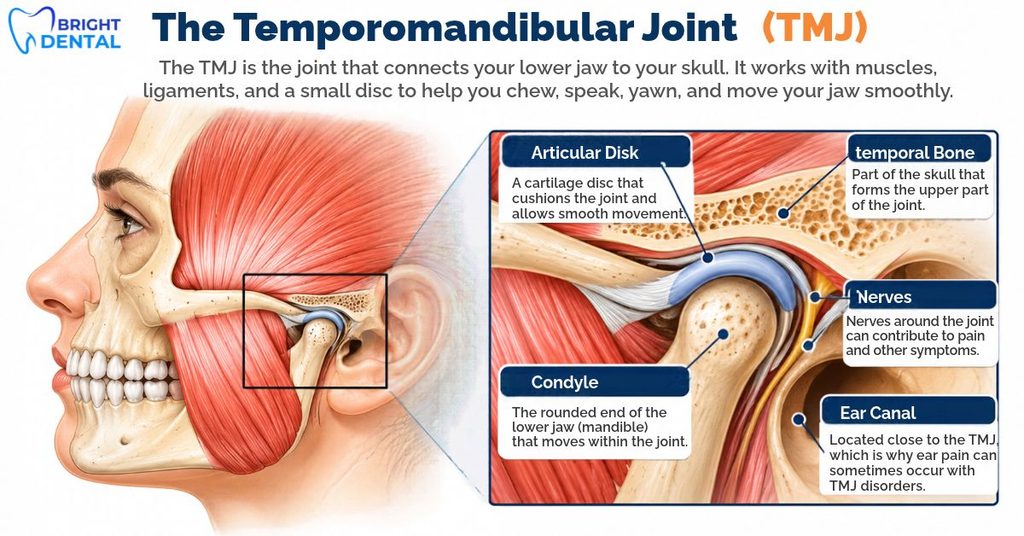
The temporomandibular joints connect your lower jaw to your skull. Located near each ear, they allow you to chew, speak, and open your mouth.
TMJ refers to the joint itself, while TMD describes disorders affecting the joint, surrounding muscles, or related structures.
The relationship between TMJ pain and dentistry is important because dental examinations can help identify symptoms and rule out other oral health problems.
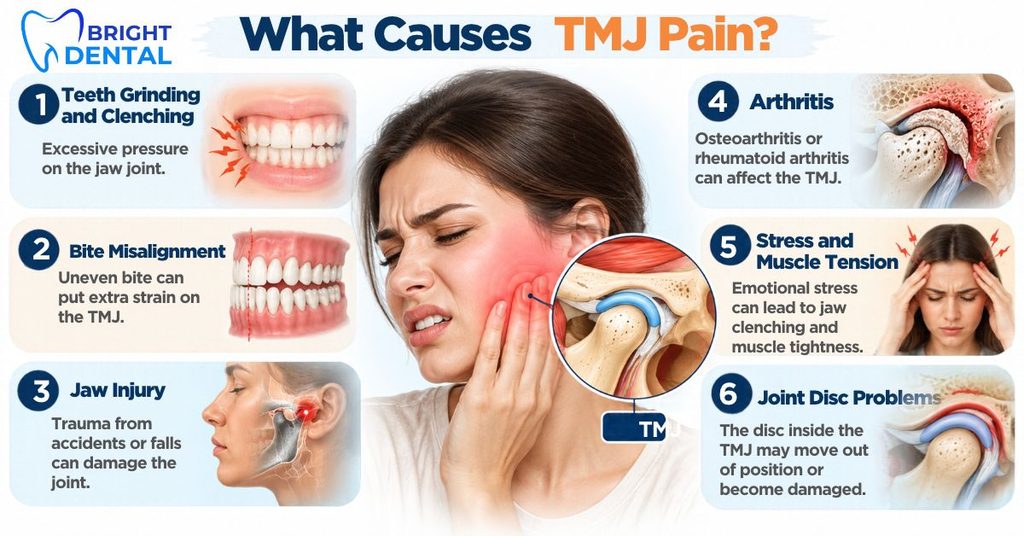
What Causes Jaw Joint Pain?
Several factors may contribute to jaw discomfort.
Teeth Grinding and Clenching
Repeated grinding can strain jaw muscles and damage tooth enamel.
Stress and Muscle Tension
Stress may increase clenching, contributing to facial soreness and headaches.
Jaw Injuries
Accidents, falls, or direct impacts may affect joint structures and surrounding muscles.
Arthritis
Inflammatory conditions and osteoarthritis can sometimes affect jaw joints.
Joint Disc Problems
Changes in the position or movement of the joint disc may contribute to painful clicking or locking.
Because symptoms overlap, professional assessment is important before choosing treatment.
7 TMJ Treatment Options for Jaw Pain
Conservative TMJ treatment options may help many patients.
1. Apply Warm or Cold Compresses
Warm compresses may help relax tense jaw muscles.
Cold packs can provide temporary comfort during painful episodes.
Use a protective cloth and avoid extreme temperatures.
2. Eat Soft Foods Temporarily
Choose foods that require less chewing when your jaw feels painful.
Suitable options include yogurt, scrambled eggs, soups, and mashed potatoes.
Avoid hard or chewy foods temporarily, then return to your normal diet as symptoms improve.
3. Reduce Teeth Grinding and Clenching
Grinding and clenching may contribute to muscle soreness and tooth wear.
Try to recognize daytime clenching habits and keep your jaw relaxed when resting.
A dentist may recommend a protective appliance when grinding causes dental damage.
4. Consider Physical Therapy
Physical therapy may help improve jaw movement and reduce muscle discomfort.
Treatment can include gentle exercises, movement training, and relaxation techniques.
Exercises should be selected by an appropriate healthcare professional.
5. Manage Stress
Stress may increase muscle tension and unconscious clenching.
Relaxation exercises, mindfulness, regular physical activity, and healthy sleep habits may help.
These strategies are particularly useful when tension contributes to symptoms.
6. Discuss Pain Management
Some patients benefit from short-term pain medication.
A healthcare professional can recommend suitable options based on medical history and symptom severity.
Avoid taking medication beyond recommended instructions.
7. Schedule a Dental Evaluation
Persistent discomfort may require professional assessment.
A dentist can examine jaw movement, check for tooth damage, and identify possible contributing factors.
Understanding TMJ pain and dentistry helps patients choose appropriate care rather than relying on temporary symptom relief alone.
7 Common Warning Signs of TMJ Disorders
Common temporomandibular disorder symptoms include:
- Persistent Jaw Tenderness: Pain around the joint or chewing muscles.
- Painful Clicking: Popping sounds accompanied by discomfort.
- Difficulty Opening Your Mouth: Restricted movement during daily activities.
- Frequent Headaches: Discomfort around the temples or facial muscles.
- Facial or Neck Pain: Muscle soreness extending beyond the jaw.
- Ear-Area Discomfort: Pain or fullness near the ears.
- Jaw Locking: Difficulty moving the jaw normally.
Painless clicking alone is common and usually does not require treatment.
However, recurring pain, locking, or restricted movement deserves evaluation.
TMJ Diagnosis: How Dentists Identify Jaw Disorders
TMJ diagnosis generally begins with a review of symptoms and medical history.
Your dentist may assess:
- Jaw opening and closing
- Joint tenderness
- Muscle sensitivity
- Painful clicking
- Signs of grinding
- Tooth wear or damage
Imaging is not necessary for everyone. X-rays, CT scans, or MRI may be considered when clinical findings justify further investigation.
The connection between TMJ pain and dentistry also involves identifying other conditions that may cause similar symptoms.
Complex cases may require specialist evaluation.
Can a Night Guard Help?
A custom night guard may protect teeth from grinding-related damage.
However, research has not established that night guards consistently relieve every type of jaw joint disorder.
An appliance should not permanently change your bite.
If wearing a night guard increases discomfort, contact your dentist.
Conservative vs. Invasive Treatments
Most patients should begin with appropriate conservative care.
| Treatment | Main Purpose |
|---|---|
| Soft foods | Temporarily reduce jaw strain |
| Warm or cold compresses | Manage discomfort |
| Physical therapy | Improve movement |
| Night guards | Protect teeth from grinding |
| Medication | Manage pain when appropriate |
| Specialist treatment | Address complex or persistent conditions |
Permanent bite adjustments, orthodontics, and surgery are not routine first-line treatments for TMD.
For additional guidance, visit the National Institute of Dental and Craniofacial Research.
How to Prevent Jaw Discomfort
Not every jaw disorder can be prevented, but healthy habits may reduce unnecessary strain.
Avoid excessive gum chewing, frequent clenching, and biting hard objects.
Maintain comfortable posture and avoid forcing painful jaw movements.
Attend regular dental examinations to identify grinding-related damage.
Managing TMJ pain and dentistry concerns often begins with recognizing habits that worsen symptoms.
When Should You See a Dentist?
Schedule an appointment if jaw discomfort persists, affects chewing, or interferes with daily activities.
Seek prompt medical or dental care if your jaw becomes stuck, severe pain follows an injury, or you develop significant swelling or fever.
Early evaluation can help identify the cause and determine appropriate treatment.
For patients experiencing recurring discomfort, TMJ pain and dentistry evaluations can help identify possible contributing factors.
Why Choose Bright Dental?
25 Years of Local Experience: Dr. Furrukh Ashraf has served the Des Plaines community for over two decades, providing personalized dental care.
At Bright Dental, patients receive individualized dental examinations for jaw discomfort, grinding-related tooth wear, and other oral health concerns.
Our approach to TMJ pain and dentistry focuses on evaluating symptoms and discussing suitable care options.
Explore our General Dentistry Services, Specialty & Premium Services, and Sleep Apnea and Teeth Guide.
Frequently Asked Questions
1. Can a Dentist Treat Jaw Pain?
Yes. Dentists can assess symptoms, recommend conservative care, and provide specialist referrals when necessary.
2. Is Jaw Joint Pain Permanent?
Not always. Many patients improve with conservative treatment, although some require ongoing care.
3. Can Grinding Cause Jaw Discomfort?
Yes. Teeth grinding and jaw pain may occur together, with repeated grinding straining jaw muscles and damaging enamel.
4. Does Jaw Clicking Always Require Treatment?
No. Painless clicking without restricted movement often requires no treatment.
5. Can Stress Make Symptoms Worse?
Yes. Stress may increase clenching and muscle tension in some individuals.
6. Can Braces Fix Jaw Joint Problems?
Orthodontic treatment is not generally recommended solely to treat temporomandibular disorders.
Conclusion
Understanding TMJ pain and dentistry can help patients recognize warning signs and explore appropriate “TMJ pain treatment options.”
Conservative approaches such as temporary dietary changes, stress management, and physical therapy may provide relief.
Persistent TMJ pain and dentistry concerns deserve professional evaluation to identify the underlying cause. Don’t let ongoing jaw discomfort interfere with your daily routine. Schedule a dental appointment to discuss your symptoms and explore suitable treatment options.
Experiencing TMJ Pain or Jaw Discomfort? Visit Bright Dental
Are you experiencing persistent jaw pain, headaches, teeth grinding, or difficulty chewing?
At Bright Dental in Des Plaines, IL, our dental team can evaluate your oral health and discuss appropriate treatment options for TMJ pain and dentistry concerns. Your comfort and long-term oral health matter.
We proudly welcome patients from Des Plaines, Mount Prospect, Bannockburn, Deer Park, Libertyville, Wheeling, Prospect Heights and Arlington Heights.
Bright Dental II – Des Plaines : 737 W Golf Rd, Des Plaines, IL 60016, USA
Phone: +1 (847) 228-2000

