

A tooth sensitive to cold can make drinking iced coffee, eating ice cream, or even breathing cold air uncomfortable. The pain may last only a second or continue after the cold sensation disappears.
At Bright Dental in Des Plaines, Illinois, we help patients identify the causes of tooth sensitivity and find appropriate treatment options.
Understanding the causes of cold sensitivity can help you recognize when professional dental care is necessary.
Quick Answer: Why Do Teeth React to Cold?
Cold sensitivity may be caused by worn enamel, exposed tooth roots, cavities, cracked teeth, or damaged fillings. Temporary sensitivity can also occur after dental procedures.
Brief discomfort does not always indicate serious damage. However, persistent pain, worsening symptoms, or sensitivity affecting one tooth should be evaluated by a dentist.
Causes of Tooth Sensitivity: Why Does Cold Cause Pain?
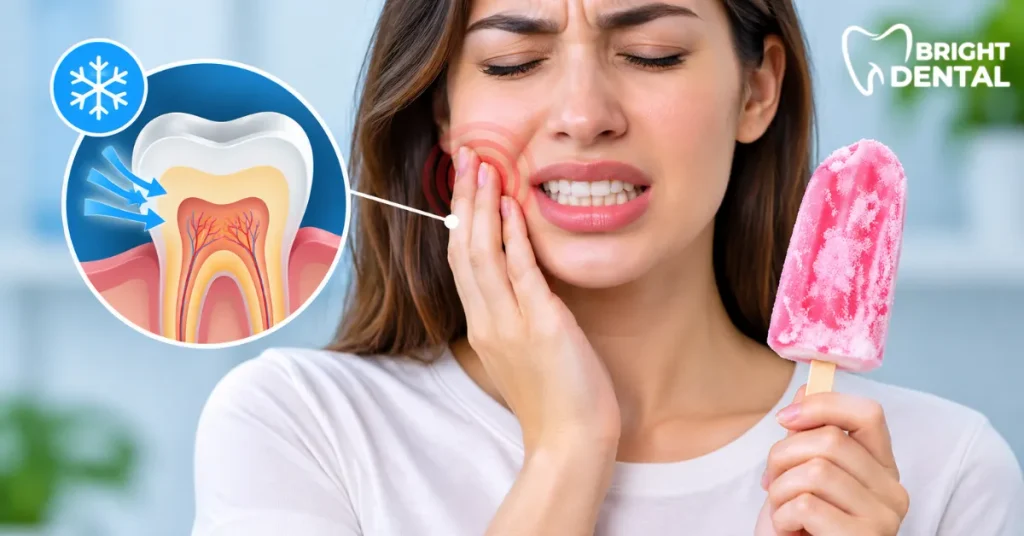
Enamel protects the outer surface of your teeth. Beneath it is dentin, which contains microscopic channels connected to the sensitive inner tissues.
When enamel wears down or gum recession exposes the roots, cold temperatures can trigger discomfort.
This discomfort may indicate exposed dentin or another underlying dental concern.
According to the American Dental Association’s Sensitive Teeth Guide, tooth sensitivity can result from decay, fractured teeth, worn fillings, gum disease, and exposed roots.
7 Common Causes and Warning Signs of Cold Tooth Sensitivity
1. Enamel Erosion
Frequent consumption of acidic drinks, citrus fruits, and other acidic foods can gradually weaken enamel.
When enamel becomes thinner, teeth may react more strongly to cold temperatures.
2. Receding Gums
Gum recession exposes tooth roots, making them more vulnerable to temperature sensitivity.
Aggressive brushing, periodontal disease, and other factors may contribute to gum recession.
Learn more in our Gum Recession Causes and Treatment Guide.
3. Cracked or Chipped Teeth
Small cracks can expose sensitive tooth structures.
Tooth sensitivity when drinking cold water or chewing may indicate a crack in one tooth.
4. Cavities and Tooth Decay
Tooth decay damages the protective structure of a tooth.
Cold-related discomfort may be an early warning sign of a cavity, especially when it becomes more frequent.
5. Worn or Damaged Fillings
Older fillings may develop gaps or wear over time.
These changes can expose sensitive areas and cause discomfort when consuming cold foods or drinks.
6. Recent Dental Procedures
Temporary sensitivity sometimes occurs after fillings, crowns, whitening, or professional cleanings.
Symptoms often improve as the tooth recovers. Contact your dentist if discomfort persists or worsens.
7. Lingering Pain After Cold Exposure
Pain that continues after removing the cold source may suggest irritation or inflammation inside the tooth.
Persistent or spontaneous pain deserves prompt professional evaluation.
Sensitive Teeth Treatment: Can Toothpaste Help?
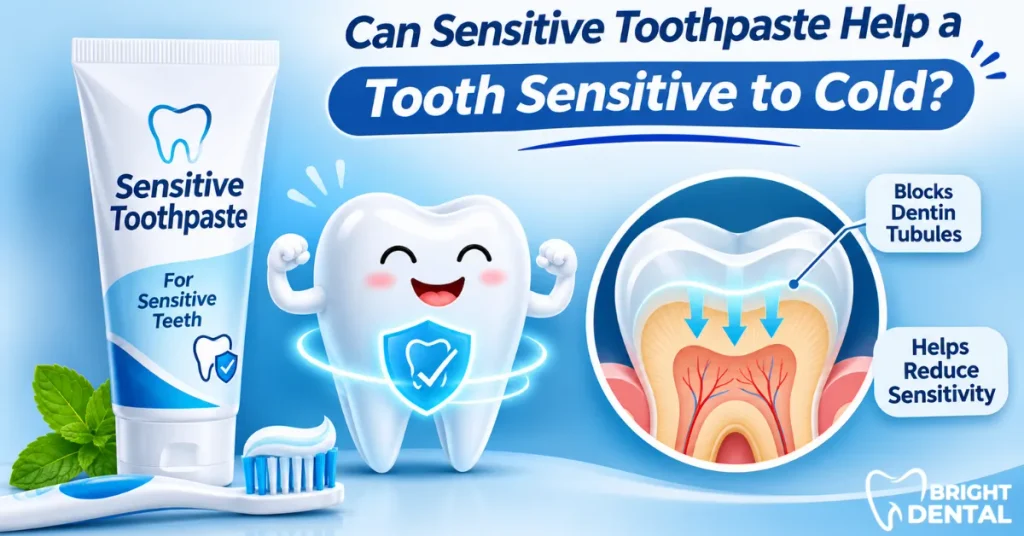
Desensitizing toothpaste may help reduce discomfort caused by exposed dentin.
Some products block microscopic dentin channels, while others help reduce nerve sensitivity.
Consistent use may improve symptoms over several weeks.
However, toothpaste cannot repair a cavity, cracked tooth, or damaged filling.
If symptoms continue despite using suitable toothpaste, schedule a dental examination.
When Should You Visit a Dentist?
Occasional brief sensitivity may not require urgent treatment, but certain symptoms should not be ignored.
Schedule an appointment if:
- Cold sensitivity becomes more frequent.
- Pain continues after the cold source is removed.
- One tooth is noticeably more sensitive.
- You experience discomfort while biting.
- Symptoms interfere with eating or drinking.
- Sensitivity develops after dental trauma.
If tooth pain is accompanied by facial swelling, fever, or difficulty swallowing, seek urgent dental or medical attention.
Early evaluation helps identify problems before they become more complicated.
Why You Shouldn’t Ignore Cold Tooth Sensitivity
Cold tooth sensitivity does not always indicate serious dental damage. Some cases improve with appropriate home care or after temporary irritation resolves.
However, untreated cavities, gum disease, and cracked teeth can worsen over time.
Ignoring persistent symptoms may allow an underlying condition to progress.
Early diagnosis can sometimes reduce the need for more extensive treatment.
How Bright Dental Treats Cold Tooth Sensitivity
At Bright Dental, treatment begins with identifying the cause of your discomfort.
Depending on your symptoms, your evaluation may include:
- Dental examination
- Cold sensitivity testing
- Digital X-rays when appropriate
- Gum health assessment
- Examination of existing fillings and crowns
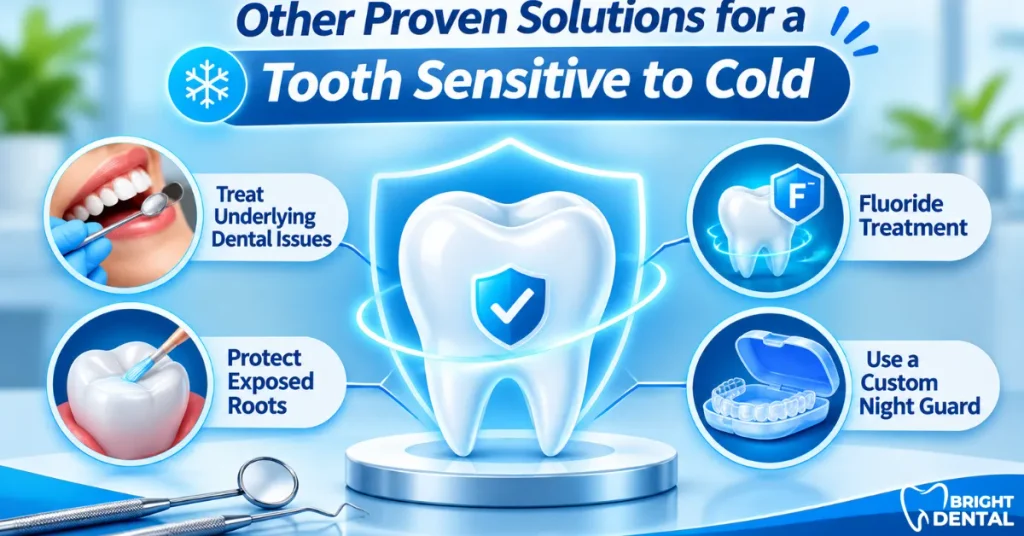
Treatment options may include desensitizing products, fluoride applications, fillings, crowns, or periodontal care.
For patients experiencing sensitivity associated with gum disease, our Scaling and Root Planing Guide explains how professional deep cleaning addresses certain periodontal concerns.
An individualized approach is important because different causes require different treatments.
How to Prevent Cold Tooth Sensitivity
Good daily habits can help protect your teeth and gums.
- Brush gently with a soft-bristled toothbrush.
- Use fluoride toothpaste.
- Limit frequent acidic foods and beverages.
- Rinse with water after consuming acidic drinks.
- Avoid brushing immediately after acidic meals.
- Attend regular dental checkups.
- Discuss teeth grinding with your dentist if you notice signs of clenching.
These habits may reduce your risk of sensitivity, although not every cause is preventable.
Why Choose Bright Dental?
Choosing an experienced dentist is important when dealing with persistent tooth discomfort.
25+ Years of Local Experience: Dr. Furrukh Ashraf has served the Des Plaines community for over 25 years, providing personalized care focused on comfort and long-term oral health.
At Bright Dental, we carefully evaluate the cause of cold sensitivity and recommend treatment based on your needs.
Learn more through our Frequently Asked Dental Questions.
Frequently Asked Questions
Why Is Only One Tooth Sensitive to Cold?
Sensitivity affecting one tooth may result from a cavity, crack, damaged filling, or exposed root. A dental examination can help identify the cause.
Can Cold Tooth Sensitivity Go Away on Its Own?
Temporary sensitivity may improve, particularly after certain dental treatments. Persistent symptoms should be evaluated.
Does Cold Sensitivity Mean I Need a Root Canal?
Not necessarily. Cold sensitivity does not automatically require root canal treatment. The cause and severity determine whether treatment is necessary.
How Long Does Sensitive Toothpaste Take to Work?
Some people notice improvement after several weeks of consistent use. Results depend on the product and underlying cause.
Can Gum Disease Cause Cold Sensitivity?
Yes. Gum recession associated with periodontal problems may expose sensitive tooth roots.
Conclusion
Cold sensitivity can result from enamel erosion, gum recession, cavities, cracked teeth, or temporary irritation.
Although mild sensitivity is sometimes manageable, persistent or worsening symptoms should not be ignored.
Identifying the underlying cause is the most reliable way to choose an appropriate treatment and protect your oral health.
Get Relief From Cold Tooth Sensitivity at Bright Dental
Do you experience discomfort every time you enjoy a cold drink?
At Bright Dental in Des Plaines, IL, our team can evaluate your symptoms and recommend personalized treatment options.
We welcome patients from Des Plaines, Mount Prospect, Wheeling, Glenview, Northbrook, Libertyville, Highland Park, Lake Bluff and Lake Forest.
Bright Dental II – Des Plaines
737 W Golf Rd, Des Plaines, IL 60016, USA
Phone: +1 (847) 228-2000

