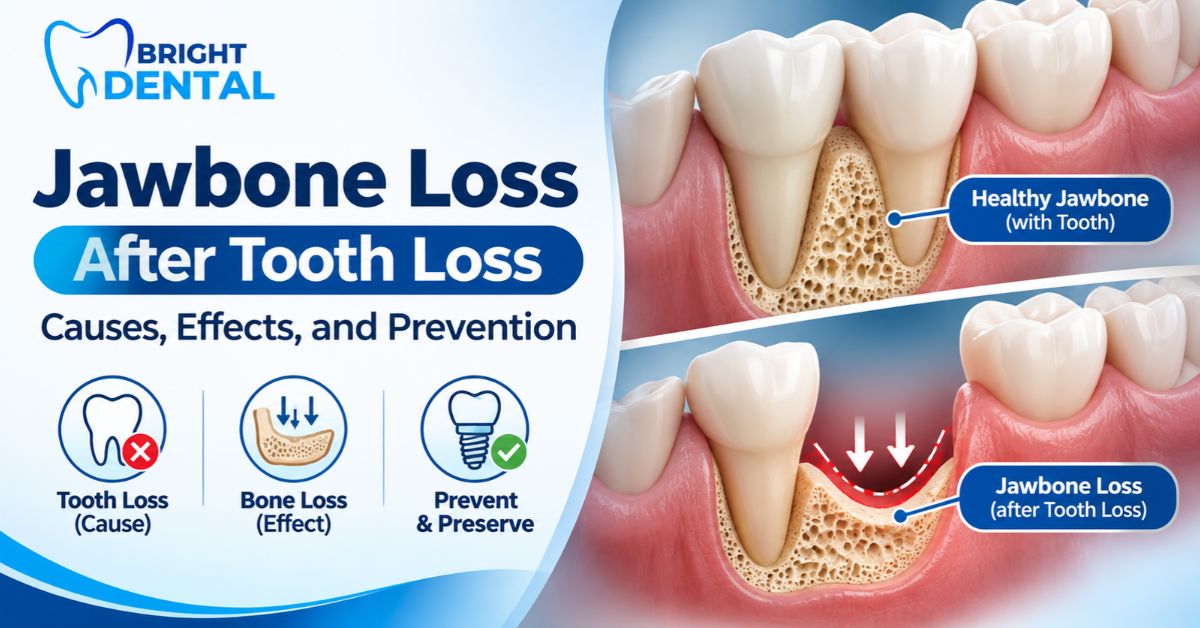

Jawbone loss after tooth loss is a common but often overlooked consequence of missing teeth. When a tooth is removed, the surrounding jawbone begins to change because it no longer supports the natural tooth root.
Over time, these changes may affect chewing, facial appearance, and future tooth replacement options.
Understanding the causes, effects, and prevention methods can help you protect your oral health and make informed treatment decisions.
Early treatment can help reduce long-term complications.
Quick Answer: Why Does Jawbone Loss Happen?
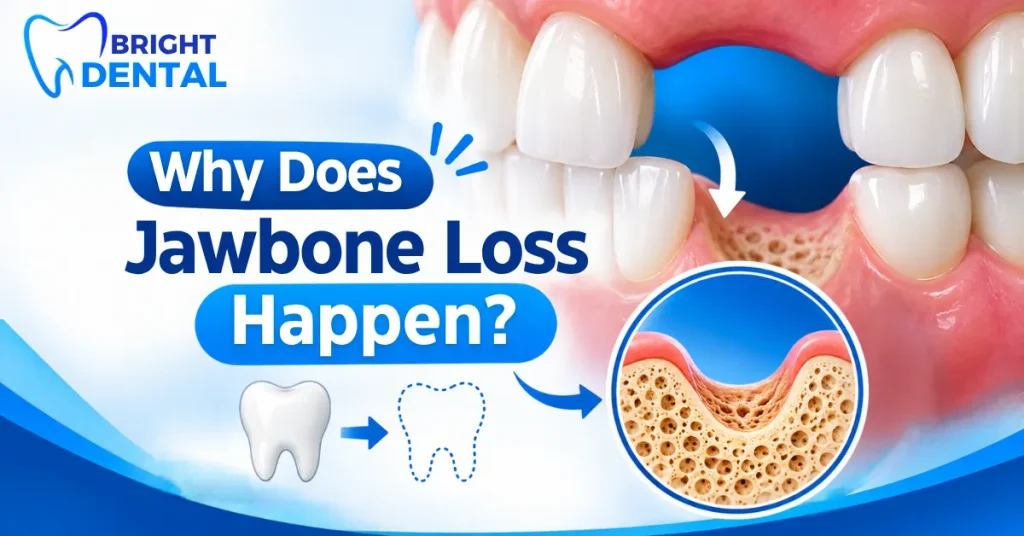
Jawbone loss after tooth loss occurs because the bone surrounding a missing tooth no longer receives normal stimulation through the tooth root and periodontal ligament.
Following extraction, the body naturally remodels the empty tooth socket. This process can reduce the jawbone’s height and width, particularly during the first several months.
Early dental evaluation can help identify ways to preserve bone and plan future tooth replacement.
What Causes Jawbone Loss After Tooth Loss?
Several biological changes contribute to bone deterioration after a tooth is removed.
1. Loss of Tooth Root Stimulation
Natural tooth roots transfer chewing forces to the surrounding bone through the periodontal ligament.
When a tooth is lost, this stimulation disappears, contributing to changes in bone structure.
2. Natural Bone Remodeling
The socket heals naturally, but jawbone resorption after tooth extraction can reduce its height and width.
Although healing is normal, the ridge often becomes smaller as the surrounding tissues remodel.
3. Gum Disease
Advanced periodontal disease can damage the gums and supporting bone.
Patients with untreated gum disease may experience additional bone deterioration around their remaining teeth.
4. Smoking and Medical Conditions
Smoking, certain medical conditions, and medications may affect oral health or healing.
Your dentist should review your medical history before recommending treatment.
What Are the Effects of Jawbone Loss?
Jawbone loss after tooth loss can affect more than the area where a tooth is missing.
Possible long-term effects include:
- Facial Changes: Significant bone loss may cause effects of missing teeth on facial structure, including reduced facial support.
- Chewing Difficulties: Missing teeth can reduce chewing efficiency.
- Denture Problems: Changes in the jawbone may affect denture stability.
- Implant Challenges: Reduced bone volume may require additional treatment before implant placement.
- Bite Changes: Nearby teeth may shift into the empty space.
The severity of bone deterioration depends on the location of the missing tooth and overall oral health.
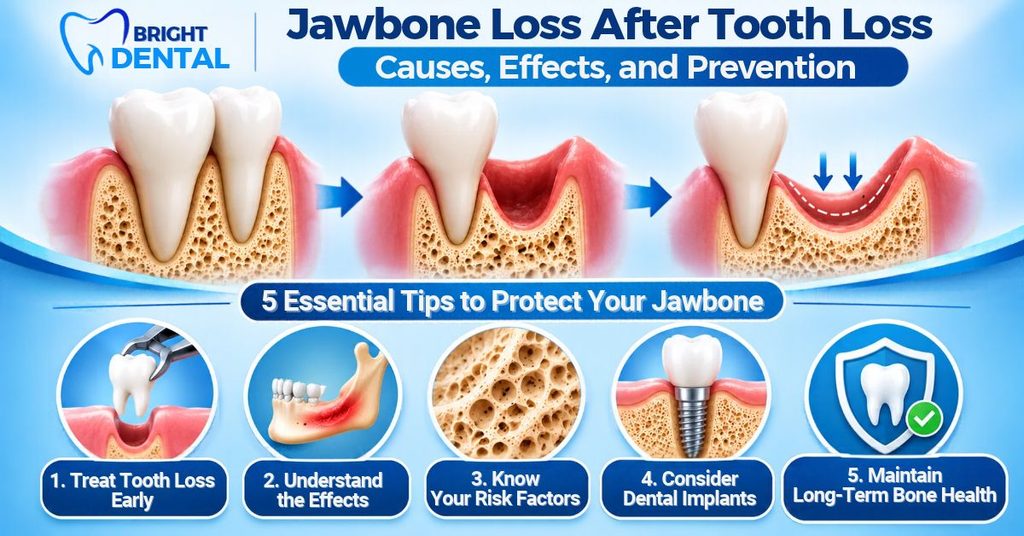
5 Essential Tips to Prevent Jawbone Loss After Tooth Loss
Although some bone remodeling is unavoidable, early treatment may help reduce its effects.
1. Consider Dental Implants
Dental implants replace missing tooth roots with artificial supports placed in the jawbone.
They can help maintain functional loading around the implant and provide a stable foundation for replacement teeth.
However, implants do not guarantee that all bone loss will stop.
Explore our Dental Implant Services in Des Plaines to understand available tooth replacement options.
2. Ask About Socket Preservation
Socket preservation after tooth extraction helps maintain the jawbone’s shape and dimensions.
A dentist may place bone grafting material into the extraction socket.
Socket preservation may help minimize jawbone loss after tooth loss by maintaining more of the extraction site’s bone structure.
This approach can reduce ridge shrinkage in suitable cases, although it cannot completely prevent bone remodeling.
3. Treat Gum Disease Early
Healthy gums are essential for protecting the bone supporting your teeth.
Untreated periodontal disease can cause inflammation and progressive destruction of supporting tissues.
Regular dental examinations, professional cleanings, and appropriate periodontal treatment help protect oral health.
4. Replace Missing Teeth Promptly
Delaying tooth replacement can make future treatment more complicated.
If you have recently lost a tooth, schedule a consultation to discuss implants, bridges, or dentures.
These treatments have different effects on surrounding tissues, so your dentist can explain which option best suits your needs.
Read our Single Tooth Dental Implants Guide for more information.
5. Maintain Good Oral Health
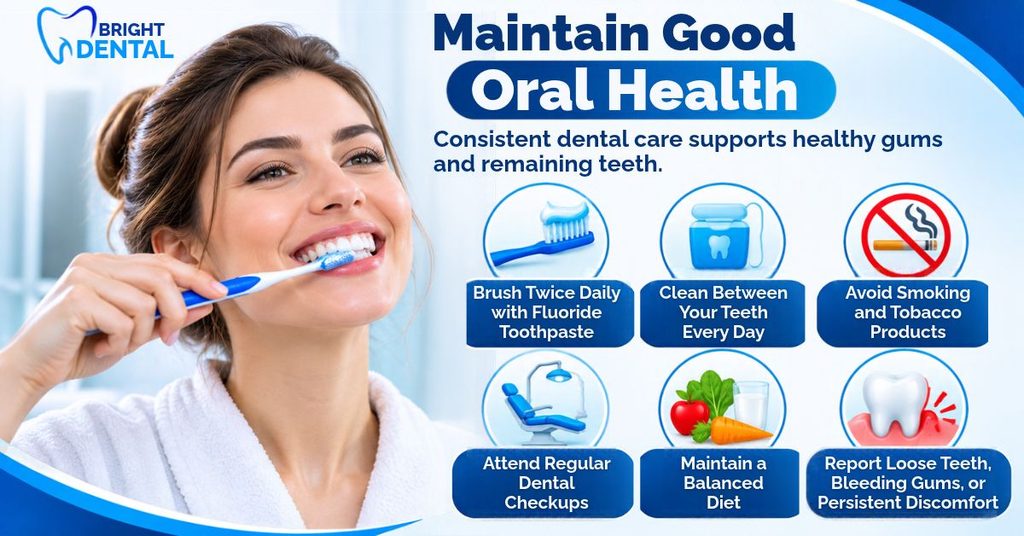
Consistent dental care supports healthy gums and remaining teeth.
Follow these habits:
- Brush twice daily with fluoride toothpaste.
- Clean between your teeth every day.
- Avoid smoking and tobacco products.
- Attend regular dental checkups.
- Maintain a balanced diet.
- Report loose teeth, bleeding gums, or persistent discomfort.
These habits cannot fully prevent extraction-related bone remodeling, but they help reduce avoidable oral health problems.
Can Bone Loss Be Reversed?
Jawbone loss after tooth loss cannot always be reversed naturally.
However, bone grafting for jawbone loss may help restore bone volume in selected cases.
Bone grafting may be recommended when there is insufficient bone to support a dental implant.
Treatment depends on the amount of remaining bone and the patient’s restoration goals.
Learn more about treatment considerations in our Dental Implant Cost and Bone Grafting Guide.
For additional patient information, the American Dental Association’s Missing Teeth Guide explains how missing teeth can affect chewing, nearby teeth, and supporting bone.
When Should You See a Dentist?
Schedule a dental evaluation if you experience:
- One or more missing teeth
- Loose or uncomfortable dentures
- Changes in your bite
- Difficulty chewing
- Receding gums or loose teeth
- Concerns about future dental implants
Early evaluation of jawbone loss after tooth loss can help patients explore suitable treatment options.
Your dentist may recommend imaging to evaluate bone levels and identify appropriate treatment options.
Frequently Asked Questions
1. How Quickly Does Jawbone Loss Begin?
Bone remodeling begins during healing after tooth extraction. Significant changes can occur during the first several months.
2. Can Dental Implants Prevent Bone Loss?
Dental implants may help maintain functional bone support around the implant, but they cannot completely eliminate bone loss.
3. Is Bone Grafting Always Necessary?
No. Bone grafting is recommended only when a patient’s anatomy and treatment plan indicate that additional bone support is needed.
4. Can Dentures Stop Jawbone Shrinkage?
Conventional dentures replace missing teeth but do not reproduce the stimulation provided by natural tooth roots.
5. Can You Get Dental Implants After Bone Loss?
Sometimes. Implant eligibility depends on remaining bone volume, health, and whether additional procedures are appropriate.
Conclusion
Jawbone loss after tooth loss can affect oral function, facial support, and future dental treatment.
Although some bone remodeling is natural, timely evaluation, appropriate tooth replacement, and good oral hygiene can help protect your long-term dental health.
The best approach depends on your individual needs and a professional assessment. Schedule your consultation today to discuss your oral health and treatment options.
Protect Your Jawbone and Restore Your Smile!
Have you recently lost a tooth or noticed changes in your oral health?
At Bright Dental in Des Plaines, IL, our team can evaluate your dental condition and discuss suitable tooth replacement and bone preservation options.
Dr. Furrukh Ashraf brings over 25 years of local dental experience, helping patients make informed decisions about their smiles. We proudly welcome patients from Des Plaines, Mount Prospect, Wheeling, Glenview, and Northbrook.
Bright Dental II – Des Plaines
737 W Golf Rd, Des Plaines, IL 60016, USA
Phone: +1 (847) 228-2000

