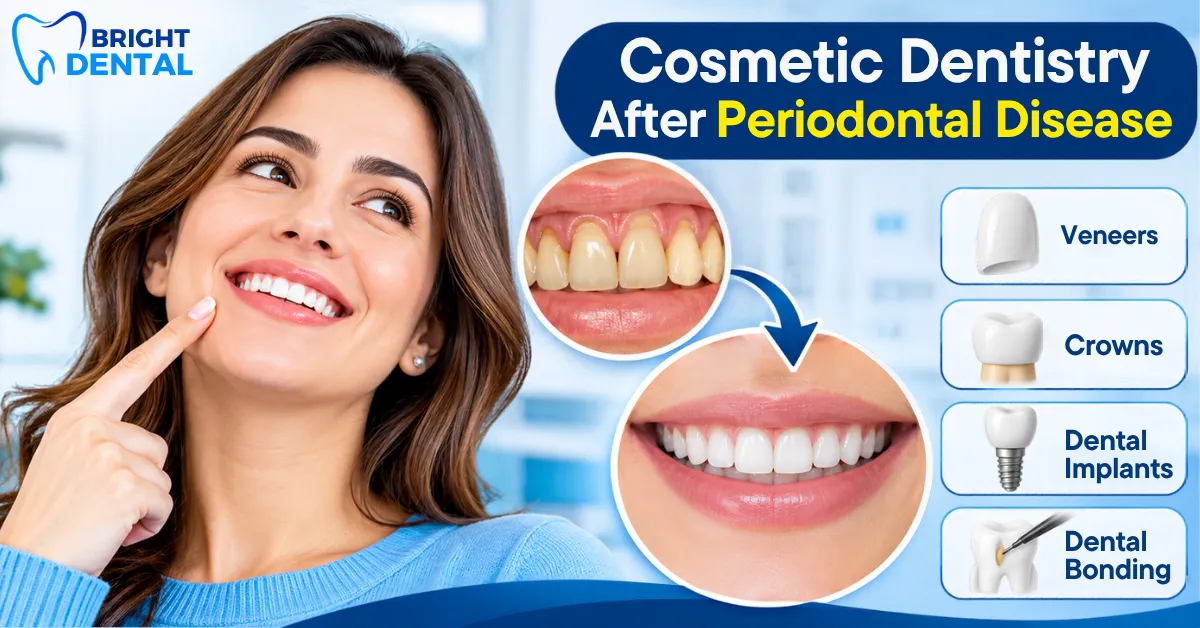

Recovering from Periodontal Disease is an important step toward better oral health. However, some patients continue to notice cosmetic concerns such as gum recession, exposed tooth roots, shifted teeth, or dark spaces between their teeth.
Exploring cosmetic dentistry after gum disease can help you understand your options for improving your smile once your periodontal health is stable. At Bright Dental, we believe cosmetic improvements should begin with a healthy foundation.
Quick Answer: Cosmetic Dentistry After Periodontal Disease
Cosmetic dentistry after gum disease can help improve smile concerns such as gum recession, black triangles, damaged teeth, and missing teeth. Treatment options may include dental bonding, porcelain veneers, crowns, and dental implants, depending on your oral health and individual needs. Before starting cosmetic treatment, your dentist should confirm that your gum health is stable and recommend the most suitable approach for your smile.

Why Healthy Gums Matter for Cosmetic Dentistry After Gum Disease
Healthy gums and strong supporting bone provide the foundation for successful cosmetic dental treatments. Periodontal disease can damage gum tissue, weaken the bone supporting your teeth, and cause changes in your smile’s appearance. Even after treatment, some patients may experience gum recession, tooth mobility, or uneven gum lines.
Before considering cosmetic dentistry after periodontal disease, your dentist should make sure the infection is controlled and your gum health is stable. An evaluation of your gums, supporting bone, tooth stability, and overall oral health helps determine which cosmetic procedures are appropriate.
Depending on your condition, you may need ongoing periodontal maintenance, restorative treatment, or additional gum care before proceeding with veneers, crowns, or other cosmetic procedures. Addressing these concerns first helps create a healthier foundation for long-lasting results.
At Bright Dental, we prioritize healthy gums before improving smile aesthetics. Explore our periodontal care services to learn more about maintaining your gum health.
Common Cosmetic Concerns After Periodontal Disease
Even after successful periodontal treatment, some visible changes may remain. These concerns can affect both appearance and comfort.
1. Gum Recession and Exposed Roots
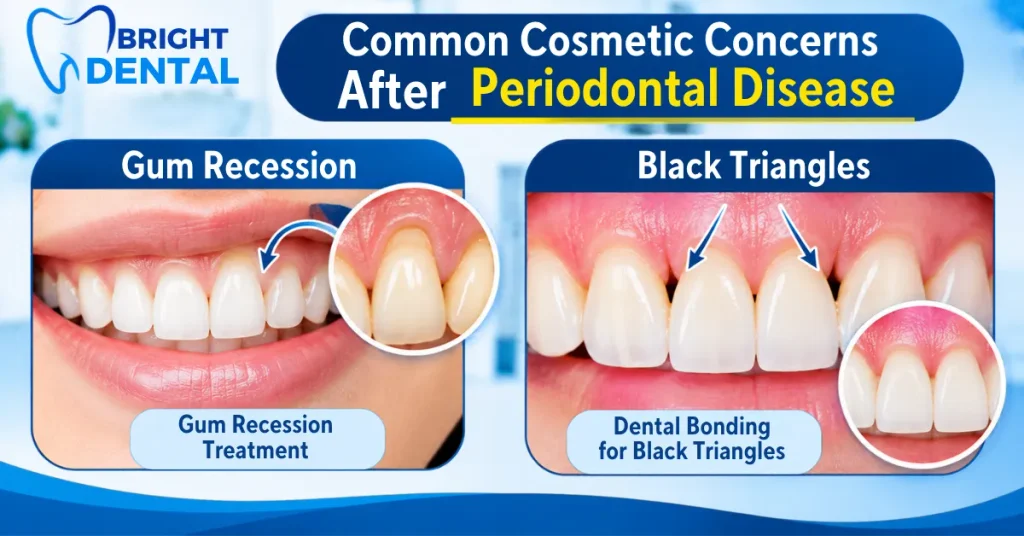
Gum recession can make teeth appear longer and expose sensitive root surfaces. It may also increase the risk of root cavities.
Gum recession treatment depends on the extent of tissue loss. Options may include gum grafting, appropriate restorative procedures, and preventive care to protect exposed roots.
2. Closing Black Triangles Between Teeth
Black triangles are small, dark spaces near the gum line caused by the loss of gum tissue between teeth. They may become more noticeable after inflammation decreases and swollen tissues return to a healthier state.
Dental bonding for black triangles can be an option for selected patients. Tooth-colored composite material is carefully shaped to reduce the visible spaces. Porcelain veneers may also be considered in appropriate cases.
The right approach depends on tooth shape, gum condition, and the amount of missing tissue.
Can You Get Dental Implants After Periodontal Disease?
Yes, having a history of periodontal disease does not automatically disqualify you from getting dental implants. Many patients can become suitable candidates after their gum disease has been treated and their oral health is stable. However, active infection and uncontrolled gum inflammation must be addressed before implant placement.
Dental implants after gum disease require a thorough evaluation of gum tissue, jawbone density, tooth stability, and overall oral health. Since periodontal disease can cause bone loss and damage the tissues supporting your teeth, your dentist must determine whether sufficient healthy bone is available to support an implant.
In some cases, additional procedures, such as bone grafting, may be recommended to improve the foundation for implant placement. Your dentist will also consider your healing ability and any factors that could affect treatment success.
Long-term maintenance is equally important. Patients with a history of periodontal disease may have a higher risk of developing inflammation around dental implants, known as peri-implant disease. Regular dental checkups, professional cleanings, and proper daily oral hygiene help protect the surrounding tissues.
If you are considering implants after gum disease, read our guide on dental implant candidacy to understand the factors dentists evaluate before recommending treatment.
Cosmetic Treatment Options After Gum Disease
Once periodontal health is stable, several cosmetic treatments may help improve your smile:
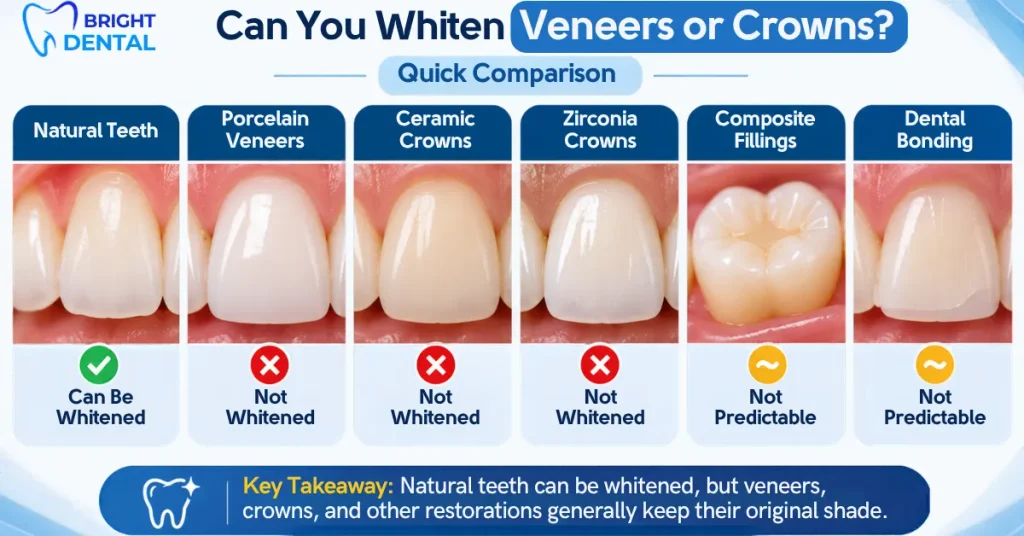
- Dental Bonding: Repairs minor chips, reshapes teeth, and reduces visible gaps.
- Porcelain Veneers: Improve the appearance of selected teeth with changes in shape, size, and color.
- Dental Crowns: Restore damaged teeth while improving their appearance and function.
- Gum Contouring: Reshapes excess gum tissue in suitable cases to create a more balanced gum line.
Choosing cosmetic dentistry after periodontal disease requires an individualized treatment plan. Not every patient is a suitable candidate for every procedure.
The Importance of Ongoing Gum Maintenance
Completing periodontal treatment does not mean you can stop monitoring your gum health. Periodontal disease can return, making regular dental examinations and professional maintenance important.
Your dentist may recommend:
- Regular periodontal maintenance visits.
- Daily brushing and interdental cleaning.
- Monitoring gum recession and tooth mobility.
- Following personalized oral hygiene instructions.
The American Academy of Periodontology explains the importance of ongoing care in its periodontal disease FAQs.
Maintaining healthy gums helps protect your natural teeth and supports the long-term condition of cosmetic restorations.
Why Choose Bright Dental?
At Bright Dental, we focus on personalized dental care that considers both oral health and smile appearance.
Dr. Furrukh Ashraf and our team evaluate your dental concerns, explain available treatment options, and help you understand the next steps.
Our approach prioritizes gum health before cosmetic improvements, helping patients make informed decisions about their treatment.
Conclusion
Recovering from periodontal disease can open the door to new cosmetic possibilities. Whether you are concerned about gum recession, black triangles, missing teeth, or uneven tooth appearance, several treatment options may help improve your smile.
The first step toward cosmetic dentistry after periodontal disease is a professional evaluation to confirm that your gum health is stable and determine which procedures are appropriate.
Cosmetic dentistry after periodontal disease can help improve your smile when supported by proper dental care.
Book Your Cosmetic Dentistry Consultation
Ready to improve your smile after periodontal treatment? Schedule a consultation with Bright Dental to discuss your concerns and explore personalized cosmetic dental options.
We proudly welcome patients from Des Plaines, Mount Prospect, Arlington Heights, Wilmette, and Deerfield.
We also offer general, cosmetic, restorative, and preventive dental services to support your overall smile.
Bright Dental II – Des Plaines
737 W Golf Rd, Des Plaines, IL 60016, USA
Phone: +1 (847) 228-2000

