
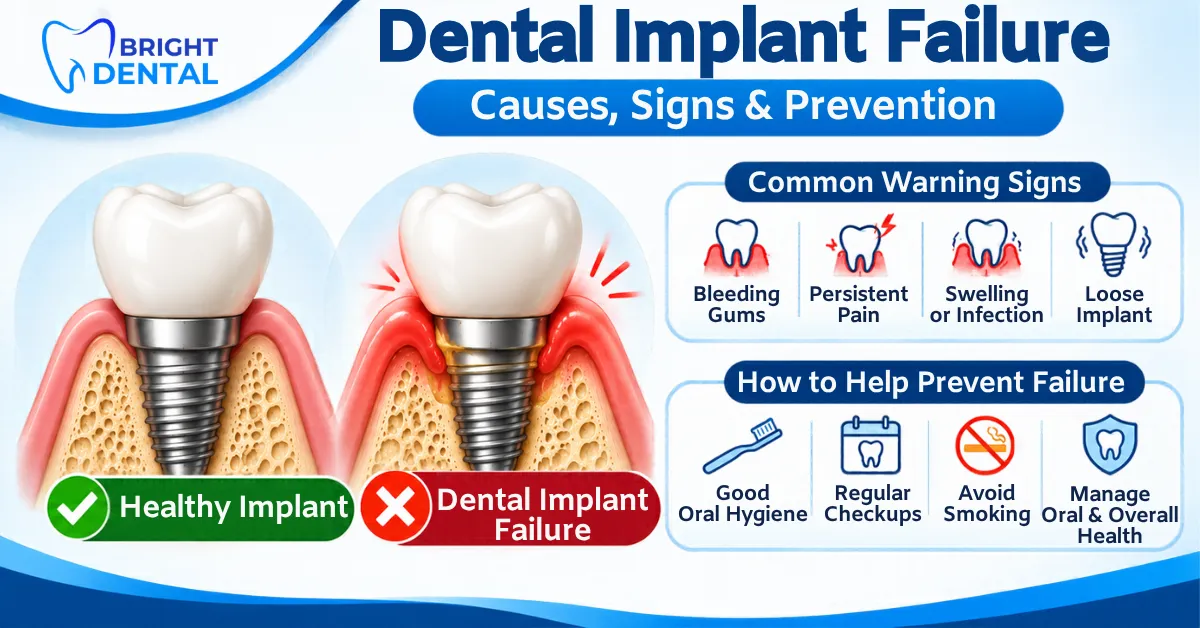

Dental implants are a reliable and popular solution for replacing missing teeth. They help restore chewing ability, improve smile appearance, and support oral health. However, like any dental procedure, implants carry certain risks.
Dental implant failure can occur when an implant does not properly integrate with the jawbone or loses its supporting bone and stability over time. Although many dental implants remain successful for years, understanding potential complications is essential.
At Bright Dental in Des Plaines, Illinois, we believe informed patients are better prepared to protect their smiles. This guide explains seven important causes, early warning signs, treatment options, and practical prevention tips.
Quick Answer: What Is Dental Implant Failure?
Dental implant failure happens when an implant cannot establish or maintain a stable connection with the surrounding jawbone.
It may occur during the initial healing period or several years after treatment. Possible warning signs include persistent pain, swollen or bleeding gums, infection, and implant movement.
Not every symptom means an implant has failed. However, early dental evaluation can help identify complications before they become more serious.
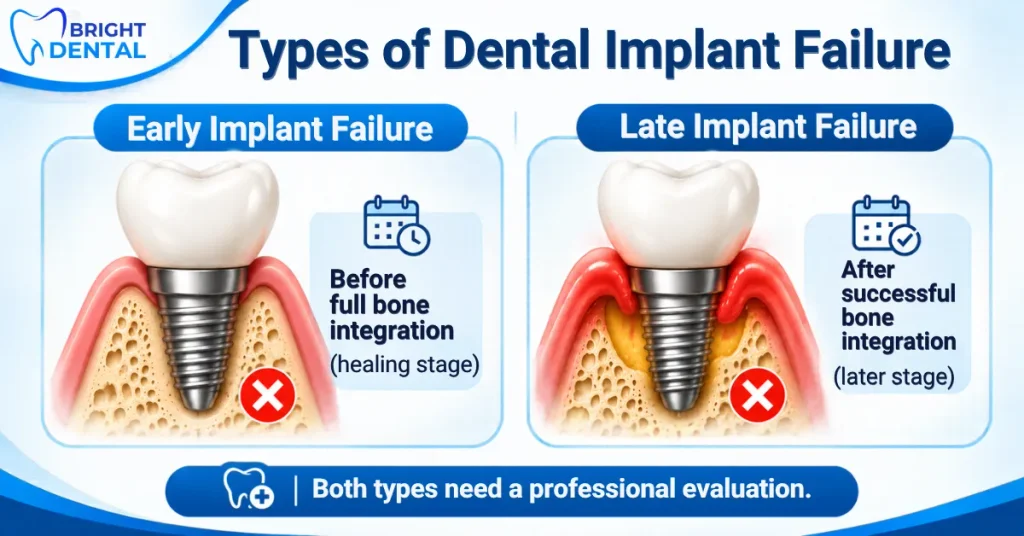
What Are the Two Types of Dental Implant Failure?
Understanding when complications occur helps dentists determine the most appropriate treatment.
Early Implant Failure
Early failure develops before the implant successfully integrates with the jawbone, a process called osseointegration.
Possible contributing factors include infection, inadequate bone support, excessive movement during healing, and certain medical conditions.
Late Implant Failure
Late failure occurs after an implant has initially integrated with the bone.
It may develop because of peri-implantitis, progressive bone loss, excessive biting forces, or mechanical complications.
Both situations require professional evaluation to determine whether the implant can be preserved.
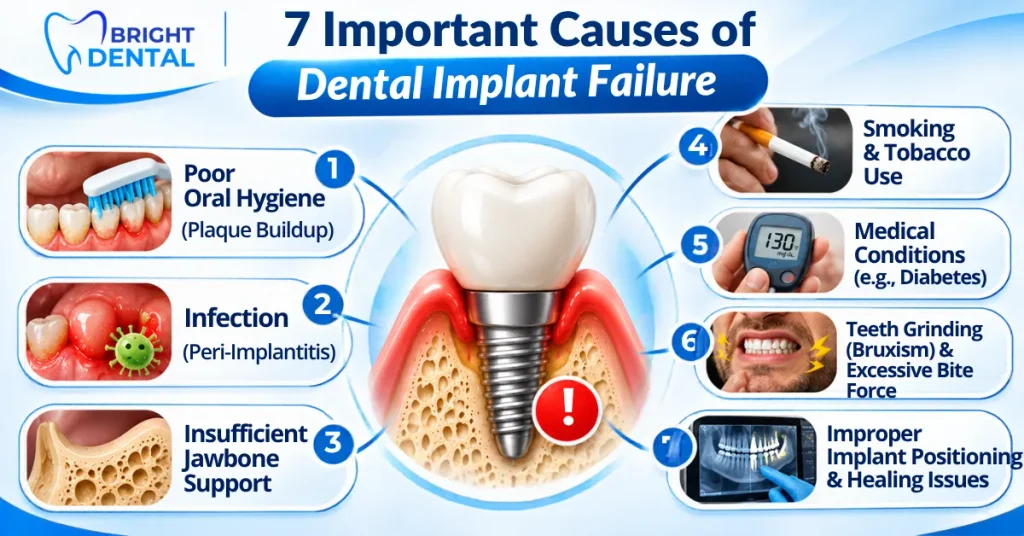
7 Important Causes of Dental Implant Failure
1. Poor Oral Hygiene and Plaque Buildup
Poor oral hygiene is an important contributor to dental implant failure.
When bacteria accumulate around an implant, they can irritate the surrounding gums and cause inflammation.
Without proper care, this inflammation may progress and affect the supporting bone.
Daily brushing, cleaning between teeth, and regular professional maintenance help reduce this risk.
2. Dental Implant Infection and Peri-Implantitis
A dental implant infection can develop when harmful bacteria affect the tissues surrounding an implant.
Two important conditions are:
- Peri-implant mucositis: Inflammation affecting the soft tissues without progressive supporting bone loss.
- Peri-implantitis: Inflammation associated with progressive bone loss around the implant.
Peri-implant mucositis may be reversible with appropriate treatment, while peri-implantitis often requires more extensive care.
The American Academy of Periodontology explains why early identification and treatment of these conditions are important.
3. Insufficient Jawbone Support
Dental implants need adequate healthy bone to remain stable.
When a tooth has been missing for a long time, the surrounding jawbone may gradually shrink. Severe bone loss can make implant placement more challenging.
Dentists evaluate bone height, width, and quality before recommending treatment.
In selected cases, bone grafting may improve the available support for an implant.
4. Smoking and Tobacco Use
Smoking is another significant risk factor for dental implant failure.
Tobacco use can interfere with healing and increase the likelihood of gum inflammation and implant-related complications.
Patients who smoke should discuss their habits with their dentist before implant surgery.
Stopping smoking and following professional guidance may improve oral health and reduce treatment risks.
5. Uncontrolled Diabetes and Medical Conditions
Certain medical conditions can affect healing and increase the risk of complications.
For example, poorly controlled diabetes may contribute to delayed healing and a greater risk of infection.
However, having diabetes does not automatically mean a patient cannot receive dental implants.
A thorough medical history, appropriate disease management, and individualized treatment planning are essential.
Patients can also explore our guide on who may be a candidate for dental implants.
6. Excessive Biting Pressure or Teeth Grinding
Excessive biting forces may place additional stress on an implant and its restoration.
Teeth grinding, also called bruxism, can contribute to mechanical problems such as crown damage, screw loosening, or other complications.
Depending on the patient’s condition, a dentist may recommend a custom night guard or adjustments to the bite.
Not every mechanical problem means the implant itself has failed.
7. Implant Positioning and Healing Complications
Proper implant positioning and careful treatment planning are important for long-term success.
Implants placed in unfavorable positions may be more difficult to clean or may experience excessive forces.
Healing complications can also interfere with successful bone integration.
Diagnostic imaging, appropriate surgical planning, and follow-up appointments help dentists identify and manage these risks.
Dental Implant Failure Symptoms: Warning Signs to Watch For
Recognizing dental implant failure symptoms early can help patients seek appropriate treatment.
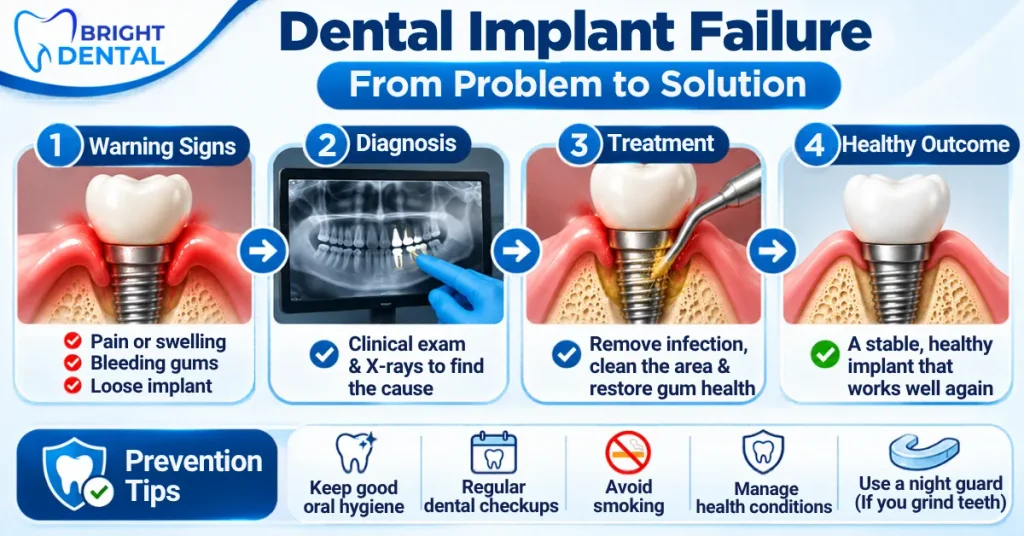
Possible warning signs include:
- Persistent or increasing pain after the expected healing period.
- Red, swollen, or tender gums around the implant.
- Bleeding when brushing or cleaning near the implant.
- Pus, persistent bad breath, or an unpleasant taste.
- Gum recession or exposed implant components.
- Difficulty chewing or discomfort when biting.
- A loose or moving implant.
Mild swelling and tenderness can be normal shortly after surgery. However, symptoms that worsen, persist, or develop after healing should be evaluated.
Important: A loose crown or abutment screw does not necessarily mean the implant embedded in the bone has failed. A dentist must identify which component is moving.
If you notice these warning signs, arrange a dental appointment promptly rather than waiting for the problem to resolve on its own.
How Is Dental Implant Failure Diagnosed?
A dentist may use several methods to investigate suspected complications.
These can include a clinical examination, assessment of gum inflammation, evaluation of implant stability, and dental imaging.
X-rays help assess surrounding bone levels, while additional imaging may be recommended when more detailed information is needed.
The dentist will also check the crown, abutment, and bite to distinguish mechanical complications from problems involving the implant itself.
An accurate diagnosis is essential before choosing treatment.
Can a Failed Dental Implant Be Saved?
Treatment depends on the underlying problem and the amount of damage present.
If inflammation is limited to the gums, professional cleaning and improved oral hygiene may help restore tissue health.
More advanced peri-implantitis may require specialized cleaning, infection management, or surgical treatment.
When an implant has lost stability and cannot be preserved, removal may be necessary.
After the area heals, some patients may be candidates for bone grafting and replacement implant treatment.
Dental implant failure does not always mean another implant is impossible. However, replacement depends on bone health, medical factors, and the reason the original implant failed.
Treatment costs also vary according to the required procedures. Learn more in our dental implants cost guide.
How to Prevent Dental Implant Failure
Patients often ask how to prevent dental implant failure and protect their investment in a healthier smile.
Although no treatment can guarantee lifetime success, several habits can help reduce complications.
Maintain Excellent Oral Hygiene
Brush twice daily using a soft-bristled toothbrush and clean around implants with dentist-recommended interdental tools.
Attend Regular Dental Checkups
Routine appointments allow your dentist to monitor gum health, implant stability, and surrounding bone.
Avoid Smoking
Reducing or eliminating tobacco use supports better oral and general health.
Manage Existing Medical Conditions
Follow your healthcare provider’s recommendations for managing conditions such as diabetes.
Protect Against Teeth Grinding
If you grind your teeth, ask whether a professionally fitted night guard is appropriate.
Follow Post-Surgery Instructions
During healing, follow instructions about eating, cleaning, medications, and activity restrictions.
Address Problems Early
Do not ignore persistent discomfort, bleeding, or implant movement.
Patients interested in long-term implant care can also read our guide on how long dental implants last.
Why Choose Bright Dental for Dental Implant Care?
At Bright Dental in Des Plaines, Illinois, Dr. Furrukh Ashraf brings over 25 years of dental experience to patient care.
Our approach emphasizes patient education, careful evaluation, personalized treatment planning, and long-term oral health.
Whether you are considering dental implants or experiencing concerns with an existing restoration, a professional examination can help determine the appropriate next steps.
Our goal is to help patients understand their treatment options and make informed decisions about their dental health.
Frequently Asked Questions About Dental Implant Failure
1. What is the most common cause of dental implant failure?
Several factors can contribute, including poor plaque control, peri-implantitis, smoking, inadequate bone support, and healing complications. The underlying cause varies between patients.
2. Is dental implant failure painful?
Not always. Some patients experience pain or tenderness, while others notice bleeding, swelling, or loosening without significant discomfort.
3. Can dental implant failure happen years later?
Yes. Late complications can develop years after successful implant placement, particularly when supporting tissues become inflamed or bone loss progresses.
4. Can an infected dental implant be treated?
Sometimes. Treatment depends on the severity of inflammation, bone loss, and implant stability. Early professional evaluation improves the opportunity to manage complications.
5. Can a failed dental implant be replaced?
In some cases, yes. Replacement may be possible after the underlying problem has been addressed and the dentist confirms that sufficient healthy bone and tissue are available.
Conclusion
Dental implant failure is a potential complication, but it does not affect every patient receiving implant treatment.
Understanding the causes, recognizing warning signs, and maintaining good oral hygiene can help protect implant health.
Regular professional care is especially important because some complications may develop without obvious symptoms.
If you experience persistent pain, bleeding, swelling, or implant movement, seek a dental evaluation promptly.
Schedule a Dental Implant Consultation at Bright Dental
Concerned about your dental implant or planning to replace missing teeth?
Bright Dental welcomes patients from Des Plaines, Mount Prospect, Buffalo Grove, Wilmette, and Lincolnshire.
Our team can evaluate your oral health, discuss possible complications, and explain suitable treatment options.
This article provides general educational information and does not replace an individualized dental examination or diagnosis.
Bright Dental II – Des Plaines
737 W Golf Rd, Des Plaines, IL 60016
Phone: +1 (847) 228-2000
