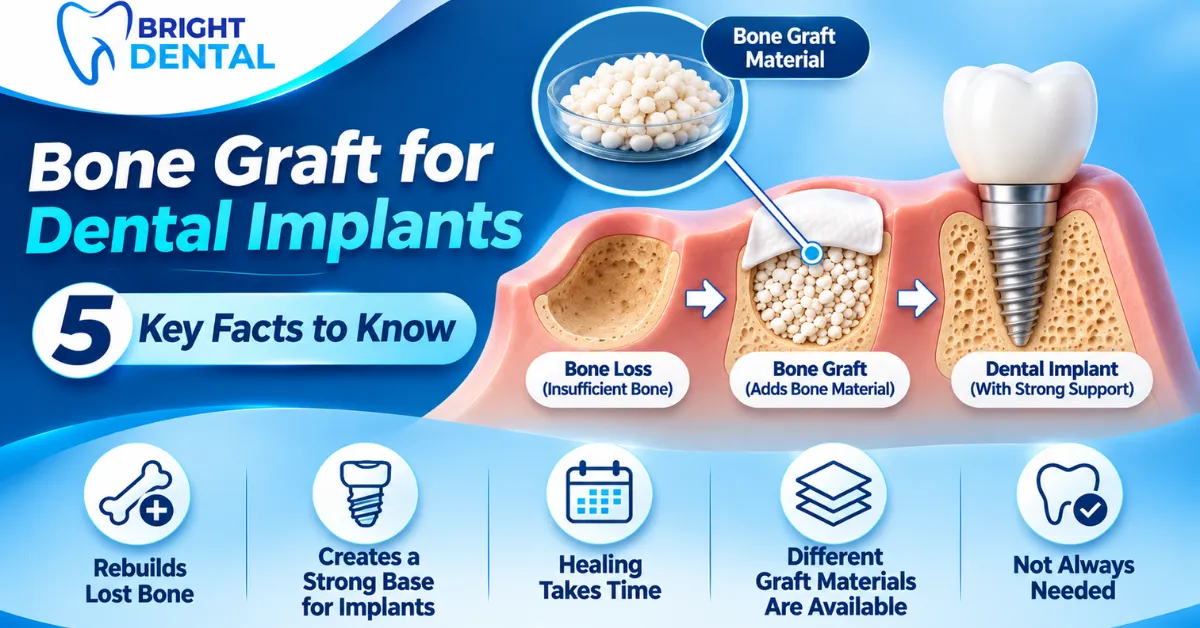

Are you considering dental implants but worried about insufficient jawbone? A bone graft for dental implants may help rebuild lost bone and create a stronger foundation for implant placement.
When teeth are missing, the jawbone can gradually shrink. Bone grafting helps restore bone volume in suitable patients, although not everyone needs the procedure.
In this guide, Bright Dental explains five important facts about dental bone grafting, including the procedure, materials, recovery, and costs.
Quick Answer: Do You Need a Bone Graft for Dental Implants?
A bone graft for dental implants may be recommended when your jawbone lacks sufficient height, width, or volume to support an implant.
The procedure places grafting material in the affected area to encourage bone formation. Healing may take several months, depending on the graft and your overall health.
Not every patient needs bone grafting. A dental examination and imaging help determine whether it is necessary.
What Is a Bone Graft for Dental Implants?
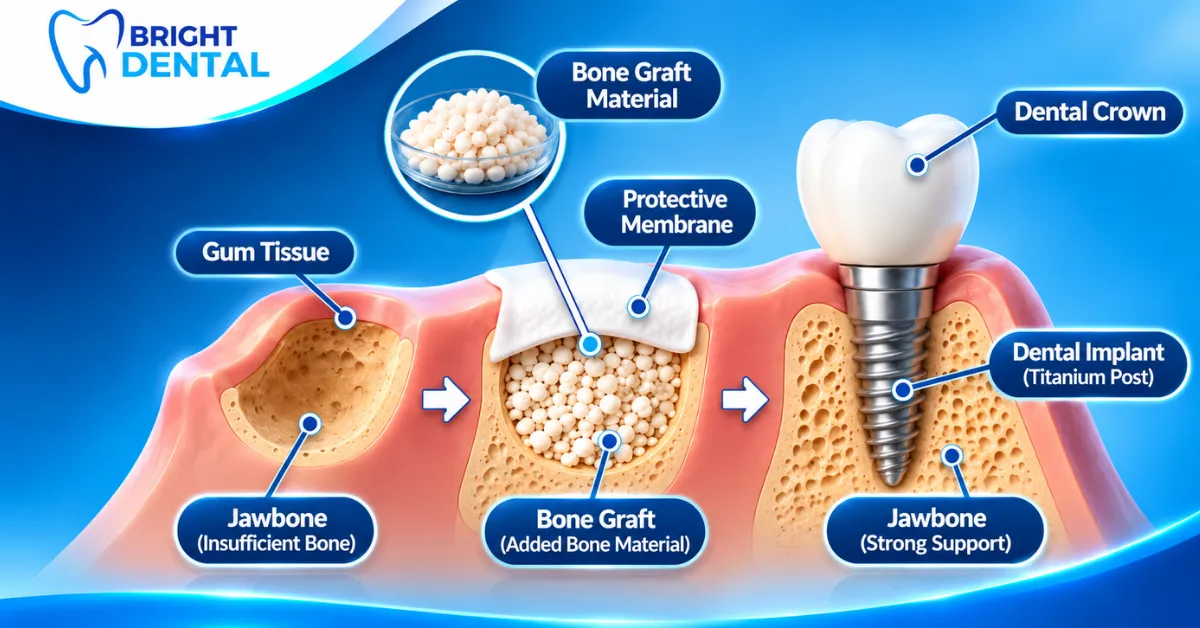
A dental bone graft is a procedure that places bone or bone-substitute material in an area where the jawbone has lost volume.
The graft acts as a framework that supports new bone formation during healing.
The goal of a bone graft for dental implants is to improve the bone available for implant placement. However, successful healing and implant stability depend on individual circumstances.
The American Association of Oral and Maxillofacial Surgeons explains that bone grafting may help restore jawbone structure and prepare suitable patients for implant treatment.
Learn more from the American Association of Oral and Maxillofacial Surgeons’ bone grafting guidance.
5 Essential Facts About Dental Bone Grafting
1. Why Might You Need a Bone Graft?
Dental implants require adequate jawbone support. If the bone is too thin or has lost volume, additional treatment may be necessary.
Common causes of bone loss include:
- Missing teeth for several years
- Natural bone shrinkage after extraction
- Advanced gum disease
- Previous dental infections
- Jaw injuries or trauma
A bone graft for dental implants may help rebuild areas where natural bone is insufficient.
Your dentist will assess your jawbone using dental imaging before recommending treatment.
Read our guide on who is a candidate for dental implants.
2. What Materials Are Used for Bone Grafting?
Different graft materials may be used depending on the treatment area and amount of bone needed.
Autograft: Bone taken from another area of your own body.
Allograft: Processed bone material obtained from a human donor.
Xenograft: Processed bone material obtained from an animal source.
Alloplast: Synthetic bone-substitute material.
Each material has different properties and uses.
Your dentist will explain which material is suitable for your bone graft for dental implants and discuss any concerns about its source.
3. How Is the Bone Graft Procedure Performed?
The procedure depends on the location and amount of bone loss.
A typical treatment involves five steps:
Step 1: Examination
Your dentist examines your mouth and may use X-rays or 3D imaging to evaluate bone structure.
Step 2: Anesthesia
Local anesthesia is commonly administered to keep the treatment area comfortable.
Step 3: Graft Placement
The selected graft material is placed in the area requiring additional bone support.
Step 4: Graft Protection
A protective membrane may be used to support healing when appropriate.
Step 5: Closing the Area
The gum tissue is repositioned and may be secured with stitches.
A bone graft for dental implants requires careful planning and follow-up care to monitor healing.
4. How Long Does a Bone Graft Take to Heal?
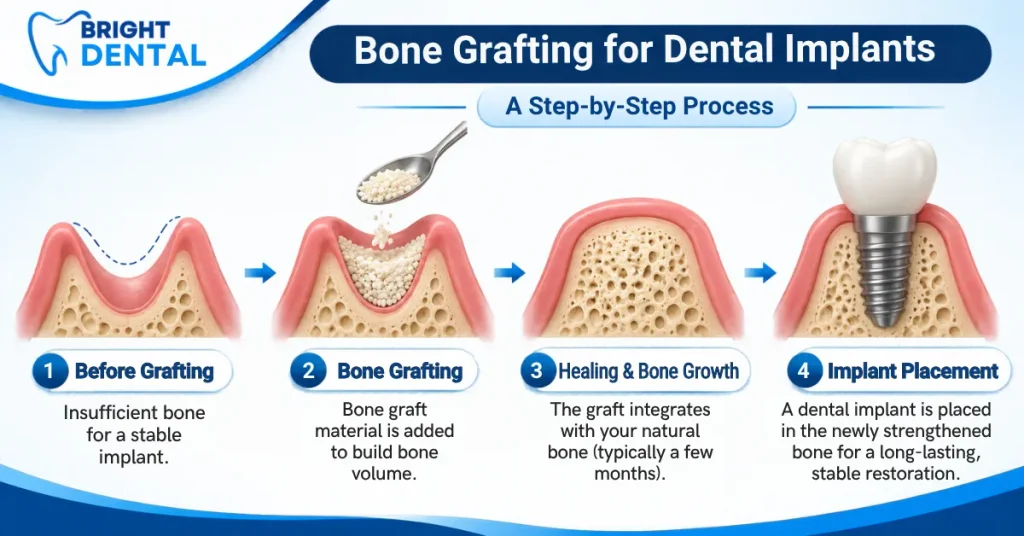
Healing time varies depending on the graft size, material, surgical technique, and individual health.
Some smaller grafts can be performed alongside implant placement. Larger grafts may require several months of healing before an implant can be placed.
During recovery, your body gradually forms and remodels bone around the graft material.
Your dentist will assess healing before proceeding with implant treatment.
The timeline for a bone graft for dental implants should always be based on your individual clinical needs.
5. Can You Get Dental Implants Without Bone Grafting?
Yes. Many patients have sufficient natural jawbone and do not require grafting.
However, patients with significant bone loss may need additional treatment.
In selected cases, alternative implant approaches may be considered. For example, basal dental implants may be discussed for certain patients.
These options are not suitable for everyone, and their benefits and limitations require careful evaluation.
Whether you need a bone graft for dental implants depends on your anatomy, oral health, and treatment goals.
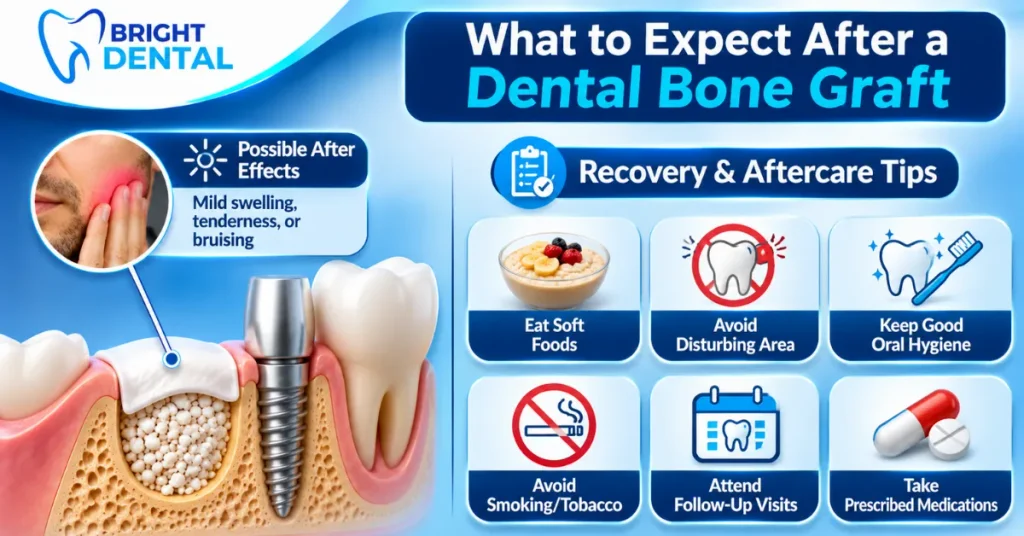
What to Expect After a Dental Bone Graft
Some swelling, tenderness, or mild bruising may occur after treatment.
Your dentist will provide personalized aftercare instructions.
General recovery recommendations include:
- Eat soft foods as advised.
- Avoid disturbing the surgical area.
- Maintain oral hygiene according to instructions.
- Avoid smoking and tobacco products.
- Attend scheduled follow-up appointments.
- Take prescribed medications as directed.
Contact your dental professional if you experience worsening pain, persistent bleeding, fever, or unusual discharge.
Proper aftercare helps protect the graft site during healing.
Does a Bone Graft Increase Dental Implant Costs?
A bone graft for dental implants can increase overall treatment costs because it may involve additional materials, imaging, and surgical procedures.
Pricing depends on:
- Amount of bone requiring restoration
- Graft material and technique
- Treatment location
- Additional procedures
- Overall treatment complexity
Some patients may need grafting before implant placement, while others may receive both treatments during one procedure.
For more information, read our guide to dental implant costs and pricing factors.
Your dentist can provide a personalized estimate following an examination.
Why Choose Bright Dental?
At Bright Dental, we focus on personalized treatment planning and long-term oral health.
25+ Years of Local Experience: Dr. Furrukh Ashraf has served the Des Plaines community for over two decades, helping patients understand their dental treatment options.
Our team evaluates jawbone condition, gum health, and individual treatment needs before discussing implant options.
If you are considering a bone graft for dental implants, we can help you understand whether additional bone support may be necessary and discuss appropriate next steps.
Frequently Asked Questions
Is bone grafting always necessary before dental implants?
No. Many patients have enough natural jawbone for implants. Grafting is considered when additional bone support is needed.
Is dental bone grafting painful?
Local anesthesia helps manage discomfort during treatment. Some swelling and tenderness may occur afterward.
How long should I wait before getting an implant?
Some patients can receive implants alongside grafting, while others require several months of healing.
Can bone grafting help after years of missing teeth?
Yes, in suitable cases. Your dentist must assess the amount and location of bone loss before recommending treatment.
What happens if a bone graft does not heal properly?
Your dentist will evaluate the area and may recommend additional healing time, further treatment, or an alternative approach.
Conclusion
A bone graft for dental implants can help rebuild lost jawbone and improve the foundation for implant placement in suitable patients.
Understanding the procedure, materials, healing timeline, and costs can help you make informed treatment decisions.
However, not everyone needs grafting. A personalized dental evaluation is essential to determine the most appropriate treatment plan.
Explore Dental Implant Options at Bright Dental
Concerned about jawbone loss or considering dental implants?
Bright Dental offers personalized consultations to help patients understand their oral health and available treatment options.
We welcome patients from Des Plaines, Mount Prospect, Wheeling, Prospect Heights, and Northfield, Illinois.
This article is for educational purposes only and does not replace professional dental advice.
Bright Dental II – Des Plaines
737 W Golf Rd, Des Plaines, IL 60016
Phone: +1 (847) 228-2000
