

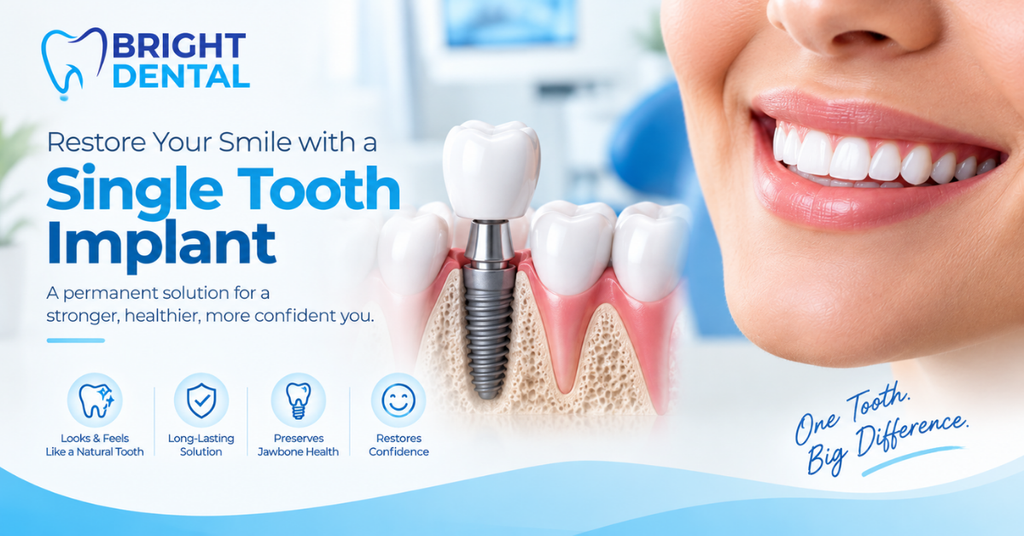
Losing a single tooth can feel like a small problem, but it affects more than your smile. The gap can change how you chew, cause nearby teeth to drift, and slowly shrink the jawbone underneath. A single tooth implant replaces the missing tooth from the root up, so it looks, feels, and works like your natural tooth. In this guide from Bright Dental, you will learn how a single tooth implant works, how it compares to a bridge, how long the process takes, and who is a good candidate.
Quick answer: A single tooth implant is a small titanium post placed in the jawbone to act as an artificial tooth root. After it fuses with the bone, a custom crown is attached on top. It replaces one missing tooth without altering the teeth beside it.
What Is a Single Tooth Implant?
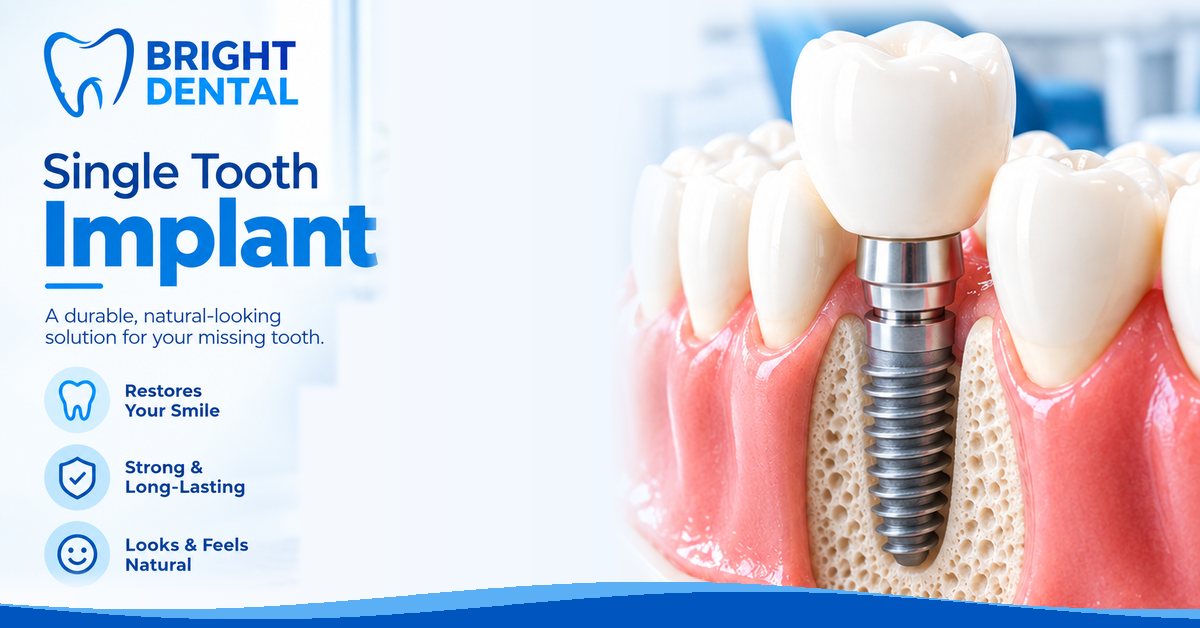
A single tooth implant is a complete replacement for one missing tooth. It has three parts:
- The implant: a titanium post that sits in the jawbone and works like a tooth root
- The abutment: a small connector that joins the post to the crown
- The crown: the visible, custom-made tooth, matched to the color and shape of your natural teeth
Titanium is compatible with the body, so the jawbone can grow around the post and hold it firmly in place. Because each part is separate and replaceable, the crown can be repaired or renewed later without redoing the whole implant.
Why Replace a Single Missing Tooth?
Some people think one missing tooth does not need replacing, especially at the back of the mouth. In reality, leaving a gap can lead to:
- Shifting teeth: neighboring teeth lean into the space, which can change your bite
- Jawbone loss: without a root to stimulate it, the bone under the gap gradually shrinks
- Chewing problems: extra pressure falls on the remaining teeth
- Changes in appearance: a gap in the front can affect your smile, and bone loss can change facial contours over time
Replacing the tooth early helps prevent these problems.
Single Tooth Implant vs. Dental Bridge
The two most common ways to replace one tooth are an implant and a bridge. Here is how they compare:
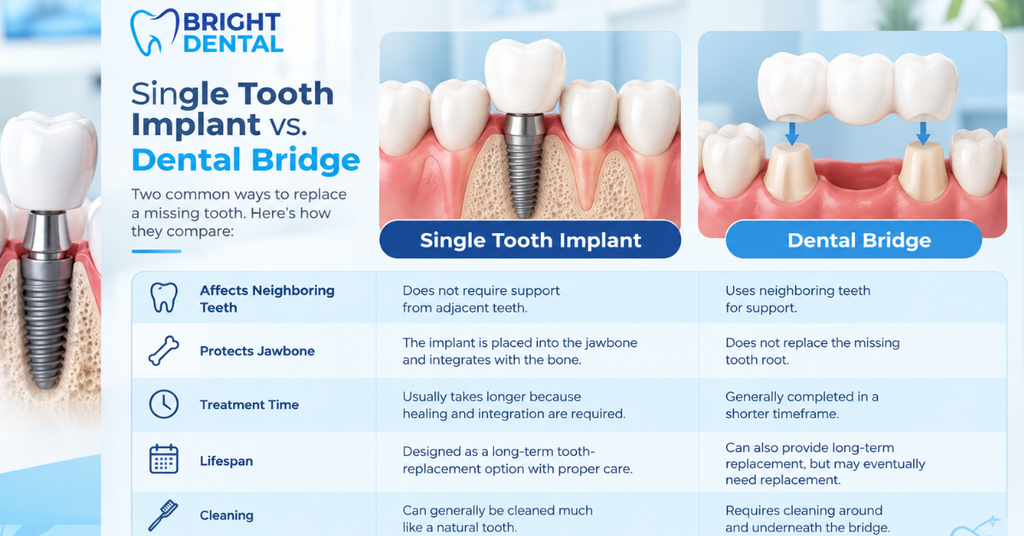
| Feature | Single tooth implant | Dental bridge |
|---|---|---|
| Affects neighboring teeth | No | Yes, adjacent teeth are filed down to hold the bridge |
| Protects jawbone | Yes, the post stimulates the bone | No |
| Treatment time | Longer, several months | Shorter, a few weeks |
| Lifespan | Very long with good care | Shorter, often needs replacement |
| Cleaning | Brush and floss like a natural tooth | Needs special floss under the bridge |
A bridge can be a good choice when speed matters or when the surrounding teeth already need crowns. An implant is often preferred when the neighboring teeth are healthy and you want a long-term solution. Your dentist can help you decide based on your teeth, bone, and budget.
The Single Tooth Implant Procedure: Step by Step
1. Consultation and Planning
Your dentist examines your mouth, takes X-rays or a 3D scan, and checks your gum health and bone density. This step confirms whether an implant is suitable and how to plan the treatment.
2. Tooth Removal (If Needed)
If the damaged tooth is still in place, it is removed first. Sometimes an implant can be placed at the same visit, and sometimes the area needs time to heal first.
3. Bone Grafting (If Needed)
If the jawbone is too thin or soft, a small bone graft can rebuild it before the implant is placed. This adds healing time but improves the chance of long-term success.
4. Implant Placement
Under local anesthesia, the titanium post is placed into the jawbone. You should feel pressure but not pain during the procedure.
5. Healing
Over the next few weeks to months, the bone grows around the implant and locks it in place. This process is called osseointegration, and it is what makes an implant so stable.
6. Abutment and Crown
Once the implant is secure, the abutment is attached and a custom crown is fitted on top. Your dentist checks the color, shape, and bite so the new tooth blends in naturally.
How Long Does a Single Tooth Implant Take?
The total timeline varies from person to person. In general:
- Simple cases: a few months from placement to the final crown
- Cases needing extraction or bone grafting: longer, since the bone needs time to heal before the implant is placed
Your dentist will give you a personalized timeline after your examination. Rushing the healing phase is not advised, because stable bone is the foundation of a lasting implant.
What Affects the Cost of a Single Tooth Implant?
The price is different for every patient because several factors are involved:
- Whether an extraction or bone graft is needed
- The type and brand of implant and crown material
- The position of the tooth (front or back)
- The experience of the dental team and the technology used
Book a consultation to receive an exact quote based on your own case, since the total depends on the steps you need.
Who Is a Good Candidate for a Single Tooth Implant?
Most healthy adults with one missing tooth are good candidates, especially if they have:
- Healthy gums with no active gum disease
- Enough jawbone, or willingness to have a bone graft
- Good general health and realistic expectations
- A commitment to brushing, flossing, and regular checkups
Smoking, uncontrolled diabetes, and gum disease can affect healing and success, so your dentist may recommend addressing these first. Growing teenagers usually need to wait until their jaws have finished developing.
Recovery and Aftercare
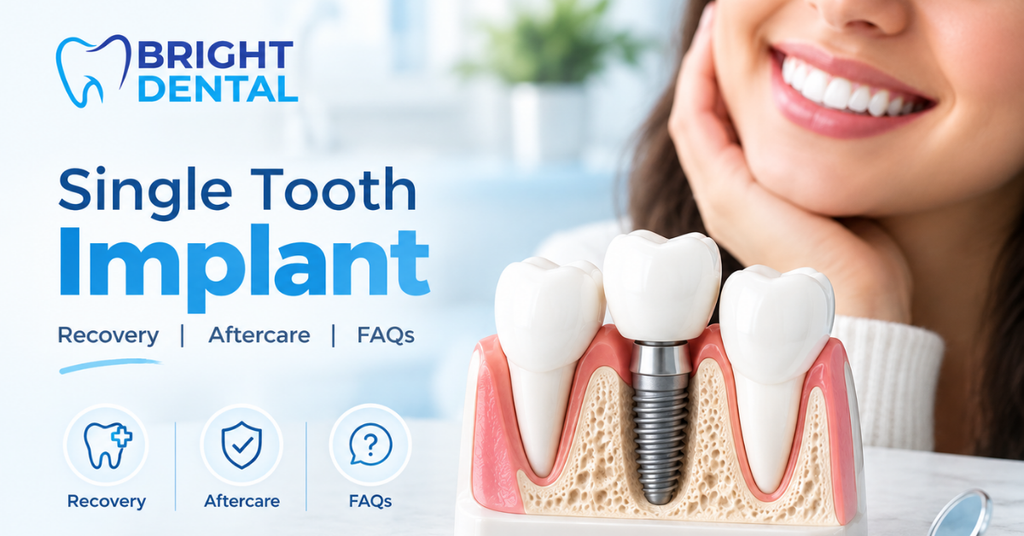
Mild swelling, tenderness, or bruising in the first few days is normal and can usually be managed with medication your dentist recommends.
Simple aftercare tips:
- Eat soft foods for the first few days
- Avoid smoking, which slows healing and raises the risk of failure
- Keep the area clean with gentle brushing and any rinse your dentist advises
- Avoid chewing hard foods on the implant until your dentist says it is safe
- Attend all follow-up visits so healing can be checked
Once healed, look after your implant just as you do your natural teeth, with brushing twice daily, flossing, and checkups every six months.
How Long Does a Single Tooth Implant Last?
With good oral hygiene and regular visits, the implant post can last for decades and often for life. The crown on top may need replacing after many years due to normal wear. Gum disease and smoking are the biggest threats to implant longevity, so healthy habits matter.
Frequently Asked Questions About Single Tooth Implants
Is a single tooth implant painful?
The procedure is done under local anesthesia, so you should not feel pain during placement. Mild soreness afterward is normal and usually manageable.
Is a single tooth implant better than a bridge?
It depends on your situation. An implant protects the jawbone and leaves neighboring teeth untouched, while a bridge is faster to complete. Your dentist can recommend the better option for you.
Can a single tooth implant be done in one day?
Some patients qualify for same-day placement, but it depends on bone quality, gum health, and the position of the tooth. Your dentist will tell you if it is possible for you.
How do I care for a single tooth implant?
Brush twice daily, floss once a day, and visit your dentist every six months. Implants cannot decay, but the gums around them can still develop disease, so cleaning is just as important.
What happens if I do not replace a missing tooth?
Neighboring teeth may drift, the bite can change, and the jawbone may shrink over time. Replacing the tooth early helps avoid these problems.
Conclusion
A single tooth implant is a natural-looking, long-lasting way to replace one missing tooth without affecting the healthy teeth around it. It protects your jawbone, restores normal chewing, and lets you smile with confidence. The best time to plan a replacement is soon after the tooth is lost.
Ready to Restore Your Smile?
A missing tooth can affect your smile, comfort, and ability to chew. Bright Dental can help you determine whether a single tooth implant is the right solution for restoring your smile and function.
