

Smoking is one of the most significant, and most preventable, risk factors for gum disease. The connection between smoking and gum disease goes beyond a general health warning: smoking changes how your gums respond to bacteria, how visible warning signs appear, and how well your gums heal after treatment.
At Bright Dental, we regularly work with patients who smoke and want a clear, honest understanding of how it affects their gum health. This article explains how smoking and gum disease are connected in plain terms, covers what the research shows, and offers practical steps for protecting your gums whether or not you’re ready to quit.
Does Smoking Cause Gum Disease? Understanding Smoking and Gum Disease
: The link between smoking and gum disease isn’t that smoking directly causes gum disease on its own, but it substantially increases the risk of developing it and makes it more difficult to treat. Gum disease begins with bacterial plaque along the gumline. Smoking interferes with your body’s ability to fight that bacteria effectively, which allows the infection to take hold and progress more easily than it would in a non-smoker with the same amount of plaque buildup.
How Smoking Affects Gum Health
Understanding smoking and gum disease starts with how tobacco use affects the gums in several distinct ways, each of which plays a role in raising periodontal disease risk.
Reduced Blood Flow to the Gums: A Key Link in Smoking and Gum Disease
Nicotine causes blood vessels to constrict, including the small vessels that supply blood to the gum tissue. Reduced blood flow means gum tissue receives less oxygen and fewer of the nutrients needed to fight infection and repair damage. This is one of the primary reasons smokers are more vulnerable to gum disease than non-smokers with similar oral hygiene habits.
Weakened Immune Response
Smoking suppresses certain immune functions that would normally help the body respond to bacterial infection in the gums. With a weaker local immune response, bacteria below the gumline can multiply and cause damage more easily, allowing gum disease to progress further before the body can push back against it.
Masked Warning Signs
One of the more concerning effects of smoking is that it can hide the early symptoms that typically alert patients to a problem. Healthy gum tissue normally becomes red and swollen and may bleed when irritated by bacteria, which is often the first sign patients notice. Because smoking restricts blood flow, smokers’ gums may bleed less, even when significant infection is present underneath. This means gum disease can advance further in smokers before it becomes noticeable, often being diagnosed at a more advanced stage.
Smoking and Gum Disease Risk Factors
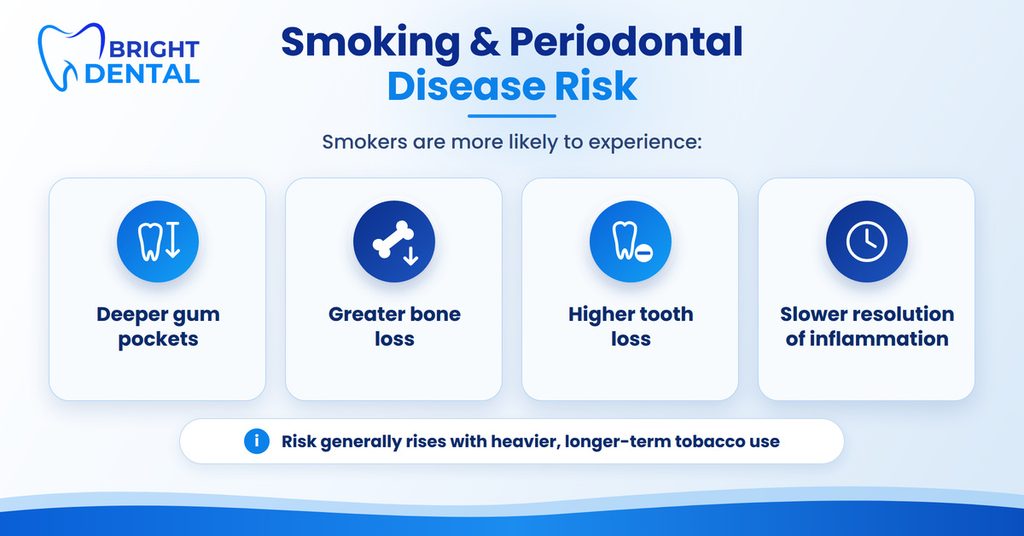
Research consistently shows that smokers face a significantly higher risk of developing periodontitis, the more advanced and destructive form of gum disease, compared to non-smokers. Smokers are also more likely to experience:
- Deeper gum pockets around the teeth
- Greater loss of the bone that supports the teeth
- Higher rates of tooth loss related to gum disease
- Slower resolution of inflammation even with treatment
The number of cigarettes smoked and the number of years a person has smoked both tend to correlate with the severity of periodontal damage, meaning risk generally increases with heavier and longer-term tobacco use. The CDC’s data on tobacco use and oral health provides further detail on this connection.
Schedule Your Gum Health Evaluation Near Riverwoods or Deerfield
If you are concerned about smoking and gum disease and haven’t had a periodontal evaluation recently, an exam is the best way to understand where your gum health currently stands. We welcome patients from Riverwoods and Deerfield to schedule a visit.
Smoking and Gum Disease: Impact on Treatment Recovery
Smoking doesn’t only raise the risk of developing gum disease, it also affects how well periodontal treatment works once it’s needed. Patients who smoke generally experience slower healing and less predictable results after periodontal treatment compared to non-smokers, for many of the same underlying reasons that raise their initial risk.
Why Smoking Slows Healing After Treatment
Procedures such as scaling and root planing rely on healthy gum tissue reattaching to the tooth root and inflammation resolving over the following weeks. Because smoking reduces blood flow and limits the immune response needed for that healing process, smokers often see:
- Slower reduction in gum pocket depth after treatment
- Less complete reattachment of gum tissue to the tooth
- Higher rates of the infection returning after initial treatment
- Reduced long-term success of more advanced periodontal procedures, including certain surgical treatments
This doesn’t mean periodontal treatment is ineffective for smokers, but it does mean outcomes are generally more favorable, and more lasting, in patients who aren’t actively smoking.
Practical Advice for Managing Smoking and Gum Disease Together
If you smoke and aren’t ready to quit, or are in the process of quitting, there are still meaningful steps you can take to protect your gums in the meantime:
- Keep up with a consistent daily hygiene routine. Thorough brushing and flossing help reduce the bacterial load your gums have to contend with.
- Don’t skip professional cleanings. Regular cleanings remove tartar buildup that a toothbrush can’t reach, which matters even more for smokers given the elevated risk.
- Be upfront with your dental team about your smoking history. This allows your dentist to monitor your gums more closely and catch early changes that might otherwise be masked.
- Watch for subtle signs, such as persistent bad breath, gum tenderness, or teeth that feel slightly loose, since more obvious signs like bleeding may be less noticeable in smokers.
- Attend follow-up visits after periodontal treatment. Given the slower healing process, consistent monitoring after treatment is especially important for smokers.
How Quitting Improves Smoking and Gum Disease Outcomes
Quitting smoking is one of the most effective steps a patient can take to improve both current gum health and the long-term success of periodontal treatment. Research shows that former smokers’ periodontal risk decreases over time after quitting, and blood flow to the gums begins improving relatively quickly once tobacco use stops. For patients undergoing periodontal treatment, quitting smoking, even shortly before or after treatment, has been associated with better healing and more stable long-term results compared to continuing to smoke through the recovery period.
Quitting is rarely simple, and your dentist isn’t there to judge that process. Many patients find it helpful to combine quitting efforts with support from their physician, since nicotine replacement therapy and other cessation approaches can improve success rates significantly.
Frequently Asked Questions
Can vaping affect gum health the same way smoking does? Emerging research suggests vaping may also affect blood flow and gum tissue health, though the long-term periodontal effects of vaping are still being studied compared to the extensive research available on traditional cigarette smoking. Patients who vape should still maintain close monitoring of their gum health.
Will my gums go back to normal after I quit smoking? Gum tissue can improve significantly after quitting, particularly in terms of blood flow and healing capacity. However, any bone loss or gum recession that already occurred generally doesn’t reverse on its own and may require periodontal treatment to manage.
How often should smokers get dental checkups? Because warning signs can be masked in smokers, more frequent periodontal monitoring, often every three to four months rather than the standard six-month interval, is commonly recommended for patients who smoke or have a smoking history.
Ongoing Care for Smoking and Gum Disease
For patients already managing gum disease, staying consistent with periodontal treatment and maintenance is especially important. Our guide on scaling and root planing explains what this common non-surgical treatment involves and how it’s used to address the early below-the-gumline effects of gum disease. For patients further along in treatment, our article on maintaining gum health after treatment covers why ongoing maintenance visits matter even after active treatment has ended.
Smoking and Gum Disease Support in Riverwoods and Deerfield
Bright Dental provides comprehensive periodontal services for patients throughout the Des Plaines area, including those coming from Riverwoods and Deerfield. Whether you’re a current smoker concerned about your gum health, a former smoker managing the after-effects, or simply due for an evaluation, our team can assess your gums and recommend a monitoring or treatment plan suited to your history.
Final Thoughts
The link between smoking and gum disease is well established: smoking reduces blood flow to the gums, weakens the body’s ability to fight infection, and can mask the warning signs that typically prompt patients to seek treatment. It also slows healing and reduces the predictability of periodontal treatment outcomes. The good news is that both quitting and consistent professional care can meaningfully improve gum health at any stage, whether you’re actively smoking, in the process of quitting, or years past your last cigarette. A periodontal evaluation is the clearest way to understand exactly where your gum health stands today.

