
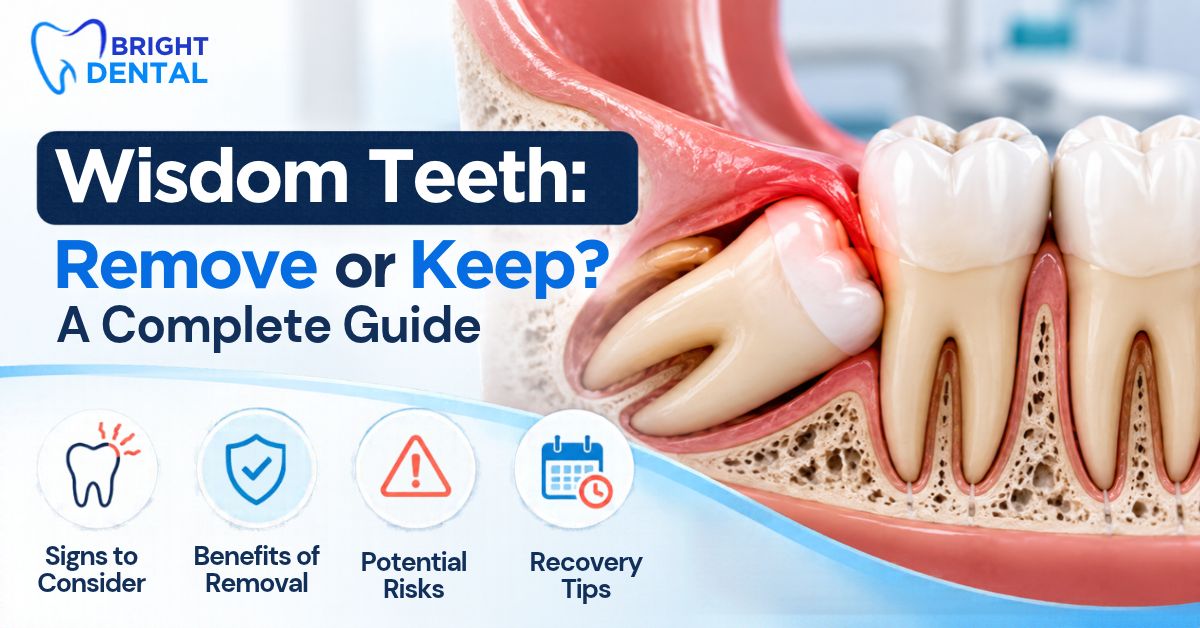

Wisdom teeth usually appear between ages 17 and 25. Some grow normally without causing problems, while others become trapped beneath the gums or develop at an angle.
Not everyone needs wisdom teeth removal. Healthy third molars can remain in place, but problematic teeth may require extraction to protect oral health.
At Bright Dental in Des Plaines, dental examinations and X-rays help determine whether keeping or removing these teeth is appropriate.
Here are seven important signs to consider.
Quick Answer: Should You Remove or Keep Wisdom Teeth?
You may keep wisdom teeth if they are healthy, properly positioned, fully erupted, and easy to clean.
However, wisdom teeth removal may be recommended for recurring infections, persistent pain, severe decay, or damage to nearby teeth.
An impacted tooth does not automatically require extraction. Your dentist will evaluate its position, symptoms, and potential complications.
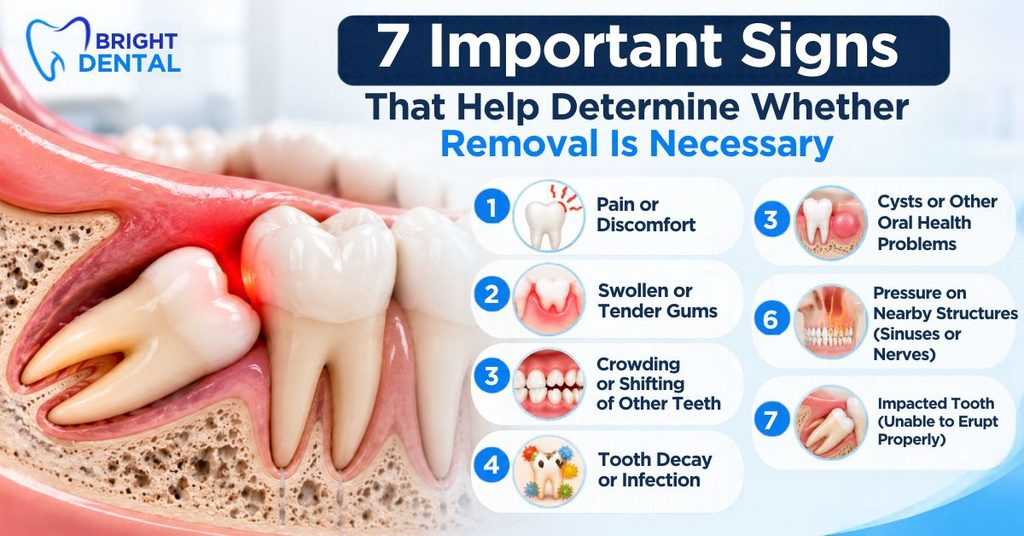
7 Important Signs You May Need an Extraction
1. Persistent Pain Behind Your Molars
Recurring pain near the back of your mouth may indicate an impacted tooth, infection, or decay.
Some discomfort occurs during eruption, but persistent or worsening pain requires a dental examination.
Extraction may be necessary when the affected tooth causes ongoing problems that cannot be managed effectively.
2. Swollen or Infected Gums
Partially erupted wisdom teeth can trap food particles and bacteria beneath surrounding gum tissue.
This may cause pericoronitis, an inflammatory condition that can lead to swelling, tenderness, and unpleasant breath.
Repeated infections are a common reason dentists consider wisdom teeth removal.
Seek urgent dental care if swelling occurs with fever, difficulty swallowing, or difficulty breathing.
3. Damage to Nearby Teeth
Wisdom teeth growing at an angle may affect neighboring second molars.
Their position can make cleaning difficult, increasing the risk of cavities and gum problems.
In some cases, pressure or associated disease can damage nearby tooth structures.
Dentists may recommend extraction when an impacted tooth threatens an adjacent molar.
4. Severe Tooth Decay
Wisdom teeth are located far back in the mouth, making brushing and flossing challenging.
Food and plaque buildup can increase the risk of cavities.
Minor decay may be treatable with fillings, but severely damaged or inaccessible teeth may require extraction.
Wisdom teeth removal can be appropriate when restoring the tooth is impractical.
5. Cysts or Other Dental Complications
Occasionally, impacted wisdom teeth are associated with cysts or changes in surrounding tissues.
These conditions may affect nearby bone or teeth if left untreated.
Dental X-rays help identify abnormalities that may not cause immediate symptoms.
When significant complications develop, extraction may be recommended as part of treatment.
6. Repeated Food Trapping
Partially erupted or poorly positioned wisdom teeth can create spaces where food repeatedly becomes trapped.
This may contribute to bad breath, gum irritation, cavities, and recurring inflammation.
If cleaning remains difficult despite proper oral hygiene, your dentist may discuss wisdom teeth removal.
However, improved cleaning techniques or monitoring may be sufficient in some cases.
7. Difficulty Opening Your Mouth
Inflammation or infection around a wisdom tooth may cause jaw discomfort and difficulty opening your mouth.
This condition can sometimes accompany pericoronitis or other dental infections.
Difficulty opening the mouth has several possible causes, so professional diagnosis is essential.
Extraction may be considered if an affected tooth is responsible for recurring symptoms.
When Should You Keep Your Wisdom Teeth?
Not every wisdom tooth needs extraction.
You may be able to keep your wisdom teeth when they:
- Are fully erupted and properly aligned.
- Have healthy surrounding gums.
- Do not cause pain or recurring infections.
- Are free from significant decay.
- Can be cleaned effectively.
- Do not damage neighboring teeth.
Healthy wisdom teeth can sometimes remain functional throughout adulthood.
Wisdom teeth removal is generally unnecessary when teeth are healthy, functional, and can be monitored safely.
Regular dental examinations help detect changes before complications develop.
Wisdom Teeth: Removal vs Keeping Them
| Factor | Keep Wisdom Teeth | Consider Removal |
|---|---|---|
| Tooth position | Properly aligned | Problematic positioning |
| Pain | No persistent symptoms | Recurring discomfort |
| Gum health | Healthy | Repeated infections |
| Tooth decay | Healthy or restorable | Severe decay |
| Cleaning | Easy to maintain | Difficult to clean |
| Nearby teeth | No damage | Existing damage |
| X-ray findings | No concerning changes | Identified complications |
The decision about wisdom teeth removal should consider your symptoms, dental examination, X-rays, and individual risks.
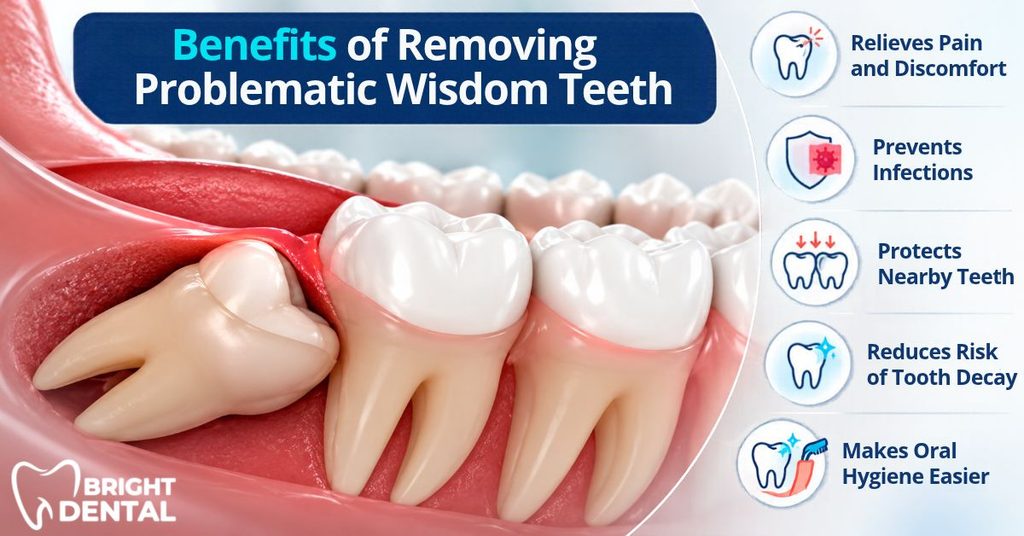
What Happens During an Extraction?
The procedure depends on whether the tooth has fully erupted or remains impacted.
Step 1: Dental Examination
Your dentist examines your teeth and gums.
X-rays help assess root position, surrounding bone, and nearby anatomical structures.
Step 2: Anesthesia
Local anesthesia numbs the treatment area.
Sedation may be considered depending on treatment complexity and patient needs.
Step 3: Tooth Extraction
Fully erupted teeth may be removed through a straightforward extraction.
Impacted teeth sometimes require a gum incision, limited bone removal, or sectioning the tooth.
Step 4: Aftercare
Your dentist provides instructions for controlling bleeding, managing discomfort, and protecting the healing area.
Wisdom teeth removal is commonly performed as an outpatient procedure, although treatment complexity varies.
Recovery Timeline After Extraction
Recovery differs depending on the procedure and individual healing response.
First 24 Hours: Mild bleeding and discomfort are common. Rest and avoid disturbing the blood clot.
Days 2–3: Swelling may peak. Eat soft foods and follow medication instructions.
Days 4–7: Pain and swelling usually begin improving. Many patients gradually resume normal activities.
Weeks 2–4: Gum tissues continue healing, while deeper bone healing takes longer.
Following your dentist’s instructions supports recovery after wisdom teeth removal.
Avoid smoking, using straws, and forceful rinsing immediately after extraction.
Contact your dentist if you develop severe pain, persistent bleeding, fever, or worsening swelling.
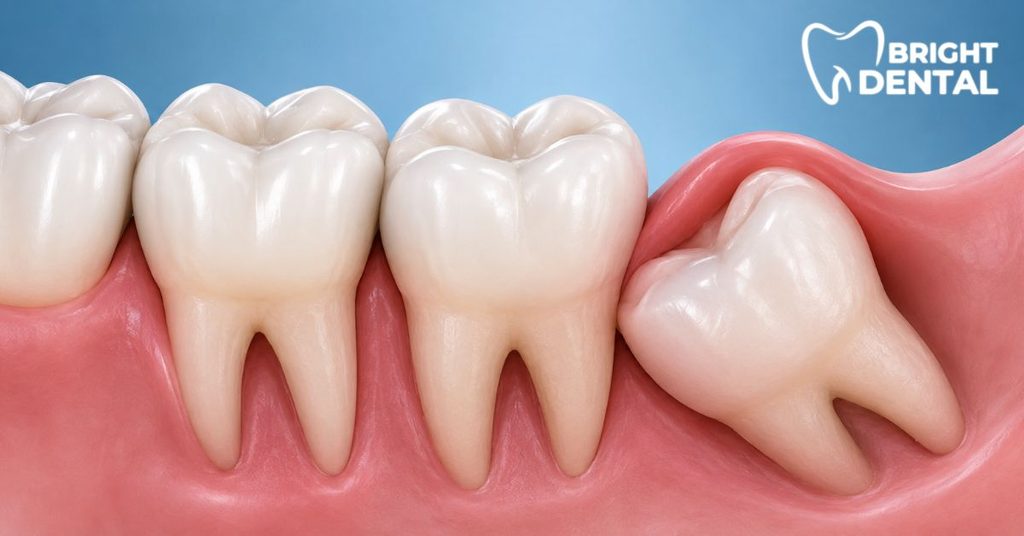
Potential Risks of Extraction
Although extraction is common, it carries potential risks.
These include infection, dry socket, prolonged bleeding, and temporary or occasionally persistent nerve-related changes.
The likelihood of complications depends on tooth position, root anatomy, and individual health.
Your dentist should explain the potential benefits and risks before recommending treatment.
For additional guidance, visit the American Dental Association’s Wisdom Teeth Guide.
Why Choose Bright Dental?
25 Years of Local Experience: Dr. Furrukh Ashraf has served the Des Plaines community for over two decades, providing personalized dental care.
At Bright Dental, patients receive individualized examinations and guidance about keeping or removing wisdom teeth.
Explore our General Dentistry Services and Specialty & Premium Services.
Frequently Asked Questions
1. Do All Wisdom Teeth Need Removal?
No. Healthy, properly positioned wisdom teeth may remain in place with regular monitoring.
2. Can Impacted Wisdom Teeth Stay in Place?
Sometimes. The decision depends on symptoms, dental findings, and potential complications.
3. What Is the Best Age for Extraction?
There is no universal ideal age. Dentists consider tooth development, symptoms, overall health, and surgical risks.
4. How Long Does Recovery Take?
Many patients feel better within several days, although complete healing takes longer.
5. Can Wisdom Teeth Cause Crowding?
Evidence does not consistently support removing wisdom teeth solely to prevent crowding of front teeth.
6. Is Wisdom Teeth Removal Painful?
Anesthesia helps prevent pain during extraction. Temporary soreness and swelling may occur afterward.
Conclusion
Not everyone needs wisdom teeth removal. Healthy teeth may remain in place, while painful, infected, or damaged teeth may require extraction.
Recognizing warning signs and scheduling regular dental examinations can help protect your oral health.
Don’t wait for recurring pain or infection to affect your daily routine. If you are unsure whether to remove or keep your wisdom teeth, consult a dental professional.
Schedule Your Wisdom Teeth Consultation
Experiencing wisdom tooth discomfort or considering wisdom teeth removal?
Bright Dental can evaluate your dental health and discuss appropriate treatment options. Early assessment of wisdom teeth can help patients understand their treatment options and make informed decisions about extraction or monitoring.
We proudly welcome patients from Des Plaines, Mount Prospect, Arlington Heights, Buffalo Grove, and Prospect Heights, Northfield, Wheeling, Winnetka, Deerfield.
Bright Dental II – Des Plaines : 737 W Golf Rd, Des Plaines, IL 60016, USA
Phone: +1 (847) 228-2000

