


Many babies and toddlers suck their thumbs or use pacifiers to feel comfortable, especially during sleep, stress, or unfamiliar situations. These habits are a normal part of early childhood, but parents often wonder whether they can affect dental development.
Understanding thumb sucking and pacifier use helps parents recognize when these habits are harmless and when professional guidance may be helpful.
At Bright Dental in Des Plaines, we encourage families to monitor their children’s oral development without unnecessary worry. Most children gradually stop these habits, and early dental changes may improve after the behavior ends.
This guide explains seven important effects, when to start weaning, and practical ways to protect your child’s developing smile. Understanding the long-term effects of thumb sucking and pacifier use can help parents make informed decisions about their child’s dental health.
Quick Answer: Can Thumb Sucking and Pacifier Use Damage Teeth?
Thumb sucking and pacifier use are common self-soothing behaviors during infancy. However, frequent or prolonged sucking can influence tooth positioning, bite alignment, and jaw development.
The risk depends on three main factors: how often the child sucks, how long the habit continues, and how strongly pressure is applied.
The American Academy of Pediatric Dentistry recommends helping children discontinue nonnutritive sucking habits by approximately age three. Earlier guidance may be appropriate if dental changes appear.
1. Why Do Children Develop These Habits?
Babies are born with a natural sucking reflex that supports feeding and provides comfort.
Some children suck their thumbs before birth, while others develop a preference for pacifiers during infancy.
Sucking may help a child relax when tired, anxious, or overstimulated. This behavior is not automatically a sign of an emotional or dental problem.
However, thumb sucking and pacifier use become more important to monitor as children grow and their teeth and jaws develop.
Parents should focus on the habit’s frequency and intensity rather than treating every instance as harmful. While thumb sucking and pacifier use provide comfort during infancy, parents should monitor how frequently these habits continue as children grow.
Does Sucking Intensity Matter?
Yes. Gentle, occasional sucking generally creates less pressure than vigorous sucking maintained for long periods.
A child who briefly uses a pacifier before sleeping may have a different level of dental risk than a child who actively sucks throughout the day.
Your dentist can assess whether the habit is influencing your child’s bite.
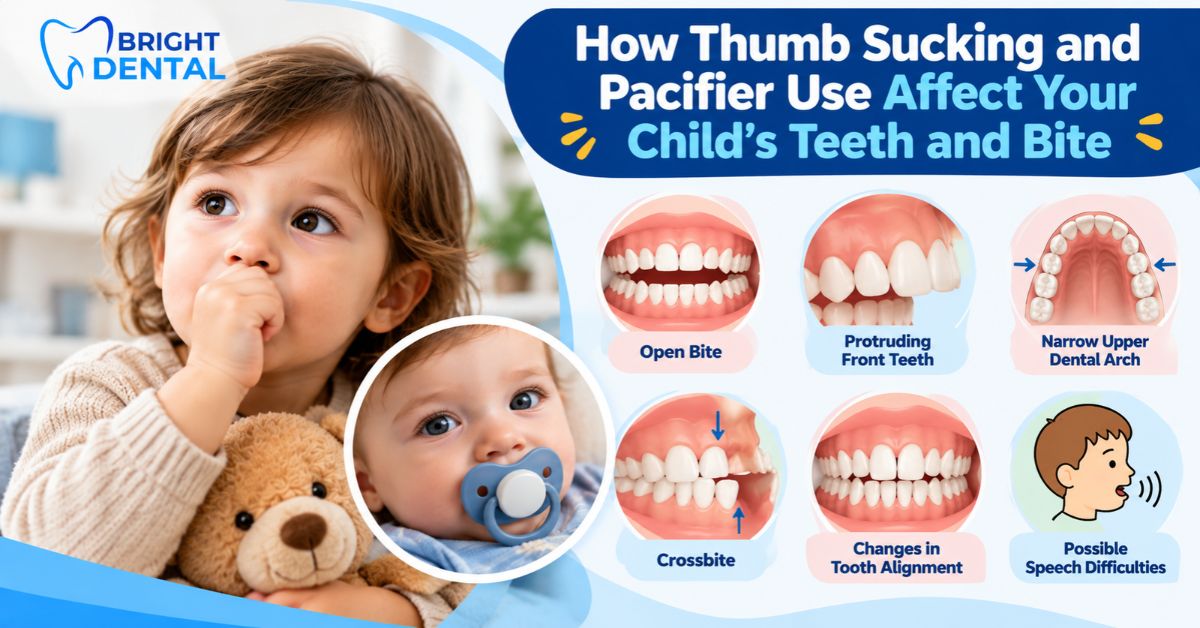
2. How Thumb Sucking and Pacifier Use Affect Teeth
Prolonged sucking can apply repeated pressure to developing teeth and surrounding oral structures.
Possible effects include:
Open Bite
An anterior open bite occurs when the upper and lower front teeth do not meet when the back teeth are closed.
Extended sucking habits can contribute to this condition, potentially affecting biting and speech.
Protruding Front Teeth
Repeated pressure may cause the upper front teeth to tilt forward.
This condition, called increased overjet, can affect appearance and increase the risk of injury to prominent front teeth.
Crossbite
A crossbite occurs when certain upper teeth bite inside the lower teeth rather than outside them.
Changes in the width of the upper dental arch may contribute to this problem.
Narrow Upper Arch
Persistent pressure can influence the shape of the developing dental arch and palate.
Not every child develops these changes, and their severity varies.
The dental effects of thumb sucking and pacifier use depend on the child’s growth stage and the characteristics of the habit. The dental effects of thumb sucking and pacifier use may become more noticeable when repeated pressure changes the position of developing teeth.
3. Can These Habits Affect Speech Development?
Dental alignment and tongue positioning can influence how certain speech sounds are produced. Monitoring thumb sucking and pacifier use alongside speech development can help parents recognize when professional guidance may be beneficial.
Children with an open bite or significant changes in tooth position may experience difficulty producing some sounds clearly.
However, speech differences have many possible causes. A sucking habit should not automatically be considered responsible for a speech problem.
If your child has persistent speech difficulties, a dentist and speech-language professional can help determine whether further evaluation is needed.
Addressing thumb sucking and pacifier use early may reduce the likelihood of certain habit-related dental changes.
4. At What Age Should Children Stop?
The appropriate timing depends on the child’s development and whether dental changes are present. Reducing thumb sucking and pacifier use before permanent teeth begin developing may help lower the risk of persistent bite problems.
| Age | Recommended Approach |
|---|---|
| Under 12 months | Focus on safe pacifier practices and routine oral development |
| Ages 1–2 | Begin observing the habit and gradually reducing unnecessary pacifier use |
| Ages 2–3 | Encourage positive weaning strategies |
| Ages 3–4 | Discuss persistent sucking with a dentist |
| Ages 4–5 | Seek guidance if the habit continues or bite changes appear |
| Age 5 and older | Arrange a dental evaluation for persistent habits, especially as permanent teeth begin developing |
These are general guidelines, not strict deadlines for every child.
Many children stop naturally. Others need additional support.
Thumb sucking and pacifier use should ideally be addressed before prolonged pressure causes significant changes to the developing bite.
Can Teeth Correct Themselves?
Some dental changes improve naturally after the habit stops, particularly in younger children.
However, not every open bite, crossbite, or tooth-position problem resolves without treatment.
A dentist can monitor development and determine whether orthodontic evaluation is appropriate.
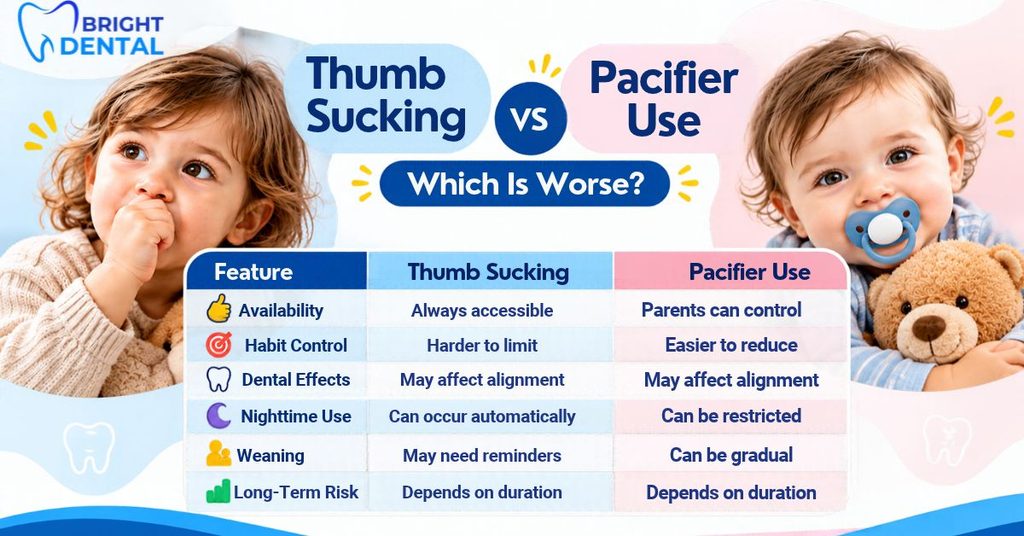
5. Thumb Sucking vs Pacifier Use: Which Is Worse?
Both habits can affect dental development when they continue frequently or intensely.
However, there are practical differences.
| Factor | Thumb Sucking | Pacifier Use |
|---|---|---|
| Availability | Thumb is always accessible | Parents can control access |
| Weaning | May be more difficult | Often easier to limit gradually |
| Dental pressure | Depends on sucking intensity | Depends on intensity and duration |
| Hygiene | Requires clean hands | Requires regular cleaning |
| Habit triggers | Often linked to sleep or comfort | Often linked to soothing routines |
Neither habit is guaranteed to cause dental problems.
Some pacifiers are marketed as orthodontic designs, but no design completely eliminates the risks associated with prolonged use.
For families concerned about thumb sucking and pacifier use, reducing frequency and duration is generally more important than relying on a particular pacifier shape.
6. How to Help Your Child Stop Safely
Stopping a comforting habit takes patience. Harsh punishment, embarrassment, and constant criticism may increase anxiety and make the behavior harder to change.
Instead, try age-appropriate strategies.
For Toddlers Ages 2–3
Gradually limit pacifier use during the day.
Offer comforting alternatives such as a favorite toy, story, or relaxing bedtime routine.
Praise your child when they settle without sucking.
Avoid forcing sudden changes during illness or other stressful transitions.
For Preschoolers Ages 3–5
Explain the goal using simple, encouraging language.
A sticker chart can help children recognize progress.
Identify situations that trigger the habit, such as boredom, tiredness, or anxiety.
Offer alternatives before the child begins sucking.
For Children Ages 5 and Older
Older children may benefit from participating in a personalized stopping plan.
Discuss the habit privately and avoid making them feel embarrassed.
If home strategies are unsuccessful, a dentist can assess whether additional support is needed.
In selected cases, professionally supervised habit-breaking appliances may be considered.
Successful management of thumb sucking and pacifier use focuses on encouragement, consistency, and the child’s emotional readiness.
7. When Should You Visit a Dentist?
Parents do not need to wait until obvious tooth changes appear.
Schedule a dental evaluation if:
- Your child continues frequent sucking beyond age three.
- The upper front teeth appear increasingly prominent.
- The front teeth do not touch when biting.
- The upper and lower teeth appear misaligned.
- Your child experiences persistent speech difficulties.
- The habit continues despite supportive efforts.
A dental examination can help identify whether the habit is affecting oral development.
Why Are Early Dental Visits Important?
Early appointments allow dentists to monitor tooth eruption, jaw growth, oral hygiene, and developing bite relationships.
The American Academy of Pediatric Dentistry recommends establishing a dental home by age one or within six months after the first tooth erupts.
For additional guidance, visit the American Academy of Pediatric Dentistry.
Discussing thumb sucking and pacifier use during routine visits helps parents receive recommendations suited to their child’s age and dental development.
What if Your Child Already Has Bite Problems?
If your child has stopped sucking but their teeth still appear misaligned, a dental evaluation can clarify the next steps.
Some minor changes improve as the child grows. More significant problems may require orthodontic monitoring or treatment.
Possible approaches include:
Observation: Monitoring dental development after the habit stops.
Habit management: Helping the child discontinue persistent sucking.
Orthodontic evaluation: Assessing open bites, crossbites, or protruding teeth.
Corrective treatment: Considering appliances or other orthodontic options when clinically appropriate.
Treatment depends on the child’s age, bite development, and severity of the problem.
Learn more about Orthodontic Treatment at Bright Dental.
Parents exploring the effects of thumb sucking and pacifier use should remember that early assessment can identify concerns before they become more complicated.
Frequently Asked Questions
1. Is Thumb Sucking Normal for a Two-Year-Old?
Yes. Many toddlers use sucking behaviors for comfort. Parents can begin gentle weaning while monitoring dental development.
2. Can Pacifiers Cause Crooked Teeth?
Prolonged, frequent pacifier use may contribute to changes in tooth position and bite alignment. The risk depends on duration, frequency, and intensity.
3. Will an Open Bite Correct Itself?
Some open bites improve after the habit stops, particularly during early childhood. Others require professional evaluation and possible treatment.
4. Is Nighttime Thumb Sucking Harmful?
Nighttime sucking can still apply pressure to developing teeth. The overall risk depends on how long and how intensely the child sucks.
5. Are Orthodontic Pacifiers Completely Safe?
No pacifier design guarantees protection against dental changes. Limiting prolonged use remains important.
6. Should Parents Use Bitter-Tasting Products?
Avoid using unpleasant products or restrictive devices without professional advice. Positive reinforcement and supportive habit-management strategies are preferable starting points.
7. When Should My Child First See a Dentist?
Schedule the first dental visit by age one or within six months after the first tooth appears.
8. Can These Habits Cause Permanent Damage?
Prolonged sucking may contribute to persistent bite changes, particularly when the habit continues as permanent teeth develop. Early assessment helps determine whether intervention is needed.
Conclusion
Thumb sucking and pacifier use are normal parts of early childhood, but prolonged habits can influence tooth alignment, bite development, and oral function.
The most important factors are frequency, intensity, and duration.
Parents can encourage healthy development through gentle weaning, positive reinforcement, and regular dental examinations.
If you notice changes in your child’s teeth or bite, professional guidance can help determine whether monitoring or treatment is appropriate.
Protect Your Child’s Smile With Bright Dental!
Concerned about your child’s sucking habits or developing teeth?
At Bright Dental, we provide family-focused dental care and guidance to help parents make informed decisions about their children’s oral health.
We welcome families from Des Plaines, Mount Prospect, Arlington Heights, Prospect Heights, Northfield, Park Ridge, Rosemont, Niles, and Elk Grove Village. Se habla español.
Whether your child needs a routine dental examination or you have questions about thumb sucking and pacifier use, our team is here to help. Give your child a healthy start toward a confident smile.
Bright Dental II – Des Plaines : 737 W Golf Rd, Des Plaines, IL 60016, USA
Phone: +1 (847) 228-2000

