
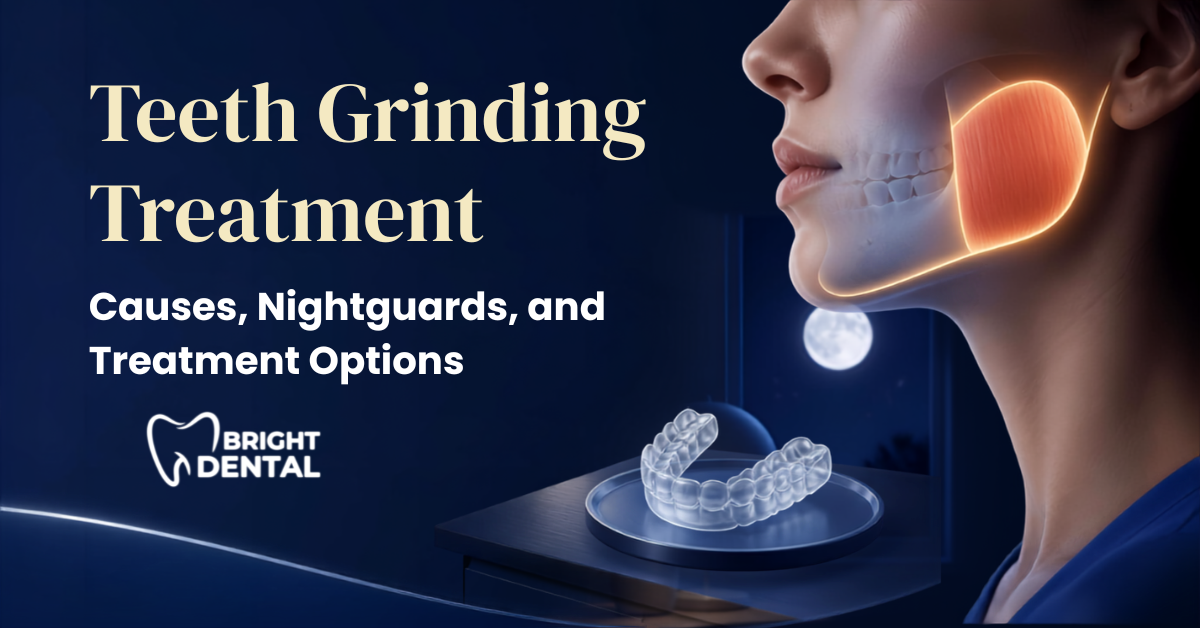

If you’ve ever woken up with a sore jaw, a dull headache, or noticed your partner mentioning strange grinding sounds while you sleep, you may be dealing with a condition called bruxism — the medical term for teeth grinding and clenching. It’s estimated that a significant portion of adults grind their teeth at some point, often without even realizing it, since the habit usually happens during sleep. Left unaddressed, teeth grinding can wear down enamel, damage restorations, and contribute to chronic jaw pain. The good news is that effective teeth grinding treatment options exist, ranging from simple lifestyle changes to custom nightguards and advanced therapies. In this guide, we’ll walk through what causes nighttime teeth grinding, the risks it poses to your oral health, and the treatment options available to protect your smile.
What Is Teeth Grinding (Bruxism)?
Bruxism refers to the involuntary grinding, gnashing, or clenching of teeth, most commonly occurring during sleep (known as sleep bruxism) but sometimes happening during the day as well (awake bruxism). Because sleep bruxism happens unconsciously, many people don’t realize they’re doing it until a dentist spots the telltale signs of wear during a checkup, or a partner mentions the noise.
There are two main types:
- Sleep bruxism — Grinding or clenching that occurs during sleep, often linked to sleep disorders and considered a sleep-related movement disorder.
- Awake bruxism — Clenching that happens during waking hours, often triggered by concentration, stress, or anxiety, and is usually more consciously controllable once identified.
Common Causes of Teeth Grinding
Teeth grinding rarely has a single cause. It’s often the result of a combination of physical, psychological, and lifestyle factors, including:
- Stress and anxiety — This is one of the most commonly cited triggers. Emotional tension often manifests physically as jaw clenching, especially during sleep when the body isn’t consciously managing muscle tension.
- Misaligned bite (malocclusion) — When teeth don’t fit together properly, the jaw muscles may overcompensate, leading to grinding.
- Sleep disorders — Conditions like obstructive sleep apnea are closely linked to bruxism. In fact, grinding is sometimes the body’s response to airway obstruction during sleep.
- Lifestyle factors — Excessive caffeine or alcohol consumption, smoking, and recreational drug use have all been associated with increased grinding.
- Medications — Certain antidepressants (particularly SSRIs) list bruxism as a potential side effect.
- Genetics — Bruxism can run in families, suggesting a hereditary component in some cases.
- Age — Teeth grinding is relatively common in children as their teeth and jaws develop, and often resolves on its own, but it can also persist or develop in adulthood.
The Risks of Untreated Teeth Grinding
Because sleep bruxism happens unconsciously and often goes unnoticed for months or years, its effects can accumulate quietly. Left untreated, chronic grinding can lead to:
- Enamel wear and tooth damage — Grinding generates significant force, which can flatten, chip, or crack teeth over time. This wear is often irreversible without restorative treatment.
- Increased tooth sensitivity — As enamel thins, teeth become more sensitive to hot, cold, and sweet foods.
- Jaw pain and TMJ disorders — Persistent clenching puts strain on the temporomandibular joint (TMJ), which can lead to popping, clicking, or pain when chewing or speaking. We cover this connection in more depth in our guide on the link between TMJ pain and your oral health.
- Headaches — Many people with bruxism experience frequent tension headaches, particularly in the morning, due to overworked jaw muscles.
- Damage to dental restorations — Crowns, fillings, and bridges can crack or loosen under the repetitive force of grinding.
- Facial muscle soreness — Chronic clenching can leave the jaw, temples, and even neck feeling tight or fatigued.
- Disrupted sleep — Both the grinder and their sleep partner can experience disrupted sleep due to the noise and physical tension involved.
If any of this sounds familiar, it’s worth having your bite and jaw evaluated by a dentist rather than waiting for symptoms to worsen.
How Dentists Diagnose Teeth Grinding
Since bruxism often happens during sleep, self-diagnosis can be tricky. During a routine dental exam, your dentist will look for specific signs, including:
- Flattened, chipped, or fractured tooth surfaces
- Worn-down enamel exposing the softer dentin underneath
- Tenderness or tightness in the jaw muscles
- Indentations on the tongue or cheek tissue (a sign of clenching)
- Damage to existing crowns, fillings, or other dental work
In some cases, your dentist may recommend a sleep study if bruxism appears linked to a sleep disorder like sleep apnea, since treating the underlying condition can significantly reduce grinding episodes.
Effective Teeth Grinding Treatment Options
The right teeth grinding treatment depends on the underlying cause, but most treatment plans combine protective measures with strategies to address the root trigger. Here are the most effective approaches:
1. Custom-Fitted Nightguards
A custom nightguard is one of the most common and effective teeth grinding treatments. Unlike over-the-counter versions, a dentist-made nightguard is molded specifically to your bite, providing a comfortable, secure fit that cushions your teeth and prevents them from grinding directly against each other. Custom nightguards also last significantly longer than store-bought alternatives and are far less likely to shift or fall out during sleep.
2. Stress Management Techniques
Since stress is one of the leading triggers for bruxism, addressing it directly can meaningfully reduce grinding episodes. Techniques like meditation, deep breathing exercises, regular physical activity, and even simple habit-awareness training (consciously relaxing your jaw during the day) can make a real difference over time.
3. Bite Correction and Orthodontic Treatment
If a misaligned bite is contributing to grinding, correcting the alignment through orthodontic treatment can reduce the muscle strain that leads to bruxism in the first place.
4. Botox Injections
For moderate to severe cases, particularly those involving significant jaw muscle tension, Botox has become an increasingly popular teeth grinding treatment. By relaxing the masseter muscle (the primary muscle used in chewing and clenching), Botox can reduce the intensity of grinding and ease associated jaw pain. We offer this as a dedicated treatment — you can learn more about how Botox for teeth grinding works and what to expect from the procedure.
5. Addressing Underlying Sleep Disorders
If bruxism is linked to sleep apnea or another sleep disorder, treating that underlying condition — sometimes with an oral appliance that also supports the airway — can significantly reduce or eliminate nighttime grinding.
6. Reducing Stimulants Before Bed
Cutting back on caffeine and alcohol, particularly in the hours before bedtime, can help reduce the frequency and intensity of grinding episodes for many people.
7. Muscle Relaxation Exercises
Simple jaw stretches and relaxation exercises recommended by your dentist can help ease tension in the muscles most involved in clenching, particularly when done consistently before bed.
8. Restorative Dental Work
If grinding has already caused significant damage — cracked teeth, worn-down enamel, or failed restorations — restorative treatments like crowns or bonding may be necessary to repair the damage and prevent further deterioration.
Ready to Protect Your Smile from Nighttime Grinding?
If jaw pain, headaches, or worn teeth are affecting your daily life, you don’t have to manage it alone. Our team can evaluate your bite, identify the underlying cause of your grinding, and create a personalized teeth grinding treatment plan — including custom nightguards and Botox options.
Nightguards vs. Other Treatment Options: Which Is Right for You?
Because bruxism varies so much from person to person, there’s no single “best” treatment for everyone. Here’s a general breakdown of how to think about your options:
- Mild, occasional grinding with no visible damage — Stress management and habit awareness may be enough on their own.
- Moderate grinding with early enamel wear — A custom nightguard is typically the first line of defense, protecting your teeth while you work on any underlying triggers.
- Grinding linked to jaw pain or TMJ symptoms — A combination of a nightguard, muscle relaxation techniques, and potentially Botox may offer the most relief.
- Grinding linked to a misaligned bite — Orthodontic evaluation may be necessary to address the root cause long-term.
- Grinding linked to sleep apnea — Treatment should focus on the underlying sleep disorder, often alongside a protective oral appliance.
Your dentist can help you determine which combination of treatments fits your specific situation best.
Tips for Managing Teeth Grinding at Home
While professional treatment is often necessary for lasting results, these habits can support your treatment plan:
- Practice conscious jaw relaxation during the day — rest your tongue gently behind your front teeth with your jaw slightly open and teeth apart
- Apply a warm compress to your jaw before bed to ease muscle tension
- Maintain a consistent sleep schedule to support overall sleep quality
- Stay consistent with wearing your nightguard, even after symptoms improve
- Keep up with regular dental checkups so your dentist can monitor wear patterns over time
When to See a Dentist About Teeth Grinding
You should schedule a dental visit if you experience:
- Frequent morning headaches or jaw soreness
- Visible wear, chipping, or flattening of your teeth
- Clicking, popping, or pain when opening and closing your jaw
- Increased tooth sensitivity without another clear cause
- A partner or family member mentioning grinding noises during sleep
Catching bruxism early makes treatment simpler and helps prevent more significant, costly damage down the road.

The Bottom Line
Teeth grinding is common, but that doesn’t mean it should be ignored. Left untreated, bruxism can wear down your enamel, strain your jaw, and lead to chronic pain and dental damage over time. The encouraging news is that effective teeth grinding treatment options are available, whether that means a custom nightguard, stress-reduction strategies, Botox therapy, or addressing an underlying sleep disorder. If you suspect you’re grinding your teeth at night, don’t wait for symptoms to worsen — a dental evaluation is the first step toward lasting relief.
Our general dentistry team at Bright Dental in Des Plaines can assess your bite, identify the cause of your grinding, and build a treatment plan tailored to your needs. Learn more about our general dentistry services or reach out to schedule a consultation.

