
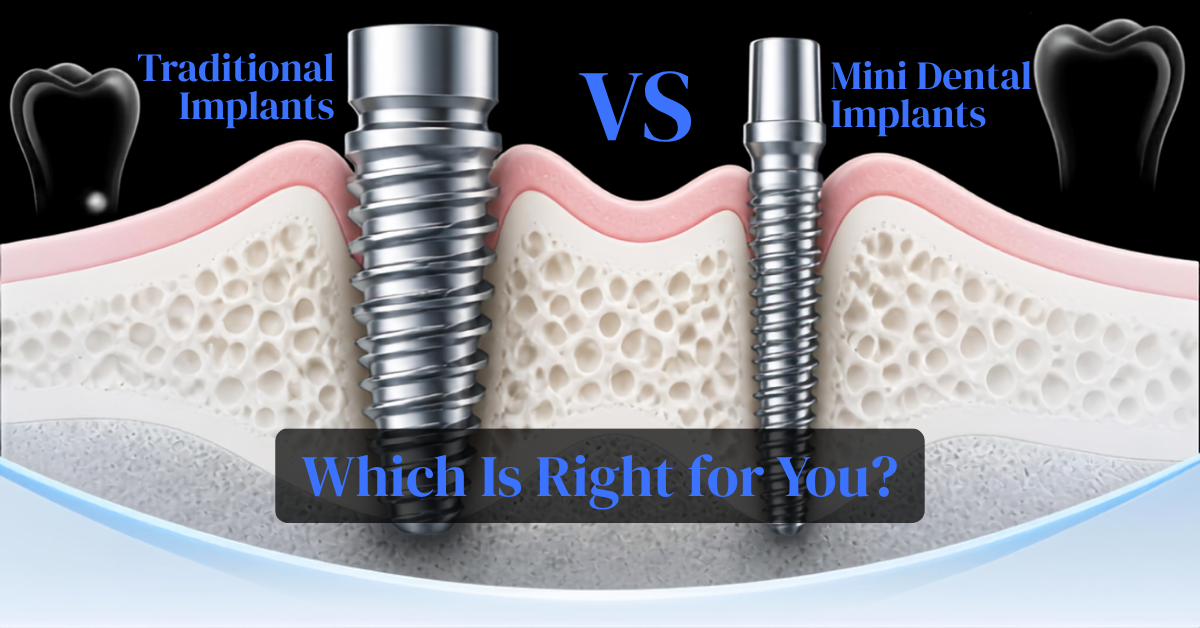

If you’re missing teeth and exploring your replacement options, you’ve likely come across two very different approaches: mini dental implants vs traditional implants. Both restore function and appearance, but they differ significantly in size, procedure, cost, and who makes an ideal candidate. Understanding these differences is essential before committing to either option, since the right choice depends heavily on your bone density, budget, and long-term goals. In this guide, we’ll break down how mini implants compare to traditional implants, what they cost, whether mini implants are truly permanent, and who tends to be the best candidate for each.
What Are Traditional Dental Implants?
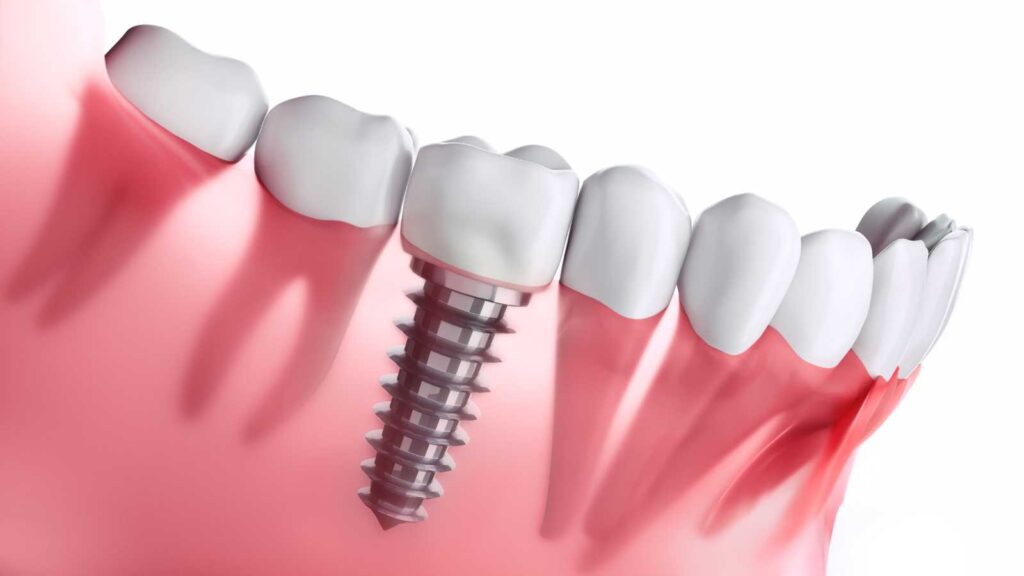
Traditional dental implants are titanium posts, typically around 3.5mm to 6mm in diameter, that are surgically placed directly into the jawbone to serve as an artificial tooth root. Once placed, the implant undergoes a healing process called osseointegration, where the bone fuses directly to the titanium surface, creating an exceptionally stable foundation. After healing, an abutment and custom crown are attached, completing the restoration.
Traditional implants are widely considered the gold standard for tooth replacement due to their long track record, strength, and stability, particularly for patients with adequate bone density.
What Are Mini Dental Implants?
Mini dental implants are a smaller alternative, typically under 3mm in diameter, roughly half the width of a traditional implant post. Because of their smaller size, mini implants can often be placed using a less invasive procedure, sometimes without the need for the additional bone grafting that traditional implants may require in cases of lower bone density.
Mini implants are frequently used for stabilizing lower dentures, replacing smaller teeth, or as a solution for patients who aren’t ideal candidates for traditional implants due to bone volume limitations.
Mini Dental Implants vs Traditional Implants: Key Differences
1. Size and Invasiveness
The most obvious distinction is size. Traditional implants require a wider post and, in many cases, a more involved surgical process, including potential bone grafting if jawbone density is insufficient. Mini implants use a narrower post and generally involve a less invasive placement procedure with a shorter recovery window.
2. Bone Density Requirements
Traditional implants typically require a certain level of jawbone density and volume to support the wider post successfully. Mini implants, due to their smaller size, can often be placed in patients with lower bone density without requiring a bone graft — a major factor in mini implant candidates who’ve been told they aren’t eligible for traditional implants.
3. Stability and Load-Bearing Capacity
Traditional implants generally offer superior long-term stability and are better suited for supporting larger restorations, including full-arch replacements and heavily load-bearing crowns. Mini implants, while stable for many applications, are typically recommended for smaller restorations or denture stabilization rather than replacing large molars subjected to significant chewing force.
4. Procedure and Recovery Time
Because mini implants involve a smaller, less invasive placement process, many patients experience a shorter recovery period with reduced swelling and discomfort compared to traditional implant surgery, which is a meaningful consideration for patients wanting to avoid a lengthy healing timeline.
5. Longevity
Traditional implants have decades of clinical data supporting their long-term durability, often lasting a lifetime with proper care. Mini implants, while durable, generally have a somewhat shorter track record in long-term studies, though they can still provide many years of reliable function when properly placed and maintained.
Mini Dental Implants Cost: What to Expect
One of the most common questions patients ask is how mini dental implants cost compares to traditional options. Generally speaking, mini implants tend to be more affordable than traditional implants, primarily due to:
- A less invasive surgical procedure, often requiring fewer appointments
- Reduced likelihood of needing supplemental procedures like bone grafting
- Shorter overall treatment timelines in many cases
That said, actual mini dental implants cost varies based on how many implants are needed, the type of restoration being supported (a single crown vs. a full denture stabilization, for example), and your individual treatment plan. Traditional implants, while typically a larger upfront investment, may ultimately provide better long-term value in cases requiring maximum stability and durability, particularly for larger restorations. A personalized consultation is the most reliable way to understand which option is more cost-effective for your specific situation — you can get a clearer sense of what factors influence pricing in our dental implant cost breakdown.
Are Mini Implants Permanent?
This is another frequently asked question, and the honest answer is: mostly, but with some nuance. Mini implants are designed to be a long-term, fixed solution, and with proper oral hygiene and regular dental checkups, they can last many years, often over a decade or longer. However, because they use a narrower post, some studies suggest they may carry a slightly higher long-term failure rate compared to traditional implants, particularly under heavy biting forces or in patients with certain bone conditions.
In short, mini implants are intended to be a permanent, long-lasting solution rather than a temporary fix — but their longevity depends significantly on proper placement, ongoing maintenance, and appropriate use for the right clinical situation.
Not Sure Which Implant Option Fits Your Smile?
Every patient’s bone density, budget, and goals are different. A personalized consultation can help determine whether mini or traditional implants are the better fit for your specific needs.
Who Are Mini Implant Candidates?
Mini implants tend to be a particularly good fit for:
- Patients with lower jawbone density who want implants without bone grafting
- Patients replacing smaller teeth, such as lower incisors, where a narrower implant is often sufficient
- Denture wearers looking to stabilize a lower denture without committing to a full traditional implant procedure
- Patients seeking a less invasive procedure with a shorter recovery timeline
- Older patients or those with certain health conditions where a less invasive surgical approach is preferred
Who Are Better Candidates for Traditional Implants?
Traditional implants tend to be the stronger choice for:
- Patients with adequate bone density who can support a wider, more load-bearing implant post
- Replacement of larger teeth, such as molars, which experience significant chewing force
- Full-arch restorations requiring maximum stability and long-term durability
- Patients prioritizing the longest possible track record of clinical data and durability
If you’re exploring full-arch solutions specifically, it’s worth reviewing our full-arch implant comparison guide as well.
The Consultation Process: How Your Dentist Determines the Right Fit
Choosing between mini dental implants vs traditional implants isn’t a decision to make based on cost alone. A thorough evaluation typically includes:
- A 3D scan or X-ray to assess jawbone density and volume
- A review of your overall oral health, including gum health and any existing dental work
- A discussion of your restoration goals, including whether you’re replacing a single tooth, several teeth, or stabilizing a denture
- A conversation about budget and timeline, since both factors can influence which option makes the most practical sense
This evaluation ensures you’re matched with the implant type most likely to succeed long-term, rather than defaulting to whichever option seems cheaper or faster on the surface.
Maintenance: Do Mini and Traditional Implants Require Different Care?
Both mini and traditional implants require similar day-to-day maintenance: consistent brushing, flossing, and regular dental checkups to monitor the health of the surrounding gum tissue and bone. However, patients with mini implants supporting removable dentures should also follow specific cleaning guidelines for the denture itself to prevent bacteria buildup at the attachment points. Regardless of implant type, staying consistent with professional cleanings plays a major role in long-term success and helps catch any early signs of complications before they become bigger issues.
The Bottom Line
When comparing mini dental implants vs traditional implants, there’s no universal “better” option — the right choice depends on your bone density, the location and number of teeth being replaced, your budget, and your long-term goals. Mini implants offer a less invasive, often more affordable path, particularly for patients who aren’t ideal candidates for traditional implants due to bone volume. Traditional implants, meanwhile, remain the stronger choice for larger restorations and patients prioritizing maximum long-term stability. Are mini implants permanent? With proper care and the right clinical fit, they can be a durable, long-lasting solution — but as with any implant option, success depends on choosing the right type for your specific situation, ideally guided by a thorough professional evaluation.
Our team at Bright Dental in Des Plaines can help you determine whether mini or traditional implants are the right fit for your smile. Explore our dental implant services or reach out to schedule a consultation.
