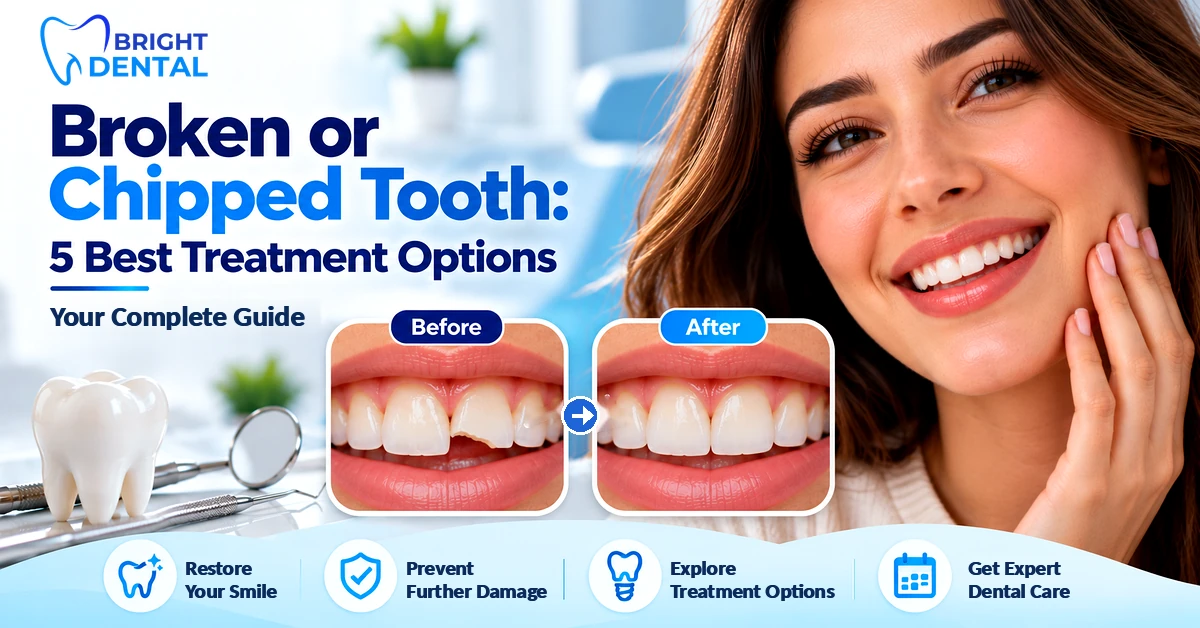

A broken or chipped tooth can happen unexpectedly. You might bite into something hard, experience a sports injury, fall, or discover that an old filling has weakened your tooth. Whether the damage is small or severe, knowing what to do next can help protect your oral health.
A broken or chipped tooth may affect your appearance, cause sensitivity, or make chewing uncomfortable. Some injuries require urgent attention, while others can be treated during a regular dental appointment.
In this guide, we’ll explain the common causes, warning signs, five treatment options, and practical steps you can take before visiting a dentist.
Is a Broken or Chipped Tooth a Dental Emergency?
Not every broken or chipped tooth requires emergency treatment, but every damaged tooth should be evaluated by a dental professional.
The urgency depends on the severity of the injury, your symptoms, and whether the inner layers of the tooth are exposed.
Minor Chip: No Pain or Sensitivity
A small chip that doesn’t cause pain or leave a sharp edge is usually less urgent. However, scheduling a dental examination is still important.
Even minor damage can affect the tooth’s appearance or create an uneven surface that may need smoothing or restoration.
Moderate Chip: Sharp Edge or Sensitivity
A moderate chip may expose dentin, the sensitive layer beneath tooth enamel.
You might notice discomfort when consuming hot, cold, or sweet foods. Sharp edges can also irritate your tongue or cheeks.
Contact your dentist promptly to determine whether bonding, a veneer, or another restoration is appropriate.
Severe Break: Significant Pain or Bleeding
A severely broken or chipped tooth may involve exposed pulp, a deep fracture, or injury to the surrounding gums.
Seek urgent dental care if you experience:
- Severe or persistent tooth pain
- Visible pink or red tissue inside the tooth
- Significant bleeding
- Facial or gum swelling
- A loose or displaced tooth
- Difficulty biting or closing your mouth normally
Heavy uncontrolled bleeding, difficulty breathing or swallowing, or serious facial trauma requires emergency medical attention.
What Causes Teeth to Chip or Break?
Several factors can weaken teeth or increase their risk of damage.
Biting hard foods: Chewing ice, hard candy, popcorn kernels, or other hard objects can fracture enamel.
Teeth grinding: Repeated clenching or grinding places excessive pressure on teeth, especially during sleep.
Sports injuries: Contact sports and accidental impacts can cause chips, cracks, or fractures.
Tooth decay: Cavities weaken tooth structure, making teeth more vulnerable to breaking.
Large or aging fillings: Teeth with extensive restorations may have less remaining natural structure.
Existing cracks: Small cracks can become more noticeable when the tooth experiences repeated biting forces.
If you have a broken or chipped tooth, identifying the underlying cause can help your dentist recommend treatment and reduce the risk of future damage.
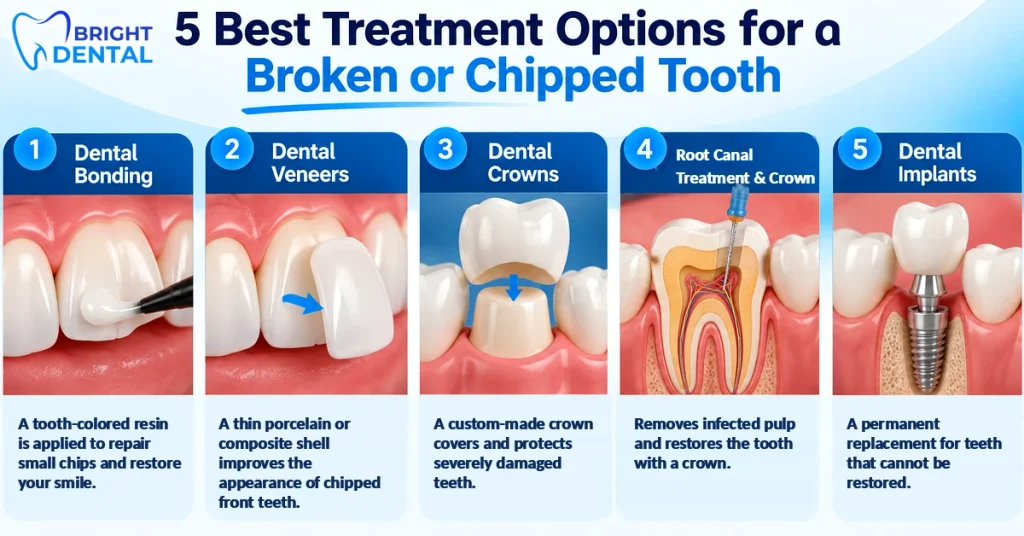
5 Best Treatment Options for a Broken or Chipped Tooth
The right treatment depends on the amount of remaining tooth structure, the location of the damage, and whether the pulp is affected. Early diagnosis of a broken or chipped tooth can help your dentist choose the most suitable treatment while preserving as much natural tooth structure as possible.
1. Dental Bonding
Best for: Small chips and minor cosmetic damage.
Dental bonding uses tooth-colored composite resin to repair the damaged area.
Your dentist applies the material, shapes it to match your natural tooth, and hardens it using a curing light.
Benefits include:
- Natural-looking results
- Minimal removal of tooth structure in many cases
- Often completed in one appointment
- Generally less expensive than larger restorations
Bonding is particularly useful for minor chips affecting front teeth. However, bonded areas can stain or chip over time and may eventually require repair or replacement.
2. Dental Veneers
Best for: Visible front-tooth damage and cosmetic concerns.
A dental veneer is a thin covering, commonly made from porcelain or composite material, that improves the appearance of the front surface of a tooth.
Veneers may be recommended when the tooth has a noticeable chip but retains enough healthy structure.
They can improve tooth shape, color, and symmetry. Porcelain veneers typically require preparation and may involve more than one appointment.
A dentist must first determine whether a veneer is suitable for the extent of the fracture.
3. Dental Crowns
Best for: Larger fractures or teeth with significant structural damage.
A dental crown is a custom-made restoration that covers and protects a prepared tooth.
Crowns can restore chewing function, improve appearance, and help protect weakened tooth structure.
Materials may include porcelain, zirconia, or other dental ceramics.
For a significantly broken or chipped tooth, a crown may offer better protection than bonding when a substantial portion of the tooth has been lost.
The number of visits depends on the treatment process and the technology available at the dental office.
4. Root Canal Treatment and Crown
Best for: Damage involving infected or irreversibly inflamed dental pulp.
The pulp contains nerves, blood vessels, and connective tissue inside the tooth.
When a deep fracture damages or exposes the pulp, root canal treatment may be needed to preserve the tooth.
During treatment, the dentist removes the affected pulp, cleans and seals the root canals, and restores the tooth.
A crown may then be recommended, particularly for weakened back teeth.
Symptoms that may indicate pulp involvement include lingering sensitivity, spontaneous pain, swelling, or tenderness when biting.
Not every deep chip requires a root canal. A clinical examination and appropriate imaging help determine the correct treatment.
5. Dental Implants
Best for: Teeth that cannot be predictably restored.
Sometimes a fracture extends too deeply beneath the gumline or compromises the tooth beyond repair.
If extraction becomes necessary, a dental implant may be considered to replace the missing tooth.
A dental implant typically consists of a titanium or other biocompatible fixture placed in the jawbone, an abutment, and a replacement crown.
Implants can restore chewing function and appearance, but suitability depends on factors such as bone health, medical history, and overall oral health.
If your broken or chipped tooth cannot be saved, your dentist can explain whether an implant, bridge, or another replacement option is appropriate.
What to Do Immediately After Chipping a Tooth
Taking appropriate steps after a dental injury can reduce discomfort and help prevent additional damage.
1. Rinse your mouth gently. Use warm water to clear debris from the affected area.
2. Control bleeding. Apply gentle pressure with clean gauze if the gums or surrounding tissues are bleeding.
3. Apply a cold compress. Hold a cold pack against the outside of your cheek to help manage swelling.
4. Protect sharp edges. Dental wax or sugar-free chewing gum may temporarily cover a sharp edge until your appointment.
5. Avoid chewing on the damaged tooth. Choose softer foods and avoid very hot or cold items if they trigger sensitivity.
6. Save any broken fragments. Place recovered pieces in a clean container and bring them to your dentist. In some cases, reattachment may be possible.
7. Contact a dental professional. Explain how the injury happened and describe any pain, swelling, or bleeding.
For additional first-aid guidance, visit the American Dental Association’s dental emergencies resource.
A broken or chipped tooth should not be ignored simply because the initial discomfort is mild.
What Happens If You Ignore a Chipped Tooth?
Delaying treatment does not always cause complications, but damaged teeth can become more vulnerable to additional problems.
Possible consequences include:
- Further fractures: Chewing pressure may worsen an existing crack.
- Tooth sensitivity: Exposed dentin can react to temperature changes.
- Soft tissue irritation: Jagged edges may injure the tongue or cheeks.
- Decay: Damaged surfaces may become harder to clean effectively.
- Pulp complications: Deep fractures can expose or affect the tooth’s inner tissues.
- Tooth loss: Severe, unrestorable damage may eventually require extraction.
Getting a broken or chipped tooth assessed early gives your dentist an opportunity to recommend an appropriate restoration before further damage occurs. Getting timely treatment for a broken or chipped tooth can help prevent further damage, reduce discomfort, and preserve your natural smile.
Why Choose Bright Dental for Broken Tooth Repair in Des Plaines?
At Bright Dental, we understand that dental injuries can be stressful, especially when they affect your smile or ability to eat comfortably.
Our team can evaluate your dental concerns, explain suitable treatment options, and help you understand the next steps.
Whether you need a minor cosmetic restoration or an assessment of more extensive damage, the goal is to preserve your natural teeth whenever possible.
Learn more about our general dentistry services and how regular examinations support long-term oral health.
If you’re anxious about dental treatment, explore our pain-free dentistry information before your visit.
Patients considering replacement options after tooth loss can also explore our dental implant information.
Our Des Plaines dental team can help you understand which approach is most appropriate for your situation. Our dental team carefully evaluates each broken or chipped tooth to recommend a personalized treatment plan that restores comfort, function, and confidence in your smile.
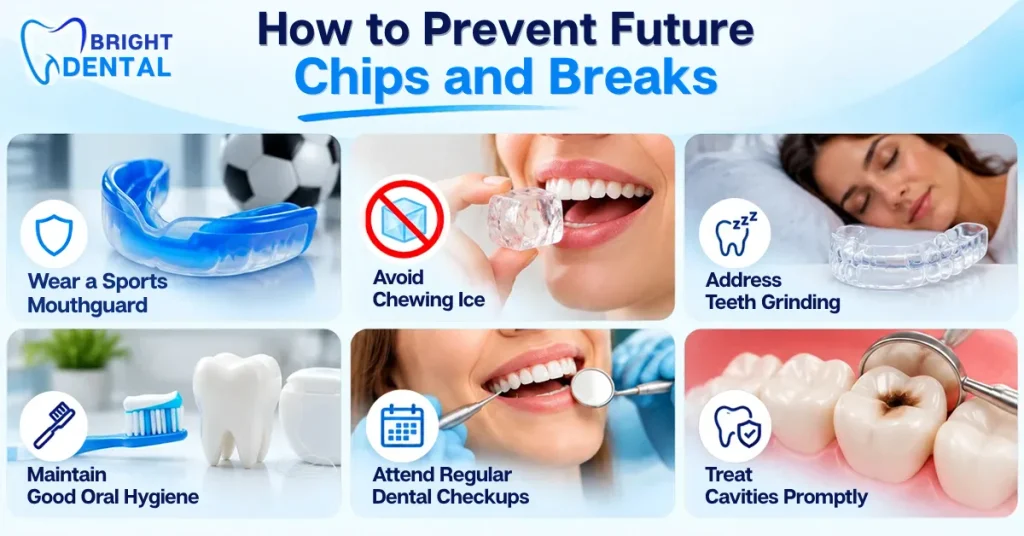
How to Prevent Future Chips and Breaks
Although dental injuries cannot always be prevented, a few everyday habits can reduce the risk.
- Wear a sports mouthguard. Protect your teeth during activities involving contact or falls.
- Avoid chewing ice. Hard objects can place unnecessary stress on enamel.
- Address teeth grinding. Ask your dentist whether a custom night guard could help.
- Maintain good oral hygiene. Brush twice daily with fluoride toothpaste and clean between your teeth.
- Attend regular dental checkups. Routine examinations can identify decay, worn restorations, and other concerns.
- Treat cavities promptly. Early care helps preserve healthy tooth structure.
These preventive measures are especially helpful if you’ve previously experienced a broken or chipped tooth. If you’ve experienced a broken or chipped tooth before, following these preventive habits can help protect your teeth and reduce the risk of future dental injuries.
Conclusion
A broken or chipped tooth can range from a minor cosmetic concern to a serious dental injury. Fortunately, several treatment options are available, including bonding, veneers, crowns, root canal treatment, and dental implants.
The best choice depends on the extent of the damage and the condition of the remaining tooth.
Rather than waiting for symptoms to worsen, arrange a dental examination to understand your options and protect your oral health.
Restore Your Smile With Bright Dental!
Dealing with a broken or chipped tooth? Bright Dental is here to help you explore treatment options and take the next step toward a healthier, more comfortable smile.
Bright Dental is conveniently located in Des Plaines, IL, proudly welcoming patients from Mount Prospect, Arlington Heights, Prospect Heights, and Northfield.
Schedule your appointment and let our dental team evaluate your tooth and recommend appropriate care.

