
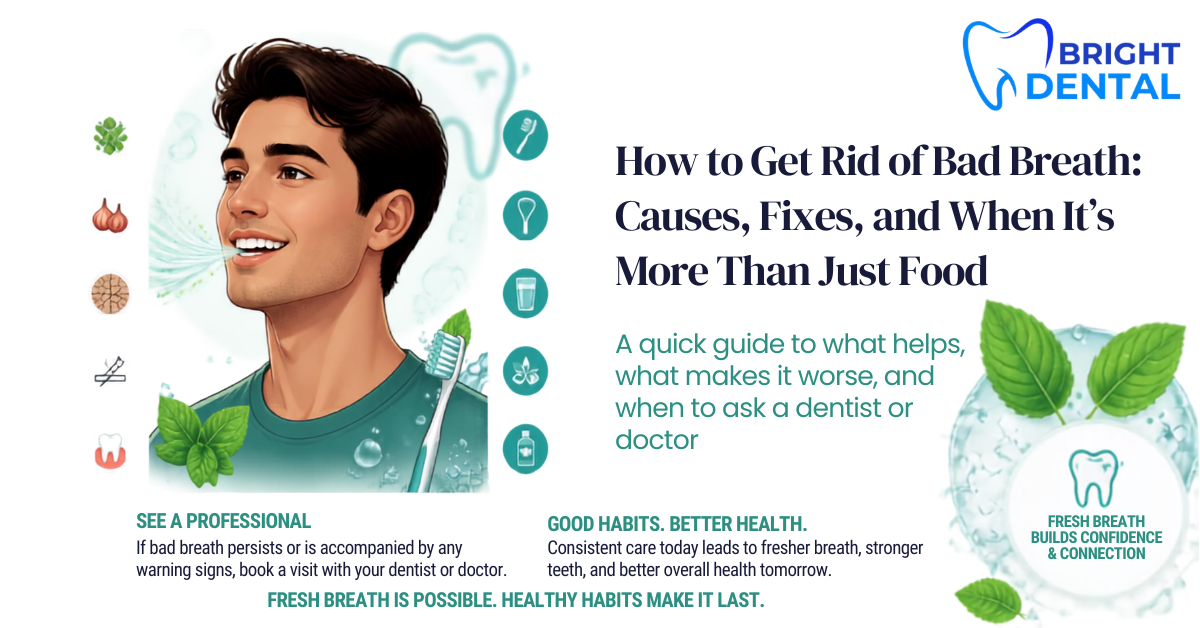

Bad breath happens to everyone occasionally — a garlicky lunch, a busy morning with no time to brush, a dry mouth after waking up. But if you’re dealing with persistent bad breath no matter what you eat or how often you brush, it might be a sign of something deeper going on. This guide covers exactly how to get rid of bad breath for good, starting with understanding what’s actually causing it.
What Causes Bad Breath?
1. Food and Drink
Strong-smelling foods like garlic, onions, and coffee release compounds that enter your bloodstream and are eventually expelled through your lungs, which is why the smell lingers long after a meal.
2. Poor Oral Hygiene
When you don’t brush and floss consistently, food particles remain in your mouth, breaking down and producing bacteria that release foul-smelling sulfur compounds. Plaque buildup on the tongue, teeth, and gumline is one of the most common — and most fixable — causes of ongoing bad breath.
3. Dry Mouth
Saliva plays a major role in washing away bacteria and food debris. When your mouth is dry, whether from dehydration, breathing through your mouth, or certain medications, bacteria multiply more easily, leading to persistent odor.
4. Tobacco and Alcohol Use
Both smoking and alcohol dry out the mouth and leave behind residue that contributes to lingering bad breath, in addition to increasing the risk of gum disease.
5. Gum Disease
Chronic bad breath is often one of the earliest warning signs of gum disease. As bacteria build up below the gumline, they release odor-causing compounds that don’t go away with regular brushing alone.
6. Sinus and Respiratory Issues
Postnasal drip, sinus infections, and chronic allergies can all contribute to bad breath, since mucus draining down the back of the throat feeds bacteria that produce odor.
7. Digestive Issues
In some cases, acid reflux or other digestive conditions can cause breath odor that originates from the stomach rather than the mouth.
8. Underlying Medical Conditions
Less commonly, bad breath can be linked to conditions like diabetes, liver disease, or kidney problems, since these can alter the chemical compounds released through breathing.
How to Get Rid of Bad Breath: Step-by-Step
Improve Your Daily Oral Hygiene Routine
Brush at least twice a day, floss daily, and don’t skip your tongue — bacteria buildup on the tongue’s surface is one of the biggest contributors to odor that people overlook. A tongue scraper can be especially effective for this.
Stay Hydrated
Drinking water throughout the day keeps saliva flowing and helps rinse away bacteria and food particles naturally.
Use an Antibacterial Mouthwash
Look for a mouthwash designed to kill bacteria rather than one that simply masks odor temporarily. Cosmetic mouthwashes that only cover up smell can actually make things worse in the long run by drying out your mouth further.
Clean or Replace Dental Appliances Regularly
If you wear retainers, dentures, or a mouthguard, make sure you’re cleaning them properly, since bacteria can build up on these surfaces just as easily as on your teeth.
Cut Back on Odor-Causing Habits
Reducing tobacco use and moderating alcohol intake can significantly improve breath odor over time, alongside the broader health benefits.
Chew Sugar-Free Gum
Chewing gum stimulates saliva production, which helps wash away bacteria between brushings — just be sure it’s sugar-free so you’re not feeding the bacteria you’re trying to get rid of.
Schedule Regular Dental Cleanings
Professional cleanings remove plaque and tartar buildup that a toothbrush can’t reach, especially below the gumline where a lot of odor-causing bacteria live.

When Bad Breath Is More Than Just Food
If you’ve tightened up your oral hygiene routine, stayed hydrated, and cut back on culprit foods, but the bad breath persists, it’s worth paying attention to a few red flags:
- Bad breath that doesn’t improve after brushing or using mouthwash
- A persistent bad taste in your mouth
- Bleeding, swollen, or receding gums alongside the odor
- Bad breath paired with other symptoms like frequent heartburn or nasal congestion
These signs can point to gum disease, chronic sinus issues, or another underlying condition that needs professional attention rather than another mint. Gum disease in particular is a common culprit that’s easy to miss in its early stages. To understand the warning signs and treatment options, take a look at our guide: Periodontitis Treatment.
Everyday Habits That Make a Bigger Difference Than You’d Think
A lot of persistent bad breath cases come down to small daily habits that seem harmless but add up over time — skipping the tongue during brushing, rinsing with the wrong products, or going too long between dental visits. If you want to review what might be working against you, check out our post: Daily Oral Hygiene Mistakes.
Frequently Asked Questions
Can bad breath come back even after brushing? Yes — if bacteria are trapped on the tongue, below the gumline, or in an underlying condition like sinus drainage, brushing alone may only mask the odor temporarily.
Does mouthwash actually get rid of bad breath, or just cover it up? It depends on the type. Cosmetic mouthwashes only mask odor short-term, while antibacterial mouthwashes target the bacteria actually causing the smell.
How long does it take to fix bad breath? For breath caused by hygiene or diet, improvement can often be seen within a few days of consistent care. Breath linked to gum disease or medical conditions may take longer and typically requires professional treatment.
Is bad breath always a sign of a serious problem? Not necessarily — occasional bad breath from food or morning dry mouth is completely normal. Persistent bad breath despite good hygiene is what warrants a closer look.
The Bottom Line
Knowing how to get rid of bad breath starts with identifying the actual cause, whether that’s your daily habits, hydration, or something that needs a dentist’s attention. For most people, small consistent changes make a noticeable difference within days. But if bad breath sticks around despite your best efforts, it’s worth having a professional take a look rather than continuing to mask it.
Ready to Get to the Root of Your Bad Breath?
If nothing seems to be working, a dental checkup can help pinpoint exactly what’s causing your bad breath and get you a lasting fix rather than a temporary cover-up.

