

Your tooth enamel is the hardest substance in your body, even harder than bone. However, that doesn’t mean it’s indestructible. Every day, your teeth encounter acids from foods, drinks, and sometimes your body’s digestive system. Over time, repeated acid exposure can gradually wear away the protective outer layer of your teeth.
This process is called enamel erosion, and it can affect your smile’s appearance, comfort, and long-term oral health. Because early damage may not cause noticeable symptoms, understanding the warning signs is essential.
In this guide, we’ll explain what causes enamel erosion, how to recognize its symptoms, whether damaged enamel can recover, and eight practical ways to protect your teeth.
What Is Enamel Erosion?
Enamel erosion is the gradual loss of tooth enamel caused by exposure to acids. Unlike tooth decay, which involves acids produced by bacteria, dental erosion occurs when acids from food, beverages, or the stomach directly affect the tooth surface.
Tooth enamel protects the sensitive layers underneath. Although early mineral loss can sometimes be repaired through remineralization, enamel that has physically worn away cannot grow back.
As enamel becomes thinner, the yellowish dentin underneath may become more visible. This can cause discoloration, tooth sensitivity, and increased vulnerability to damage.
Understanding enamel erosion early gives you a better opportunity to protect your remaining tooth structure and avoid more extensive dental treatment.
What Causes Enamel Erosion?
Several everyday habits and health conditions can contribute to enamel erosion. Identifying these factors is an important step toward prevention.
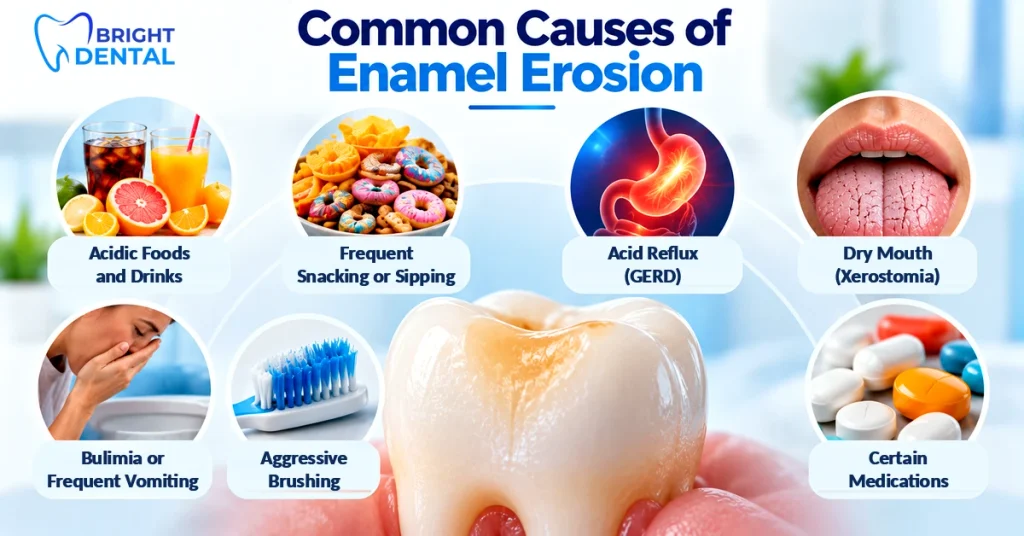
1. Acidic Foods and Beverages
Citrus fruits, soda, sports drinks, wine, and other acidic beverages can gradually weaken enamel when consumed frequently.
The risk of enamel erosion often increases when acidic drinks are sipped repeatedly throughout the day rather than consumed during meals.
2. Frequent Snacking and Sipping
Constant snacking or sipping acidic beverages exposes teeth to repeated acid attacks. This reduces the time saliva has to neutralize acids and support remineralization.
3. Acid Reflux (GERD)
Gastroesophageal reflux disease can allow stomach acid to reach the mouth. Because stomach acid is highly acidic, repeated exposure can contribute to significant enamel damage.
4. Dry Mouth
Saliva plays an essential role in protecting teeth. It helps wash away food particles, neutralize acids, and deliver minerals that support enamel strength.
People experiencing dry mouth may face a greater risk of enamel erosion because they have less natural protection against acids.
5. Frequent Vomiting
Repeated vomiting exposes teeth to stomach acid and can cause substantial enamel loss over time. Addressing the underlying medical condition is essential for protecting both oral and overall health.
6. Aggressive Brushing
Brushing too forcefully can contribute to tooth wear, particularly when enamel has recently been softened by acidic foods or beverages.
7. Certain Medications
Some medications may contribute indirectly by causing dry mouth. Certain acidic chewable tablets or supplements may also increase acid exposure.
According to the American Dental Association (ADA), dietary acids and stomach acids are important contributors to dental erosion.
Signs You May Be Experiencing Enamel Erosion
Enamel erosion often develops gradually, making early changes difficult to notice.
Common warning signs include:
- Tooth sensitivity: Discomfort when consuming hot, cold, or sweet foods and drinks.
- Yellowish teeth: Thinning enamel may make the underlying dentin more visible.
- Rounded tooth edges: Teeth may gradually lose their natural shape.
- Translucent edges: Front teeth may appear more transparent near their biting surfaces.
- Cracks or chips: Weakened teeth may become more vulnerable to damage.
- Cupping: Small indentations may develop on the chewing surfaces of teeth.
- Smooth or shiny surfaces: Some affected areas may appear unusually polished.
These symptoms can have several possible causes, so a professional examination is important for an accurate diagnosis.
If you notice persistent sensitivity, you can also learn more about routine dental evaluations through our General Dentistry services.
Recognizing enamel erosion early may help prevent additional tooth wear and preserve your natural smile.
How to Prevent Enamel Erosion: 8 Best Tips
Although lost enamel cannot regenerate, many causes of enamel erosion can be managed through consistent oral hygiene habits and lifestyle changes.
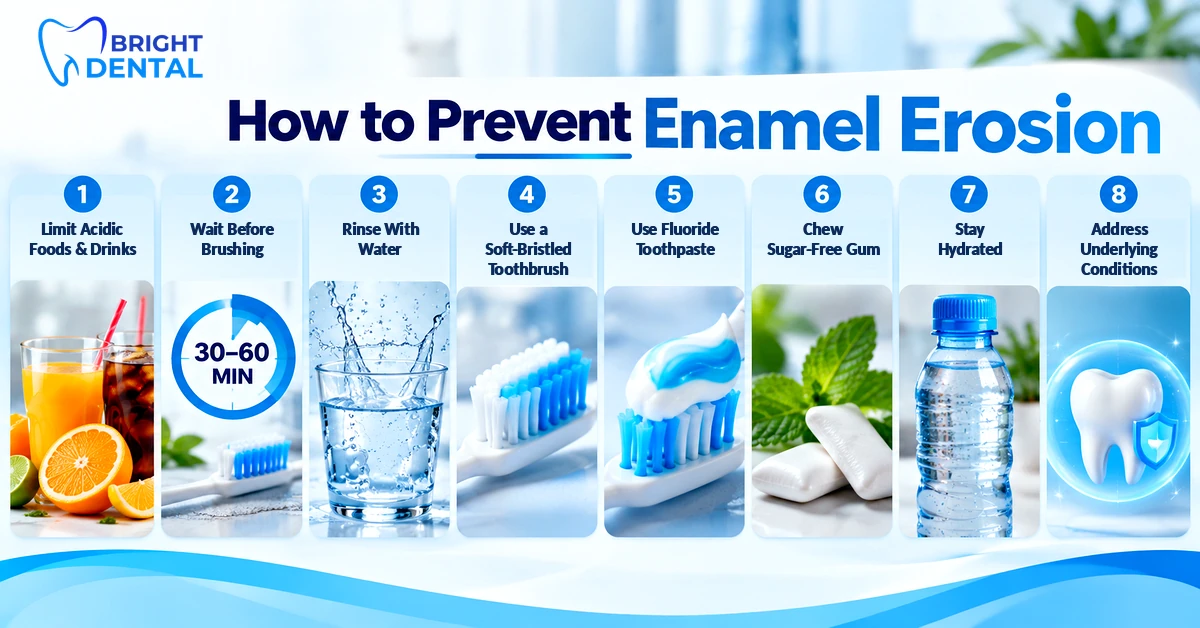
1. Rethink Your Drinking Habits
Limit how frequently you consume acidic beverages such as soda, sports drinks, and citrus juices.
When drinking acidic beverages, consider using a straw to reduce contact with your teeth. Avoid sipping them continuously throughout the day.
2. Wait Before Brushing
After consuming acidic foods or beverages, wait approximately 30–60 minutes before brushing your teeth.
Acids temporarily soften the enamel surface, and brushing immediately afterward may contribute to additional wear.
3. Rinse Your Mouth With Water
Rinsing with plain water after acidic foods or drinks helps wash away residual acids.
This simple habit can support your efforts to prevent enamel erosion, especially when brushing immediately is not recommended.
4. Choose a Soft-Bristled Toothbrush
Use a soft-bristled toothbrush and gentle brushing motions.
Avoid applying excessive pressure, which may contribute to mechanical tooth wear and gum irritation.
5. Use Fluoride Toothpaste
Fluoride toothpaste helps strengthen remaining enamel and supports remineralization of early mineral loss.
Brushing twice daily with fluoride toothpaste is an important part of protecting your teeth against enamel erosion and tooth decay.
6. Chew Sugar-Free Gum
Chewing sugar-free gum after meals can stimulate saliva production.
Saliva helps neutralize acids and maintain a healthier oral environment. Choose sugar-free gum, preferably one containing xylitol.
7. Stay Hydrated
Drinking water throughout the day supports saliva production and helps rinse away food particles and acids.
Adequate hydration is particularly important for people experiencing dry mouth.
8. Address Underlying Health Conditions
Conditions such as acid reflux, frequent vomiting, and chronic dry mouth can increase the risk of enamel erosion.
Working with an appropriate healthcare professional to manage these conditions can help reduce repeated acid exposure.
Following these eight habits consistently can help protect your remaining enamel and support long-term dental health.
Can Enamel Erosion Be Reversed?
One of the most common questions patients ask is whether enamel erosion can be reversed.
The answer depends on the extent of the damage.
During the earliest stages, when enamel has lost minerals but has not physically worn away, fluoride and saliva-supported remineralization may help strengthen the affected surface.
However, once enamel has been permanently lost, the body cannot replace it naturally.
Treatment for established enamel erosion focuses on protecting the remaining tooth structure, relieving sensitivity, and restoring damaged areas when necessary.
Depending on the severity, a dentist may recommend:
- Fluoride treatments: To help strengthen remaining enamel.
- Desensitizing toothpaste: To reduce discomfort associated with exposed dentin.
- Dental bonding: To restore certain worn or damaged areas.
- Veneers: To improve the appearance of selected affected teeth.
- Dental crowns: To protect teeth with more extensive structural damage.
Not every patient requires restorative treatment. Your dentist can evaluate the damage and recommend an appropriate approach.
For patients interested in maintaining healthy teeth through routine examinations and preventive care, explore our General Dentistry services.
When Should You See a Dentist?
You should consider scheduling a dental examination if you experience persistent tooth sensitivity, changes in tooth color, or visible wear along the edges of your teeth.
People with frequent acid reflux, dry mouth, or a diet high in acidic foods and beverages may also benefit from discussing their individual risk factors with a dentist.
A professional evaluation can help distinguish enamel erosion from other conditions, such as tooth decay, grinding-related wear, or toothbrush abrasion.
Regular dental visits are especially valuable because early enamel changes may be identified before significant discomfort develops.
If you’re experiencing discomfort during everyday activities, such as drinking cold water or eating certain foods, our Pain-Free Dentistry page provides additional information about patient comfort during dental care.
The Bottom Line
Enamel erosion is a gradual process that can affect the appearance, strength, and sensitivity of your teeth. Although permanently lost enamel cannot grow back, early recognition and preventive habits can make a meaningful difference.
Reducing acidic beverage consumption, brushing gently, using fluoride toothpaste, and managing underlying health conditions are practical ways to protect your smile.
Most importantly, don’t ignore persistent sensitivity or visible changes in your teeth. Identifying enamel erosion early can help prevent further damage and reduce the need for more extensive treatment.
Protect Your Smile With Bright Dental!
Concerned about tooth sensitivity or signs of enamel erosion? At Bright Dental in Des Plaines, IL, our team can evaluate your enamel health, discuss possible causes of tooth wear, and recommend personalized preventive or restorative care.
We proudly welcome patients from Des Plaines, Mount Prospect, Glenview, Arlington Heights, and Northbrook.
Take the next step toward a healthier, more confident smile.

